
Review · UBUD
Electric Bike Tour in Ubud
Ubud is best seen at a slower pace, and this fat-tire e-bike ride gets you beyond the central streets. You pedal through Sok Wayah’s rice paths, pass cottages and paddies, pause at Tegalalang Village, and visit a traditional Balinese home where village life feels more real than it does from a tour bus window.
I like the personal guiding, especially the care shown by guides such as Wayan, Ketut, Nyoman, and Inyoman. I also like the practical value: hotel transfers, water, snacks, equipment, and a local meal are included for $34. The main caution is that this is not an all-trail ride. You may cycle beside traffic, and the narrow rice paths can feel tricky if you lack confidence on a bike.
Key points to know before you book
- Sok Wayah’s narrow paths offer close views of rice paddies, cottages, and village life.
- Tegalalang Village provides the tour’s main rice-terrace photo stop.
- A traditional Balinese house visit adds a useful look at family and community life.
- Electric assistance helps on hills, but you still need moderate physical fitness and basic riding confidence.
- Ubud hotel pickup and drop-off are included, while transfers outside Ubud cost extra.
- Morning and afternoon departures make this easy to fit into a wider Ubud schedule.
Why an e-bike is a smart way to see Ubud
Ubud’s countryside is close to town, but walking between rice fields, village lanes, and terrace viewpoints would take far too long. A standard bicycle can make the hills and heat feel like work. The electric fat-tire bikes solve much of that problem while keeping you active.
You can pedal when you want and use the motor when a slope starts to bite. That balance matters. One rider found the electric assistance useful but still felt it required effort, so do not treat this as a motorbike tour. You need a moderate fitness level and enough bike control to handle narrow paths.
The fat tires are a good match for uneven lanes, though the bikes are not perfect. Assistance can be temperamental, and one outing found the power less effective on uphill sections. Spend time getting familiar with the controls before leaving the shop. Ask your guide to check your seat, brakes, and assistance setting.
The group limit is small, with a maximum of 10 people and no more than six people per booking. That gives the guide a better chance of watching the group on roads and helping anyone who is unsure. Private outings may also be available, as some bookings have consisted of only two riders and a guide.
More e-bike tours around the world:
- 3-Hour Porto Highlights on a Electric Bike Guided Tour
★ 5.0 · 4,392 reviews - Lisbon: Hills, Alfama, and Mouraria Tour by Electric Bike
★ 4.8 · 3,438 reviews - Athens Scenic Electric Bike Tour with optional Acropolis visit
★ 5.0 · 3,350 reviews
Starting at Puri Bebengan in Ubud
Pickup is offered from hotels within Ubud, and an air-conditioned vehicle takes you to the meeting point at Puri Bebengan on Jalan Kajeng. If you are staying outside Ubud, the operator can arrange a transfer, but it is not part of the advertised price.
At the shop, you meet your guide, receive the bike and gear, and learn how the electric system works. This early briefing is more important than it sounds. The first paths can be narrow, and you may need to steer carefully around bends, pedestrians, or other riders.
The guides receive especially strong praise for safety and patience. Wayan has been singled out for taking photographs and helping riders feel secure. Ketut is noted for clear English and useful explanations about Balinese culture. Suradnya Inyoman has also helped riders adjust to the bikes and supplied raincoats when the weather changed.
Still, do not rush the introduction. If you have not used an e-bike before, practice starting, stopping, and changing the assistance level at the shop.
Sok Wayah rice paths and the first ride
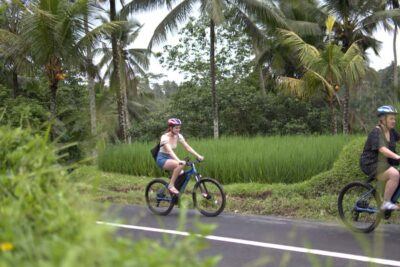
The ride heads through Sok Wayah, where the route narrows into paths beside rice fields and cottages. This is the part that gives the tour its strongest sense of place. You are not simply looking at a terrace from a distant platform. You are moving beside fields and village homes, with the guide explaining what you see and how Balinese life works.
There are plenty of opportunities to stop for photographs. You may find the best pictures come from the pauses rather than from trying to shoot while riding. Keep your camera secure, since the paths are not always smooth or wide.
This section is scenic, but it can also be the most demanding. Some riders have found the narrow lanes hairy at first, especially while learning the bike. If you are a nervous cyclist, tell the guide early. The tour has been extended when someone needed more time, and the guides are used to adjusting the pace.
You should also expect sections on public roads. These can include cars and motorbikes, not just quiet lanes. Two guides may supervise road sections, which helps, but you still need to pay attention and ride in control. Confident cyclists will find this manageable. Inexperienced riders may prefer a private booking or should ask about the pace before setting out.
Tegalalang Village and the rice terraces
The stop at Tegalalang Village gives you a wider look at Bali’s famous rice terraces. It is a natural point for photographs and a chance to pause after the first part of the ride.
Tegalalang is often associated with postcard views, but the value here is the route that leads to it. You have already passed through smaller paths and local areas, so the terrace stop feels connected to the countryside rather than like an isolated photo call.
Your guide explains the scenes around you and shares details about Balinese life. The exact amount of commentary depends on the guide and group, but the strongest part of this experience is the combination of riding and conversation. Guides such as Ketut and Wayan have been praised for explaining culture in clear, friendly terms.
Do not expect a long guided visit at a formal attraction. Admission is not charged for the listed stops, and the emphasis is on seeing the area by bike, taking photographs, and continuing through the villages.
Same saddle, a different route:
- Porto: City Highlights 3-Hour Guided Electric Bike Tour
★ 4.8 · 3,092 reviews - Red Rock Canyon eBike Half-Day Tour
★ 5.0 · 1,870 reviews - Hidden Kyoto E-Biking tour
★ 5.0 · 1,843 reviews - Rome EBike Tour: Appian Way, Catacombs & Roman Aqueducts
★ 5.0 · 1,766 reviews
The traditional Balinese home visit
The stop at a traditional house is the cultural heart of the outing. Here, the guide explains how a Balinese family compound works and how relatives support one another. One guide described the family as functioning much like a village, with shared responsibilities and daily cooperation.
That detail gives the stop real value. Rice terraces are beautiful, but they do not explain much about the people who live among them. A family home visit helps connect the fields, houses, ceremonies, and community life you see during the ride.
The visit also gives you a break from cycling. Fresh fruit, water, or a snack may be provided, and it is a good moment to ask questions. Guides have shared information about family life, village customs, and local routines in a way that feels more direct than a standard sightseeing talk.
Keep your expectations respectful and modest. This is a short visit, not a full cultural workshop. You are seeing part of a living home and community, so listen carefully and follow your guide’s instructions about where to stand and what to photograph.
Lunch, snacks, and the end of the ride
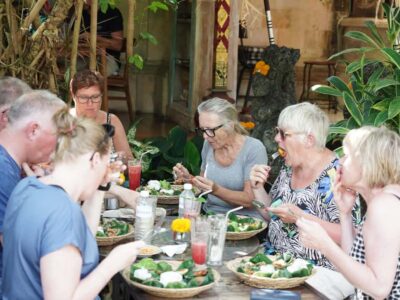
A local meal is included at the end of the tour, served on the terrace of the company’s shop. The included food adds useful value to the $34 price, especially since bottled water and snacks are also supplied.
The meal has received particularly warm attention, with one rider calling the noodles the best they had eaten. The exact menu is not specified, so you should not book expecting a particular dish. Think of it as a simple local meal after an active morning or afternoon.
Some outings have included a coffee tasting stop. This can be a pleasant rest, but it may feel less authentic than the family-home visit, especially if you prefer more time in the fields. The coffee stop is not the main reason to choose this tour, and the itinerary centers on the cycling, village paths, terraces, home visit, and meal.
After lunch, the vehicle returns you to your Ubud accommodation if you began with hotel pickup. The listed meeting-point end is Puri Bebengan, so confirm your transport plan when booking, particularly if you arrange your own way to the shop.
What the $34 price really includes
At $34, this is a good-value half-day outing if you use the included services. You receive the e-bike, riding gear, guide, bottled water, snacks, local food, and round-trip hotel transfers within Ubud. The air-conditioned vehicle is useful in Bali’s heat and saves you from arranging separate transport.
The price is less compelling if you are staying outside Ubud and must add a transfer, or if you mainly want uninterrupted off-road cycling. A portion of the route uses roads, and some riders found there were more traffic sections than expected.
The cultural content improves the value. You are paying for more than a bike rental. The guide manages the route, watches the road sections, explains village life, helps with photographs, and adjusts to the group’s skill level.
Free cancellation is available until 24 hours before the start time. Changes or cancellations inside that window are not refunded. The tour also depends on good weather. If poor weather forces cancellation, you are offered another date or a full refund.
Who will enjoy this Ubud ride most
I would recommend this tour to you if you want to see the countryside without committing to a hard full-day cycling trip. It suits couples, families with older children, solo riders, and small groups who like a mix of scenery, activity, and culture.
It is also a good choice for people who want a guide rather than a self-guided rental. The road supervision and help with the electric bikes make the outing more approachable, especially for riders who are fit but not eager to navigate Ubud alone.
You should think twice if you dislike traffic, have poor balance, or rarely ride a bicycle. The electric motor reduces the strain, but it does not remove the need to steer, brake, pedal, and manage narrow paths. Riders who expect only smooth trails may be disappointed.
Morning and afternoon departures give you flexibility. A morning ride leaves the rest of the day open, while an afternoon departure can work around a slow start in Ubud. Weather can change quickly, so ask about rain protection. Guides have carried raincoats for riders, but conditions may still affect the route and comfort.
Practical tips for a smoother ride
- Wear comfortable clothing that allows easy movement.
- Bring a phone or camera, but keep it secure on uneven paths.
- Tell the guide if you are nervous on bicycles before the ride begins.
- Use the practice time at the shop to understand the assistance controls.
- Expect both quiet rice paths and sections with cars and motorbikes.
- Confirm pickup details if your hotel is outside central Ubud.
- Leave room in your schedule, since the ride may run longer if the group needs a slower pace.
- Take the weather seriously. The tour requires suitable conditions, and rain can affect the route.
Should you book the Ubud e-bike tour?
Book it if your ideal Ubud outing combines rice fields, village roads, a traditional home, and a local meal in about three hours. The strongest guides make this feel personal, and the electric bikes let you cover far more ground than walking without turning the experience into a rushed vehicle tour.
Skip it if you want a completely quiet trail ride or if you are not comfortable on a bicycle. The road sections and narrow rice paths are real parts of the experience. For most reasonably fit riders, though, the balance is appealing: enough effort to feel involved, enough electric help to enjoy the views, and enough cultural contact to make the ride about more than scenery.
FAQ
How long does the Ubud electric bike tour last?
The tour lasts approximately three hours, though it may take longer if the group needs extra time on the narrow paths or roads.
What is included in the $34 price?
The price includes the electric bike and gear, bottled water, snacks, a local guide, lunch, and hotel pickup and drop-off within Ubud.
Is hotel pickup available outside Ubud?
Pickup and drop-off outside Ubud are not included, but the operator says an additional transfer can be arranged if you ask.
Do I need cycling experience?
You need moderate physical fitness and enough riding confidence to manage narrow paths and some roads with cars and motorbikes. Electric assistance helps with hills but does not remove the need to pedal and control the bike.
Where does the tour start?
The meeting point is Puri Bebengan, F7X7+H6H, Jalan Kajeng, Ubud. Guests using the included Ubud pickup are taken there before the ride.
What happens if the weather is poor?
The experience requires good weather. If it is canceled because of poor conditions, you can choose another date or receive a full refund. Free cancellation is also available up to 24 hours before the start time.
New e-bike tours around the world
- Franschhoek: Private E-bike Ride & Wine Experience★ 5.0 · 6 reviews
- Franschhoek: E-Bike & Wine Tour (Shared Tour)★ 5.0 · 10 reviews
- Franschhoek: Explore The Valley Of Dreams With E-Bikes★ 5.0 · 7 reviews
- Frankfurt: Unique E-Bikes Tours★ 4.8 · 22 reviews
- Forte Dei Marmi: E Bike Tour and hidden gems with a local★ 4.7 · 3 reviews
- Formentera: discover our fast ferry + electric bike package.★ 4.4 · 51 reviews
- Private E-Bike Tour: Piazzale Michelangelo & Florence hills★ 5.0 · 5 reviews
- eBike Guided Tour of Fort Worth★ 5.0 · 4 reviews
Ubud E-Bike Tours, side by side.
Rice Terraces & Villages Half-Day Fat Tire E-Bike Tour
Read our review →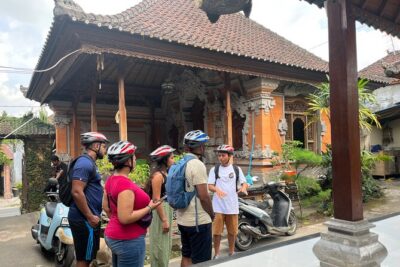

E-Bike: Ubud Rice Terraces & Traditional Villages Cycling
Read our review →This ride also appears in