Review · ROME
Rome EBike Tour: Appian Way, Catacombs & Roman Aqueducts
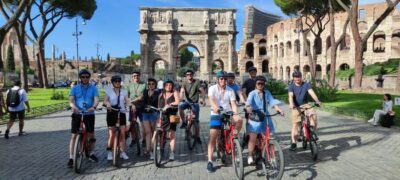
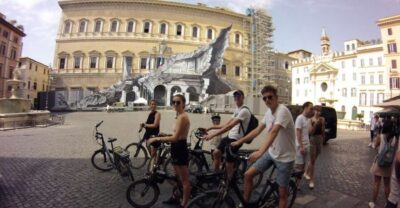
The best part of this Rome tour is the change of pace. You leave the crowded center, pass through ancient gates, and soon find yourself riding beside old stone roads, Roman ruins, open fields, and towering aqueducts. An electric-assist Cannondale bike makes the 17-mile route manageable, but this is still a real ride, not a sightseeing trip from a saddle.
I like the chance to see several far-flung Roman sites in one outing, especially the Appian Way and the Aqueducts Park. I also like the small groups, capped at 10 people, and guides such as Cas, Carmen, Fabio, and Nami, who are praised for clear directions, historical detail, and careful street crossings. The main drawback is the rough surface. Rocky tracks, dirt paths, and some city riding require confidence on a bicycle.
Key points at a glance
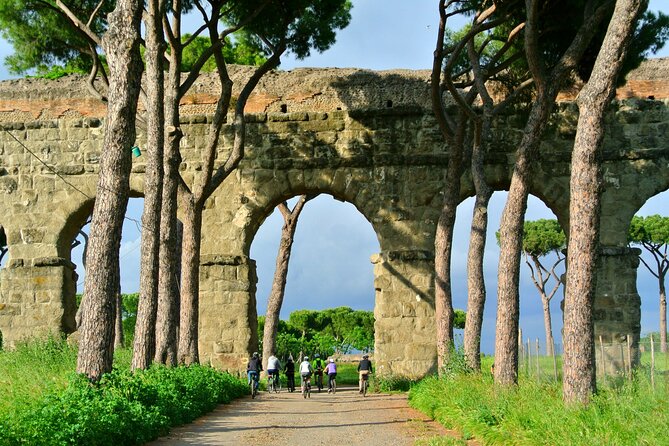
- The 17-mile route covers ancient roads, catacombs, villas, baths, and aqueducts without demanding constant hard pedaling.
- The 6-hour option includes a 45-minute guided catacomb visit, while the shorter tour only pauses near the underground burial site.
- About 60 percent of the ride is off-road, including uneven stone and dusty paths through Roman parks.
- City streets make up about 40 percent of the route, so you need to be comfortable riding in traffic with a guide.
- Small groups of up to 10 riders allow the guide to watch the group and give individual help.
- The $102.79 price is fair for the longer outing, especially with the bike, helmet, water, guide, and catacomb admission included.
Why an e-bike changes your day in Rome

Rome’s ancient sites are spread across a wide area. The Colosseum and Roman Forum are easy to reach on foot, but the Appian Way and the Aqueducts Park sit well beyond the usual center-city walking circuit. You can reach them by car or bus, but a bike gives you a better feel for the distance and the countryside around the ruins.
The pedal assistance is the key. You still pedal, steer, and handle the road, but the motor helps you keep pace with the group. This matters on a ride of roughly 27 kilometers, especially when the route includes uneven surfaces and several hours in the saddle.
The bikes are Cannondales with anti-puncture tires and comfortable saddles. A helmet is required and supplied, along with a handlebar bag and a biodegradable bottle of water. The equipment has a weight limit of 300 pounds, or 136 kilograms.
You should not mistake electric assistance for a motorized tour. You need a moderate level of fitness and enough bike control to handle rough stone and dirt. The e-bike helps with distance and effort, but it cannot smooth out a rocky track or steer for you.
More Historic E-Bike Tours in Rome
- Rome: Appian Way, Catacombs, & Roman Aqueducts E-bike Tour
★ 4.9 · 1,421 reviews - Rome: Appian Way & Roman Aqueducts Guided E-Bike Tour
★ 4.9 · 162 reviews - Rome: Appian Way, Catacombs & Roman Aqueducts Top EBike Tour
★ 4.9 · 101 reviews
From Via Labicana to Porta San Sebastiano
The tour starts at Via Labicana 49, a central Rome location near public transportation. After the bikes and helmets are fitted, the group heads out through the city. The exact amount of time spent in central Rome varies, but about 40 percent of the overall route uses carefully chosen city streets.
This urban section is practical rather than scenic. It connects the shop with the ancient parks, and some traffic is unavoidable. The guide takes the lead, gives directions, and waits for the group at crossings. That support matters, particularly if you have not ridden in Rome before.
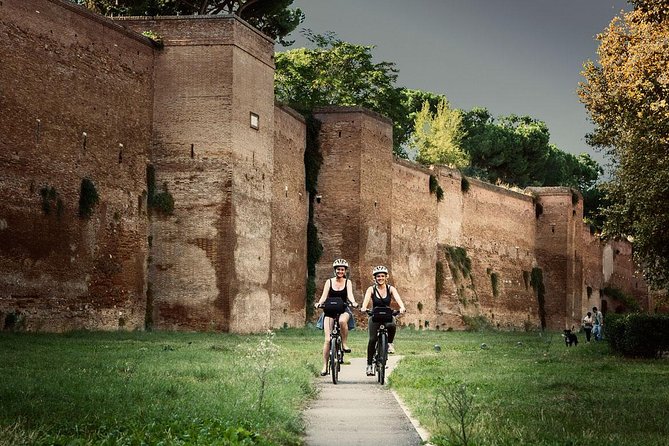
Your first major stop is Porta San Sebastiano, one of the large gates in Rome’s third-century defensive walls. You have about 10 minutes to look at the gate and get a sense of the transition from modern city to ancient road.
This is also a useful point to settle into the bike. If you are nervous about city riding, pay attention to the guide’s hand signals and positioning. The route becomes quieter once you reach the protected archaeological areas, but the opening streets should not be treated casually.
Riding the Appian Way, Rome’s ancient highway
The Via Appia Antica was built in 312 BC to connect Rome with southern Italy. In its earliest form, the road reached Brindisi, about 538 kilometers away. Romans called it the Regina Viarum, or Queen of Roads, a fitting name for a route that carried soldiers, merchants, officials, and messages across the Republic and Empire.
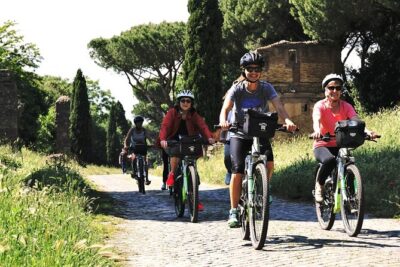
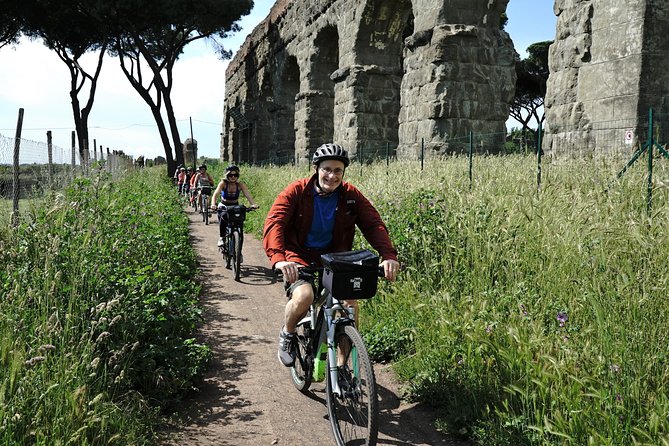
The bike puts you close to the surface of the road. You see the worn stones, grassy edges, old walls, and scattered ruins at a slow enough pace to notice them. A vehicle can move you along the route, but it cannot give you the same sense of the road under your wheels.
The catch is that the old road is not a smooth cycle path. Some sections are rough, with loose stone and uneven paving. One rider described the surface as seriously rough in some spots, while another advised less confident cyclists to walk parts of the ancient road.
That advice is worth taking seriously. You do not need to be an athlete, but you should be comfortable balancing over irregular ground and braking carefully. The ride is generally manageable with the e-bike, yet it can feel taxing if you have not been on a bicycle for a long time.
Catacombs of San Callisto or San Sebastiano
The catacombs are the most important choice between the tour lengths. On the 6-hour version, you get a guided 45-minute visit inside the underground burial complex. The regular route uses the Catacombs of San Callisto, while Wednesday departures visit San Sebastiano instead.
San Callisto dates to the second century and became the burial place of roughly half a million people. Underground passages and burial chambers give you a direct look at Roman funerary customs and early Christian burial traditions. The setting is quiet, narrow, and somewhat eerie, so it feels very different from riding through open fields and sunlit ruins.
Photography is not allowed inside the catacombs. Leave your camera ready for the surface sights and listen closely during the underground visit. The guide leading the bike ride is not necessarily the person conducting the catacomb tour, since the catacombs have their own guided visit.
The 4-hour option includes only a short pause connected with the catacombs rather than the full interior visit. If going underground is one of your main reasons for booking, choose the 6-hour tour and check the day carefully. On Wednesdays, the route changes and can take about 30 minutes longer. On Easter Sunday, April 5, 2026, the catacombs are closed and the 6-hour tour does not operate.
More Appian Way rides around Rome:
- Rome: Appian Way & Aqueducts E-Bike Tour (Catacombs & Food)
★ 4.9 · 1,498 reviews - Appian Way Aqueducts Bike Tour (Catacombs & Lunch Option)
★ 5.0 · 975 reviews - Appian Way, Catacombs and Aqueducts Park Tour with Top E-Bike
★ 5.0 · 735 reviews - Rome: Appian Way E-Bike Tour Catacombs, Aqueducts & Picnic
★ 4.6 · 727 reviews
Circus of Maxentius and the tomb of Cecilia Metella
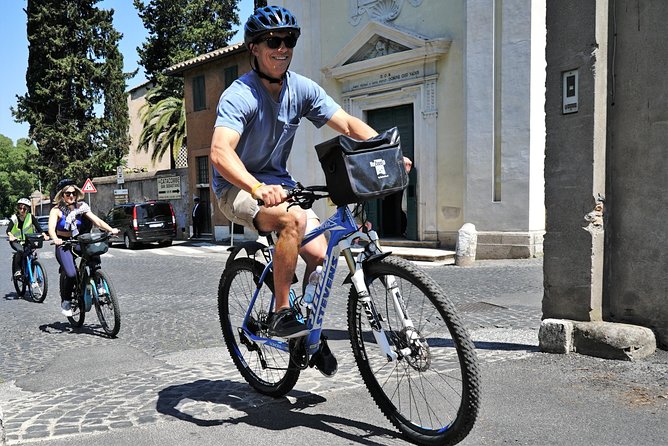
The ride continues to the Circus of Maxentius, part of an imperial villa complex from the beginning of the fourth century AD. This was a private chariot-racing track, not Rome’s famous Circus Maximus. The remaining structures help you picture how grand private imperial estates could be.
The stop is brief, about five minutes. That is enough for an explanation and a look, but not a full archaeological visit. Think of this tour as a moving history lesson with short stops, not a sequence of long museum sessions.
Nearby, you pass the Mausoleum of Cecilia Metella and the Castrum Caetani. The mausoleum was built for a young noblewoman in the first century AD and is the largest tomb on the Ancient Appian Way. Its size makes the social order of ancient Rome plain: even death could come with a monument built to dominate the road.
Again, the stop is short. You get context from the guide and time to take in the site, but you should not expect to explore every structure at length. The reward is the way the sites connect. You are seeing the road, villas, tombs, and defensive structures in the setting where they were meant to be seen.
The longer route to Villa dei Quintili
The 6-hour tour adds Villa dei Quintili and Santa Maria Nova. This sprawling second-century villa was so impressive that it reportedly aroused the envy of Emperor Commodus. Its scale gives you another look at Roman wealth outside the central city.
This stop is not included on the 4-hour route, so the longer tour is not simply a slower version of the short one. It reaches farther and gives you more time for the archaeological park. If you want a full day outside the center and prefer several major ruins over a quick outing, the 6-hour option earns its extra time.
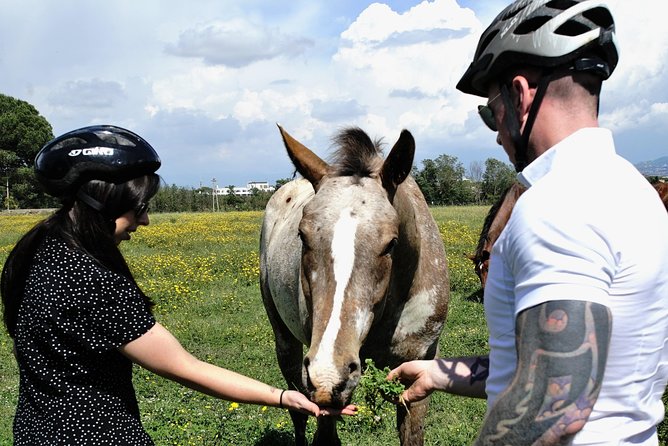
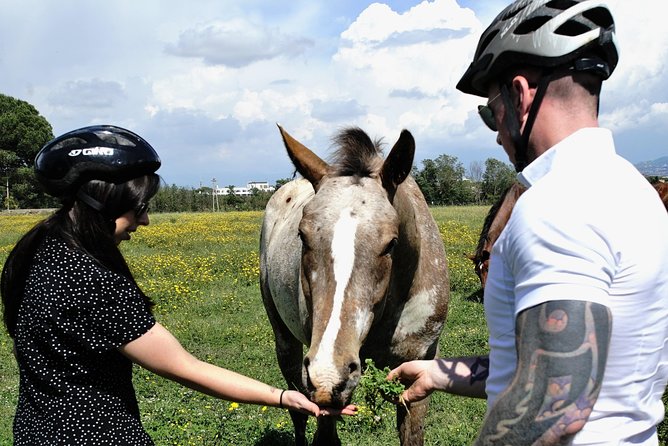
The longer tour also allows a more complete experience of the Appian Way area. You ride through open countryside with rustic animal farms and broad pastures, while ancient remains appear beside modern rural life. That mix is part of the appeal. Rome does not end at the famous monuments.
Aqueducts Park is the visual high point
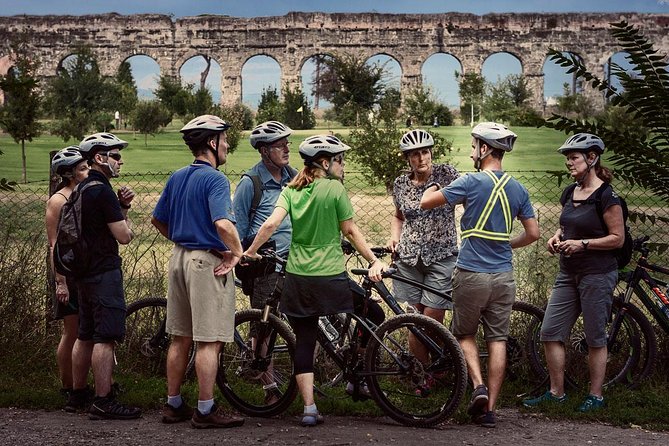
The Aqueducts Park is likely to be the most memorable open-air stop. Tall arches cross a wide park, showing how Rome carried water from distant sources into the city. The structures are easy to understand at a glance, but the scale becomes clearer when you ride beside them.
You get about 30 minutes here. The paths can be narrow, dusty, and uneven, with tall grass and open fields nearby. This is one place where the e-bike makes the route enjoyable, but the tires still travel over dirt and stone.
I would save room on your phone for photographs here, even though cameras are not permitted in the catacombs. The aqueducts photograph well, but the experience is not only visual. You can see why water engineering helped Rome grow into a major city, then look across the park and see how much open land remains around these monumental structures.
The aqueduct stop can feel long if you prefer a rapid checklist of sights. That extra time makes sense if you enjoy the setting and want to hear the guide explain how the structures worked. It is less useful for someone who wants extended time at every ruin along the Appian Way.
Caracalla Baths and the ride back
The 6-hour version includes a view over the Baths of Caracalla, one of ancient Rome’s largest bathing complexes. The stop is brief, around five minutes, but the ruins are an impressive final reminder of Rome’s public infrastructure.
The baths were not simply places to wash. Large Roman bath complexes served as social, exercise, and leisure centers, with elaborate buildings and engineering systems. You will not tour the interior on this bike excursion, so plan a separate visit if the baths are high on your list.
After the parks and ruins, the group rides back to central Rome. The return uses city streets again, so the guide’s management remains important. The activity ends where it began at Via Labicana 49, with no hotel pickup or drop-off.
What the $102.79 price really covers
At $102.79 per person, the tour is not cheap, but it includes several useful elements: the Cannondale e-bike, helmet, guide, water, handlebar bag, and the guided catacomb visit on the 6-hour tour. You also get transport between sites without arranging taxis or public buses.
The value is strongest if you would otherwise struggle to connect the Appian Way, catacombs, Villa dei Quintili, aqueducts, and Caracalla Baths in one day. A self-guided version might cost less, but you would need to find the route, rent a bike, manage city traffic, and arrange catacomb access separately.
The price is less attractive if you want a relaxed sightseeing outing with very little physical effort. You are paying for a long, active route. Food and drinks are not included, although the route has some places where you can buy them during a suitable break. Bring money and do not assume lunch is part of the booking, even though some outings may include a stop at a pizza restaurant.
Who should book this ride?
I would choose this tour if you have already seen the central monuments or want a different side of Rome. It is especially good for active adults, families with older teenagers, and people who like history better when they can see it in the open air.
It can also work well for a mixed-age group. One group included riders from ages 42 to 70, and a 70-year-old who cycled regularly adapted well to the e-bike. The motor helps people with different speeds ride together, but everyone still needs basic cycling ability.
I would hesitate if you are an uncertain cyclist, have trouble with uneven surfaces, or dislike riding in traffic. The route is intermediate, and it becomes difficult with a child seat or child extension attached to the bike. A child who cannot ride independently may not be a good fit for this particular outing.
Groups are limited to 10 people, which is small enough for personal attention without making the tour private. The minimum is four participants, so the operator can cancel after confirmation if fewer people are booked. In that case, you are offered another option or a full refund.
Weather, clothing, and practical preparation
Wear clothes that can handle dust. The parks include dirt and rocky tracks, and one useful tip is to avoid anything you would hate to dirty. Closed shoes with a secure fit make more sense than sandals.
Bring sun protection and a little cash for food or drinks. Water is supplied, but lunch is not. The ride can last four to six hours, and Wednesday departures may run about 30 minutes longer because of the altered route.
The company allows free cancellation up to 24 hours before the start time. Changes or cancellations inside that window are not refunded, and the cut-off uses Rome local time. If bad weather is a concern, contact the operator rather than simply missing the start. A rainy-day booking can be rescheduled or canceled with a refund when the company confirms that option.
Should you book the Appian Way e-bike tour?
Book it if you want Roman history with fresh air, movement, and space between the monuments. The combination of the ancient road, catacombs, and aqueducts gives you a side of Rome that walking tours in the center cannot provide.
Choose the 6-hour version if the catacombs matter to you, since the shorter tour does not include the full underground visit. Choose the 4-hour option if you mainly want the Appian Way and aqueducts and prefer to keep the outing shorter.
My main warning is simple: this is not a smooth bike path. You will ride on city streets, rough stone, and dusty park tracks. If that sounds like part of the fun, the tour offers excellent value and a memorable way to connect Rome’s ancient roads with the countryside that still surrounds them.
FAQ
How long is the Rome e-bike tour?
The tour lasts about four to six hours. On Wednesdays, the altered route may make the experience about 30 minutes longer, and the same extension may apply from January 14 through February 11, 2026.
How far do you ride?
You cover about 17 miles, or 27 kilometers. Roughly 60 percent of the route is off-road, while about 40 percent uses city streets.
Are the catacombs included?
A guided visit inside the catacombs is included only with the 6-hour tour. The 4-hour option includes a short pause connected with the catacombs, but not the full guided underground visit. On Wednesdays, the longer tour visits San Sebastiano instead of San Callisto.
Is the tour suitable for beginners?
You need moderate physical fitness and basic cycling confidence. The route includes traffic, rough dirt, and stone roads, so it is not ideal if you are uncomfortable riding on uneven ground.
What equipment is provided?
The tour includes a Cannondale electric-assist bike, helmet, handlebar bag, and water in a biodegradable bottle. Helmets are mandatory.
Are food and drinks included?
No. Food and drinks are not included, but the route has some opportunities to buy them during an appropriate break.
Where does the tour start and finish?
You meet at Via Labicana 49 in Rome. The tour ends back at the same meeting point, and hotel pickup and drop-off are not included.
New e-bike tours around Rome
- Rome E-Bike Tour: Roman Castles, Villages and Lake Views★ 5.0 · 2 reviews
- E-bike tour in the center of Rome★ 3.8 · 9 reviews
- Rome E-Bike Tour: Ultimate Street Food and Market Feast★ 4.9 · 50 reviews
- Best of Rome Electric Bike Tour★ 4.6 · 3 reviews
- Rome: E-Bike Tour on the Appian Way to Castel Gandolfo and the Lake★ 5.0 · 3 reviews
- Rome: Private Appian Way & Albano Lake Full-Day E-Bike Tour★ 5.0 · 2 reviews
- Rome: Appian Way, Aqueducts & Catacombs (Small Group or Private)★ 5.0 · 103 reviews
- Rome E-Bike Small Group Tour of the Appian Way with Private Option★ 5.0 · 130 reviews
Rome E-Bike Tours, side by side.
Top Highlights & Hidden Gems Tour by Cannondale E-Bike
Read our review →
Appian Way & Aqueducts E-Bike Tour (Catacombs & Food)
Read our review →
Rome City Small Group Bike Tour with quality Cannondale EBike
Read our review →
Rome by Night – Ebike Small Group Tour – Food and Wine (Option)
Read our review →