
Review · UBUD
Ubud: E-Bike Tour with Rice Terrace and Village Visit
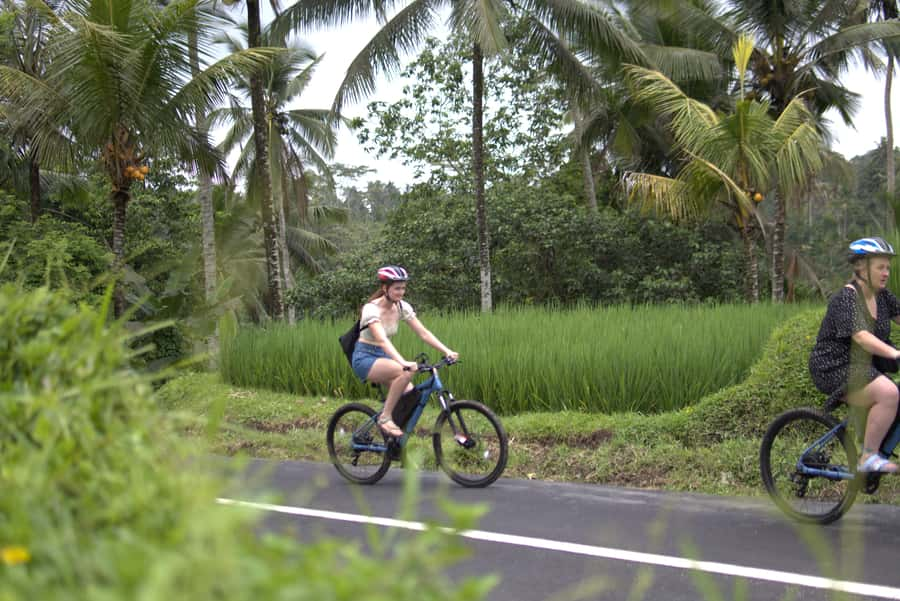
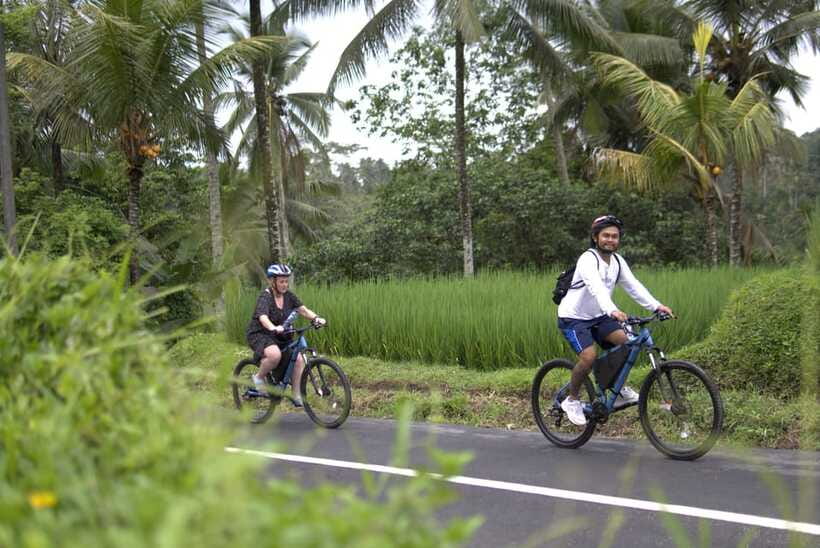
The best part of this small-group e-bike tour is the route away from central Ubud. You ride through working rice fields, quiet village lanes, and traditional Balinese compounds, with stops that show how people live rather than just where to take a photo. Guides such as Agung and Raika add useful local detail, from family homes to rice farming and temple customs.
I like the way the electric bikes make the countryside accessible without turning the outing into a fitness test. I also like the meal overlooking the rice terraces, especially when paired with a coffee and tea tasting or fresh fruit stop. The tradeoff is that you still ride on public roads, including some busy stretches and narrow, twisty paths, so basic cycling confidence matters.
Key points at a glance
- Ride through working rice fields: See farming areas and, depending on the season, traditional harvesting in progress.
- Learn about the subak system: Your guide explains the irrigation system that supports Balinese rice cultivation.
- Visit real village homes: A traditional family compound gives you a closer look at local customs and daily life.
- Use an e-bike on mixed terrain: The motor helps on hills, bumps, and longer stretches without removing the fun of pedaling.
- Stop for food with a view: The included meal option takes place at a local restaurant near the Tegallalang rice terraces.
- Keep the group personal: Groups are limited to nine people, and English-language guiding is provided.
Why this Ubud bike ride feels different
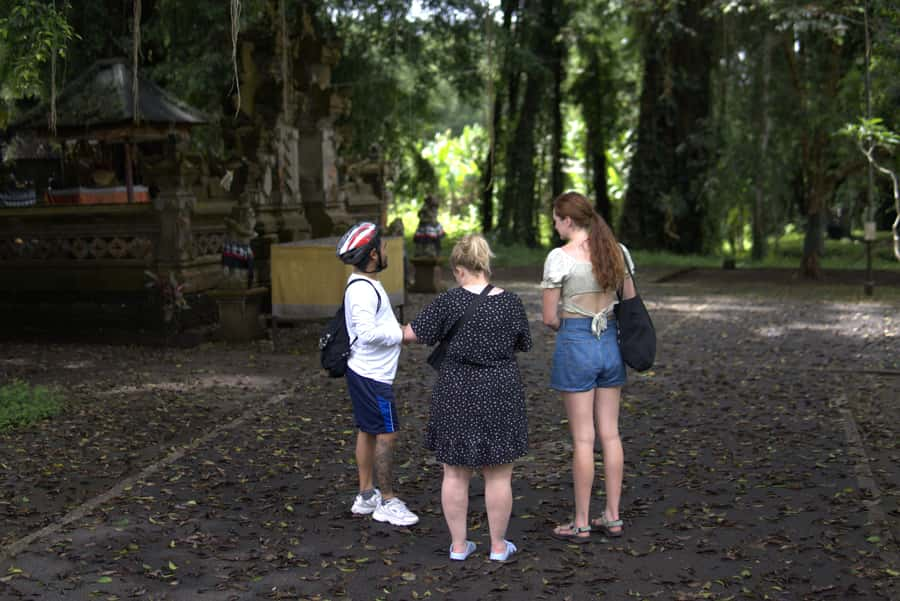
Many Ubud outings keep you in the town center or take you from one famous viewpoint to another by car. This experience uses the e-bike to connect several parts of rural Bali at a human pace. You have time to notice a family compound, a temple, a burial site, a rice field, and the narrow roads linking villages.
The route is not only about scenery. The guide explains why rice matters in Balinese culture and how the subak irrigation system organizes water for farming communities. That context gives the terraces more meaning. You are not simply looking at green steps cut into a hillside. You are seeing part of a shared agricultural and religious system.
The tour is also family-run, which helps explain its personal feel. Guides are described as warm, quick to answer questions, and willing to adjust the pace. Agung is particularly good at explaining how homes and family traditions have changed over his lifetime, while Raika is praised for his friendly, attentive style.
More countryside e-bike rides around the world:
- Amsterdam: Windmill, Cheese, and Countryside E-Bike Tour
★ 4.5 · 1,308 reviews - Malaga: Castle Hill and Fisherman Village E-Bike Tour
★ 4.9 · 617 reviews - Ubud: Rice Terraces & Villages Half-Day Fat Tire E-Bike Tour
★ 4.9 · 602 reviews
Getting started north of Ubud
The outing begins at a start point north of Ubud, or with hotel pickup if you choose the transfer option. Exact meeting details depend on the option you book, so contact the provider if the location is unclear. Hotel pickup and drop-off apply to the transfer option, not automatically to every booking.
Before riding, you receive a safety briefing and an introduction to the e-bike. Helmets are provided. This opening matters because the ride mixes quiet back roads with public roads, and you need to understand the bike’s controls before joining traffic.
You should arrive in comfortable clothes and shoes suitable for pedaling. Sunscreen is useful, and you should carry a camera and extra water even though water is provided. Smoking is not allowed during the activity.
The standard outing lasts three hours. Some departures have lasted longer because the guide added stops or extended the route, but you should treat that as a pleasant possibility rather than part of the guaranteed schedule.
E-bikes make the hills manageable
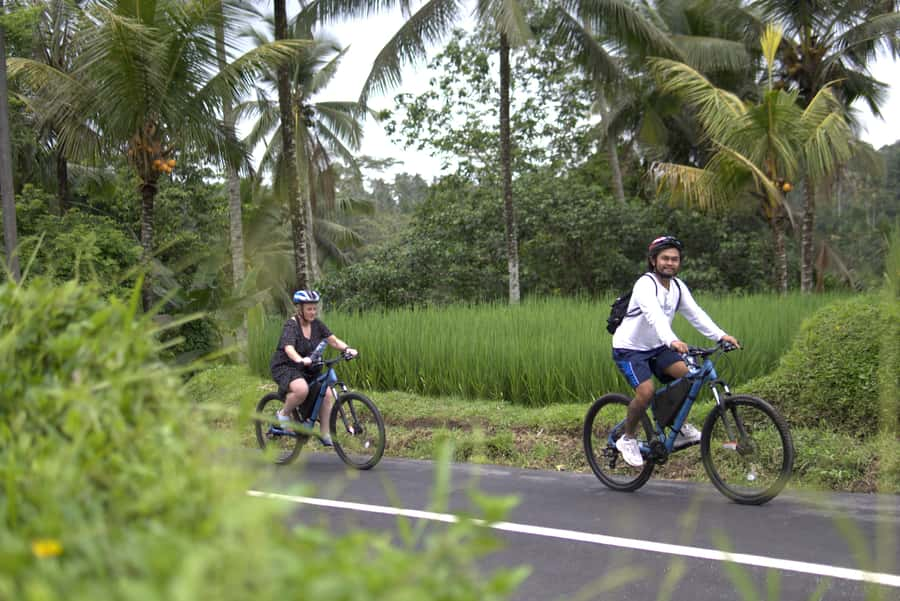
The bikes are a strong reason to choose this tour. The route is described as mostly easy and fairly flat, but Bali’s roads still include hills, bumps, and uneven sections. The electric assist lets you reduce the effort when needed while still giving you the feel of cycling.
You do need to know how to ride a bicycle. This is not a motorized sightseeing trip where you sit back while someone else handles everything. You pedal, steer, and share the road. The guides help riders through busier areas, but you should feel comfortable balancing and controlling a bike before booking.
The e-bike is especially useful in hot weather. You can enjoy the countryside without arriving at every stop soaked in sweat, and you have more energy for listening, taking photos, and exploring the stops. People with back problems or anyone unable to ride a bike should choose another Ubud activity.
Village roads and everyday Balinese life
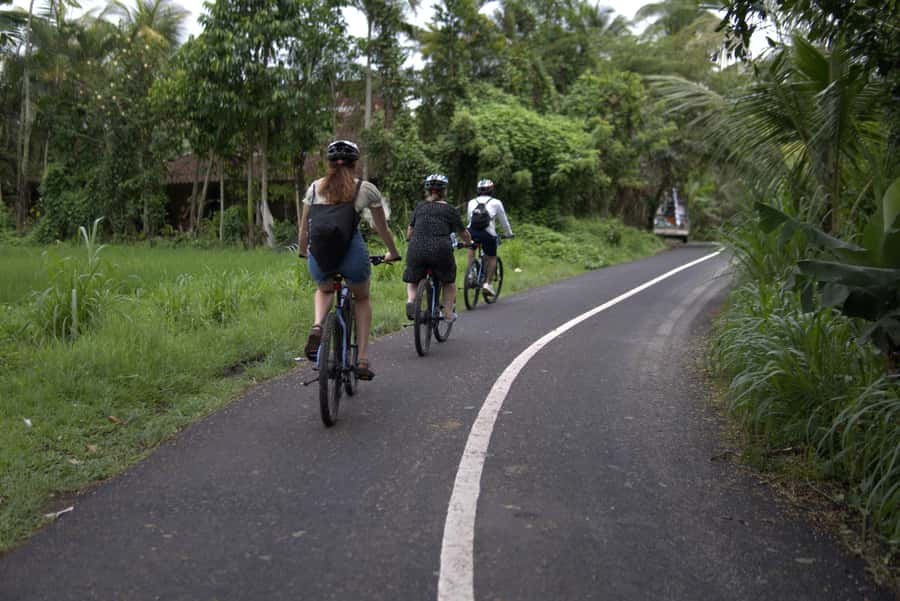
Once the group leaves the starting area, the ride moves through traditional villages and smaller roads. You may see residents carrying out ordinary tasks, local farming activity, and homes arranged in the traditional Balinese style.
The village portion is valuable because it puts the famous rice terraces into context. Rice does not exist as an isolated attraction. It sits beside homes, temples, paths, and family compounds, all connected by community customs.
The route includes a visit to a traditional Balinese family compound. This is one of the most interesting stops because it offers a look at the layout and purpose of a local home. Guides explain family life and heritage, and you can ask questions rather than simply walk past a building.
That visit also requires respectful behavior. You are entering a lived-in cultural space, not a museum display. Listen to your guide, follow instructions, and ask before taking close-up photographs of people or religious objects.
More e-bike tours around the world:
- 3-Hour Porto Highlights on a Electric Bike Guided Tour
★ 5.0 · 4,392 reviews - Lisbon: Hills, Alfama, and Mouraria Tour by Electric Bike
★ 4.8 · 3,438 reviews - Athens Scenic Electric Bike Tour with optional Acropolis visit
★ 5.0 · 3,350 reviews - Porto: City Highlights 3-Hour Guided Electric Bike Tour
★ 4.8 · 3,092 reviews
Cekingan and Tegallalang rice terraces
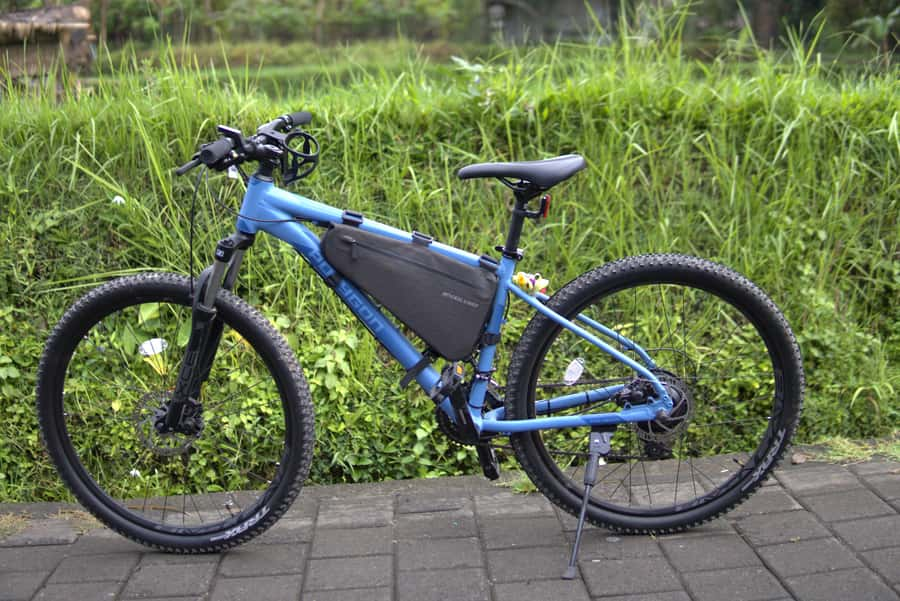
The rice terraces are the visual centerpiece. At Cekingan, you pause for broad views and photos, while the Tegallalang area provides the setting for the meal and more views across the cultivated slopes.
The scenery changes with the season and the stage of farming. You might see flooded plots, growing rice, or traditional harvesting. One ride included a view of rice being harvested by hand, which gives you a better sense of the work behind the postcard image.
Your guide explains the subak system as you ride. This irrigation network is an important part of Balinese farming and community life. The explanation helps you see why water management, ceremonies, and cooperation matter so much in the villages around Ubud.
There is a practical point to remember: rice paths are not always smooth cycling lanes. Some stretches can be narrow or bumpy, and the ride is not limited to the terraces. You still spend time on public roads, so the experience suits people who want a real countryside ride, not a fully controlled park circuit.
Temples, burial sites, and family traditions
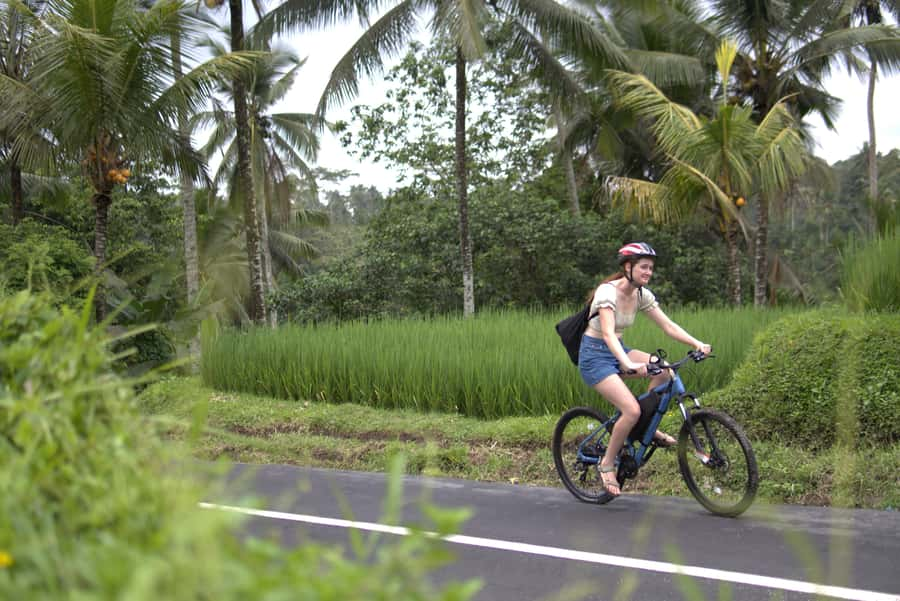
The exact stops can vary, but the experience may include a local temple and a burial site. These visits add cultural depth to the ride and show how village life connects farming, family, and religious practice.
The temple stop is not just a photo break. Your guide can explain customs, ceremonies, and the role of sacred places in local life. Wear clothing that is comfortable and respectful for a cultural visit.
A burial site can be a striking stop because it offers another view of Balinese traditions. It is also a place where sensitivity matters. Treat the area as a sacred space, keep your voice low, and follow the guide’s instructions about where to stand and what to photograph.
These stops are one reason I would choose this tour over a simple cycle through the rice fields. You gain a wider picture of the community instead of seeing only the most scenic angle.
Lunch above the rice terraces
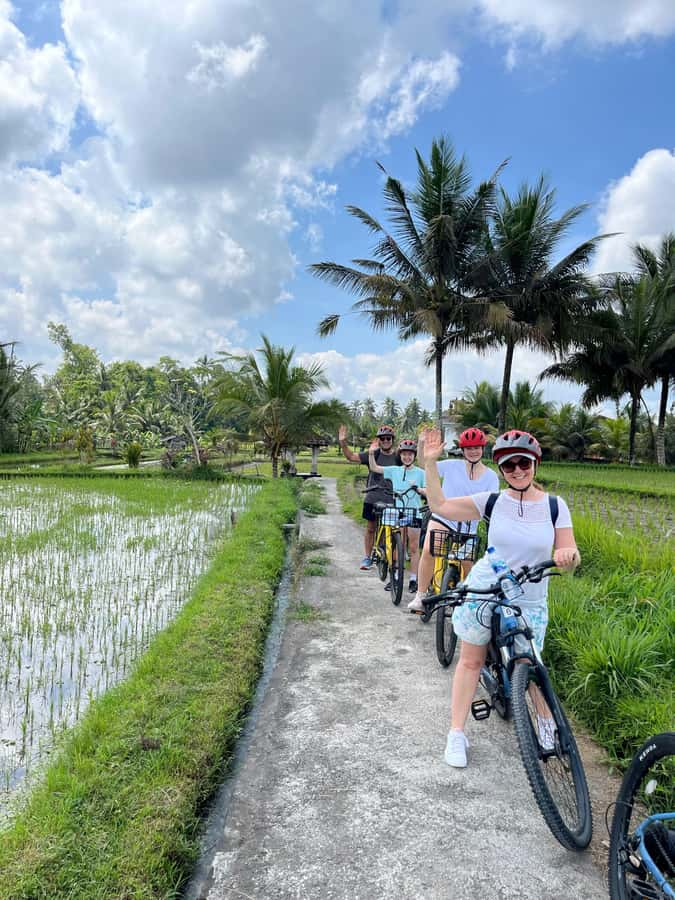
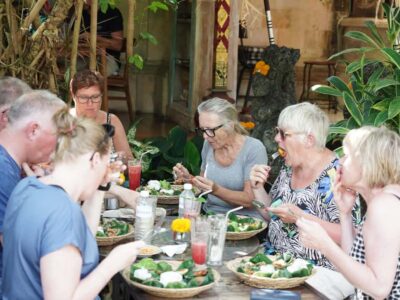
The meal option includes food at a local restaurant near the Tegallalang rice terraces. The setting is a major part of the appeal: you can eat while looking across the paddies rather than stopping at an anonymous roadside café.
Past meals have included tasty local food, iced tea, and, on one outing, fresh watermelon at the end. Exact dishes are not specified, so do not book this expecting a particular menu. If food is important to you, select the meal option when booking and ask the provider about current choices.
At $27 per person, the price is strong if your chosen package includes the meal, guide, bike, and helmet. Hotel transport costs and meal inclusion depend on the option you select, so compare the package details rather than assuming every booking includes everything.
The restaurant stop also gives you a break from the saddle. Three hours can pass quickly, but heat and road riding still take energy. A seated meal makes the outing feel like a half-day experience rather than a nonstop bike workout.
Coffee, tea, and optional extras
Several routes include, or can add, a coffee and tea tasting. This was one of the most praised parts of the experience, especially when a local host explained the drinks and preparation.
Some versions also offer activities such as swings and zip lines near the rice terraces for an additional charge. These are optional, not essential to the bike tour. I would treat them as add-ons only if you want a more activity-heavy day.
The coffee stop works well as a final cultural and food-related note. It gives you a chance to slow down, ask questions, and try local drinks after the ride. If you want the fullest version of the outing, check that the coffee plantation or tasting is available with your selected package.
How hard is the three-hour route?
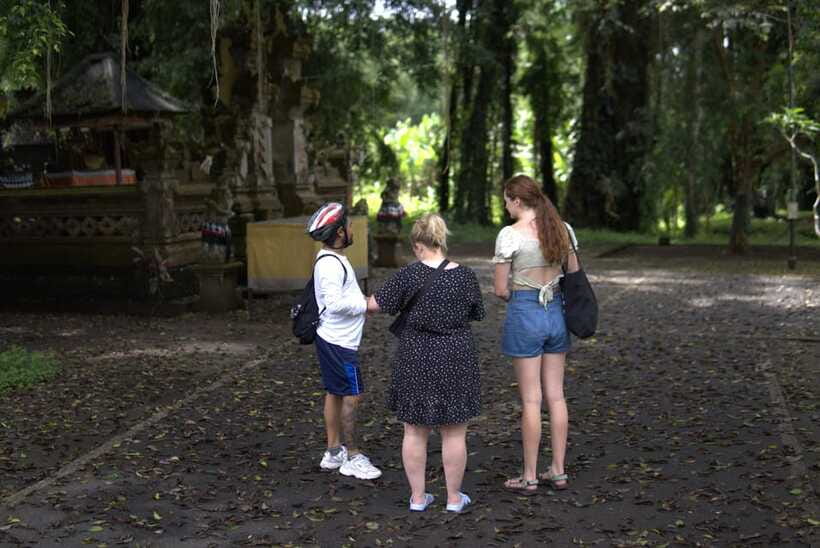
The ride is generally manageable, and the electric assistance helps on uphill sections. Still, you need basic bike skills and enough confidence for public roads, narrow paths, and occasional uneven ground.
The route has included busy main roads as well as quiet lanes and rice-field paths. Guides take care with road sections, but traffic conditions are part of the experience. If you have not ridden a bike for years and feel uneasy around vehicles, this may not be the right choice.
The small group helps. With no more than nine participants, the guide can keep an eye on the group and answer questions. A small group also makes stops at homes, temples, and fields less cumbersome than a large coach excursion.
Wear light, comfortable clothing and secure footwear. Bring sunscreen, a camera, and extra water. Water is supplied, but having more with you is sensible in Bali’s heat.
Who should book this experience?
I would recommend it to you if you want to see rural Ubud while still learning about Balinese culture. It fits couples, friends, and solo visitors who like active sightseeing but do not want a demanding full-day cycling trip.
It is also a good choice for anyone who has already seen Ubud’s main streets and wants a closer look at villages and farming areas. The combination of family compound, temple, rice fields, local food, and optional coffee tasting gives the tour more range than a simple scenic ride.
You should think twice if your priority is complete comfort or a private, traffic-free route. The ride uses public roads, and the surface can change. People with back problems and anyone unable to ride a bicycle should not book it.
The English-speaking guides are a major part of the experience. Agung is praised for detailed cultural explanations, and Raika is known for being attentive and engaging. The provider may assign a different guide, but the family-run approach appears central to the activity.
Price, options, and booking value
At $27 per person, this is good value for a three-hour guided ride, particularly when your package includes the meal. The bike, helmet, local guide, and cultural stops give you more than a basic equipment rental.
Check the selected option carefully. Hotel pickup and drop-off are included only with the transfer option, while the meal is included only with the meal option. Coffee tasting, swings, zip lines, and similar additions may cost extra.
The tour allows free cancellation up to 24 hours before the start time, and you can reserve now and pay later. Starting times vary, so check availability for your preferred day.
My verdict: a strong choice for active Ubud sightseeing
You should book this tour if you want an affordable, friendly way to connect Ubud’s villages, rice terraces, homes, temples, and food. The e-bike keeps the physical effort reasonable, while the guide adds the cultural detail that makes the route worthwhile.
Choose the transfer and meal options if you want the simplest package. Add the coffee experience if available and appealing to you. Skip it if you want a shorter, more direct ride.
I would not choose this for a completely quiet or traffic-free cycling route. For most people who can ride a bike and accept a few public-road stretches, though, the mix of scenery, local contact, food, and value makes this one of the better short activities north of Ubud.
FAQ
How long does the Ubud e-bike tour last?
The scheduled duration is three hours. Some outings have lasted longer because of added stops or route extensions, but the standard booking is for three hours.
What areas does the tour visit?
The route includes the Cekingan and Tegallalang rice terrace areas, traditional villages, working rice fields, and may include a family compound, temple, and burial site.
Is hotel pickup included?
Hotel pickup and drop-off are included only when you select the transfer option. Otherwise, you will use the stated meeting point, which depends on the booking option.
Is a meal included?
A meal at a local restaurant is included with the meal option. The restaurant is near the Tegallalang rice terrace and offers views over the paddies.
What language does the guide speak?
The live guide speaks English.
How many people are in the group?
The group is limited to nine participants.
Do I need cycling experience?
You need to know how to ride a bicycle. The ride is generally manageable with electric assistance, but it includes public roads, narrow paths, hills, and uneven sections.
Who should not take this tour?
The experience is not suitable for people with back problems or people who cannot ride a bike.
What should I bring?
Bring comfortable shoes, suitable cycling clothes, sunscreen, a camera, and extra water. Water is provided, but carrying more is recommended.
New e-bike tours around the world
- Franschhoek: E-Bike & Wine Tour (Shared Tour)★ 5.0 · 10 reviews
- Franschhoek: Explore The Valley Of Dreams With E-Bikes★ 5.0 · 7 reviews
- Franschhoek: Private E-bike Ride & Wine Experience★ 5.0 · 6 reviews
- Frankfurt: Unique E-Bikes Tours★ 4.8 · 22 reviews
- Forte Dei Marmi: E Bike Tour and hidden gems with a local★ 4.7 · 3 reviews
- Private E-Bike Tour: Piazzale Michelangelo & Florence hills★ 5.0 · 5 reviews
- eBike Guided Tour of Fort Worth★ 5.0 · 4 reviews
- Formentera: discover our fast ferry + electric bike package.★ 4.4 · 51 reviews
Ubud E-Bike Tours, side by side.
Rice Terraces & Villages Half-Day Fat Tire E-Bike Tour
Read our review →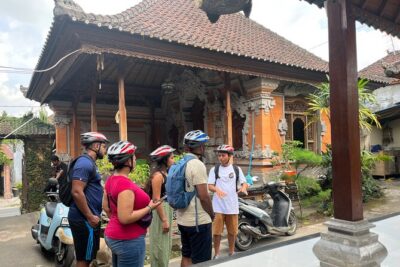
E-Bike: Ubud Rice Terraces & Traditional Villages Cycling
Read our review →This ride also appears in