Review · ROME
Rome: Appian Way, Catacombs & Roman Aqueducts Top EBike Tour
Rome’s best ancient sights are not all inside museums. This 27-kilometer e-bike route carries you from near the Colosseum to the Appian Way, through Roman countryside, past imperial ruins, and beneath the huge arches of the Aqueducts Park. It gives you a very different Rome: open, quiet, and full of old stones.
I like the mix of history and fresh air, and I like the careful route planning. Guides such as Claudia, Fabio, Zak, Areia, and Caterina have been praised for clear explanations and calm road handling. The catch is simple: this is an intermediate ride, with some city traffic and rough off-road stretches. The electric motor helps a lot, but it does not replace basic cycling confidence.
Key points at a glance
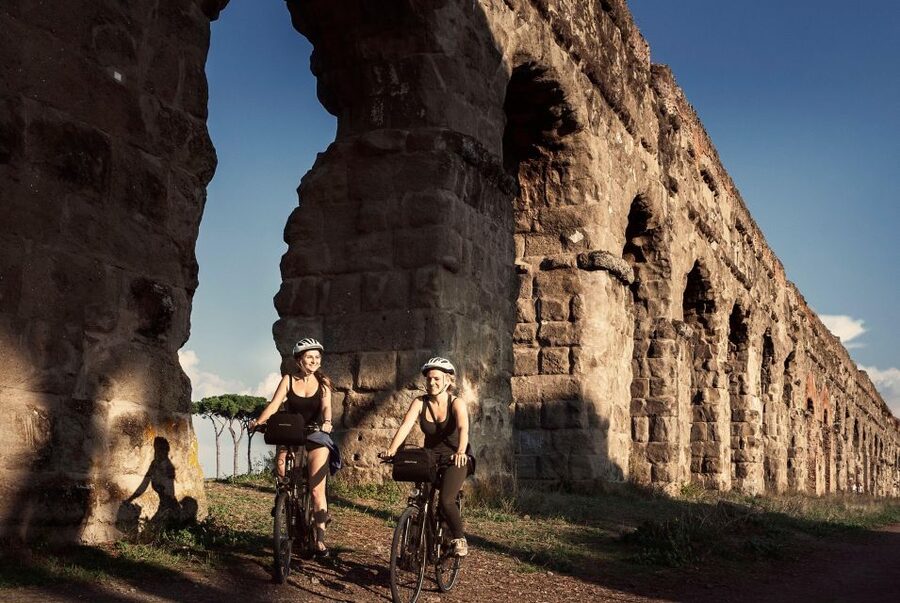
- A 27-kilometer route: About 60 percent runs away from traffic on park paths and rural tracks.
- The Appian Way: Ride along one of Rome’s oldest roads, lined with tombs, villas, and ancient remains.
- The six-hour option: Adds a 45-minute guided visit underground in the Catacombs of Rome.
- Strong safety focus: Guides lead groups of no more than 10 and help with difficult intersections.
- Quality bicycles: Cannondale e-mountain bikes come with anti-puncture tires, comfortable saddles, and electric assistance.
- A memorable finale: The Roman aqueducts and Caffarella Valley provide some of the tour’s best views.
Starting near the Colosseum on Via Labicana
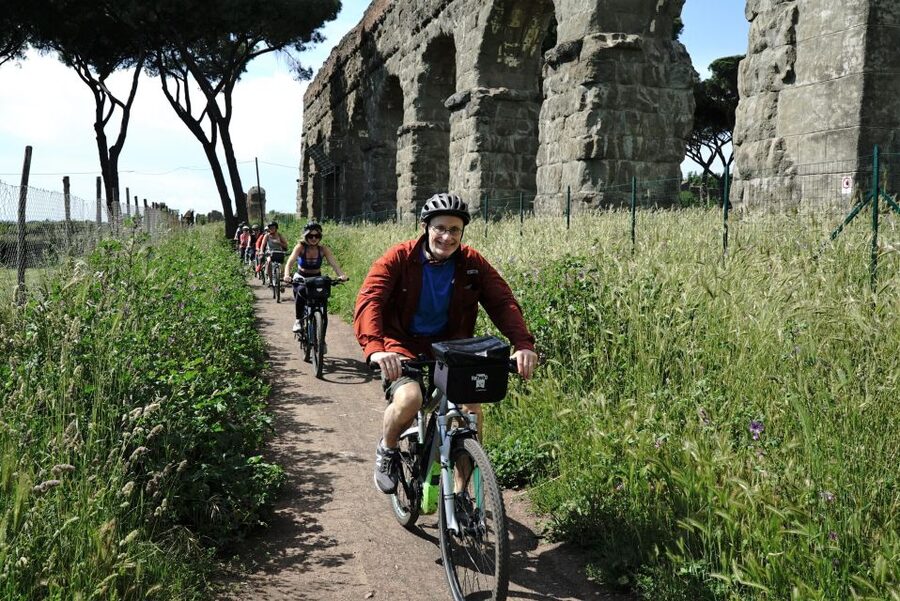
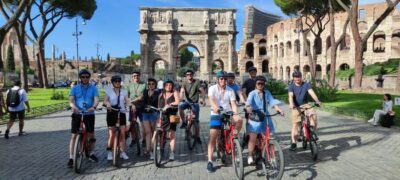
You meet at Via Labicana 49, about a five-minute walk from the Colosseum. That location is handy if you are staying in central Rome, and it makes the tour easy to pair with a morning or afternoon near the ancient center.
The staff fits you with a helmet and a Cannondale e-mountain bike. A bottle of water is included, but food is not, so eat beforehand and carry some spending money. The route has places where you can buy food or drinks, and one rider noted that the group stopped for pizza, but you should not treat lunch as a guaranteed part of the schedule.
Before you set off, take the time to understand the electric assistance. It makes hills and longer distances much easier, especially if you have not ridden for a while. Still, you need to steer, brake, balance, and handle uneven ground yourself.
The tour requires at least four participants and limits the group to 10. That is a useful size for a city cycling trip. You get the social feel of a group, while the guide can still keep an eye on each rider.
More Historic E-Bike Tours in Rome
- Rome EBike Tour: Appian Way, Catacombs & Roman Aqueducts
★ 5.0 · 1,766 reviews - Rome: Appian Way, Catacombs, & Roman Aqueducts E-bike Tour
★ 4.9 · 1,421 reviews - Rome: Appian Way & Roman Aqueducts Guided E-Bike Tour
★ 4.9 · 162 reviews
Leaving Rome through the Aurelian Walls
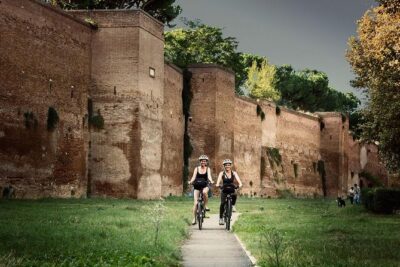
The first section connects the modern city with the ancient road system. You pass the Aurelian Walls and leave through St. Sebastian’s Gate, one of the old entrances through Rome’s defensive circuit.
This part is not pure sightseeing. Around 40 percent of the full route uses carefully chosen city streets, and some traffic is unavoidable as you move between the historic center, the Appian Way, and the aqueducts. The guide’s job matters here.
Fabio was singled out for bringing history to life while keeping the group together. Claudia was praised for handling busy streets with confidence, while Meghan and Areia were noted for patience and careful navigation. Names and assignments can change, but the tour clearly depends on guides who can do two jobs at once: explain Rome and manage a moving group on city roads.
If you are nervous about urban cycling, this section deserves honest attention. You will not spend the whole day on an empty cycle path. The route is planned to reduce traffic exposure, but it cannot eliminate it.
Riding the 2,300-year-old Appian Way
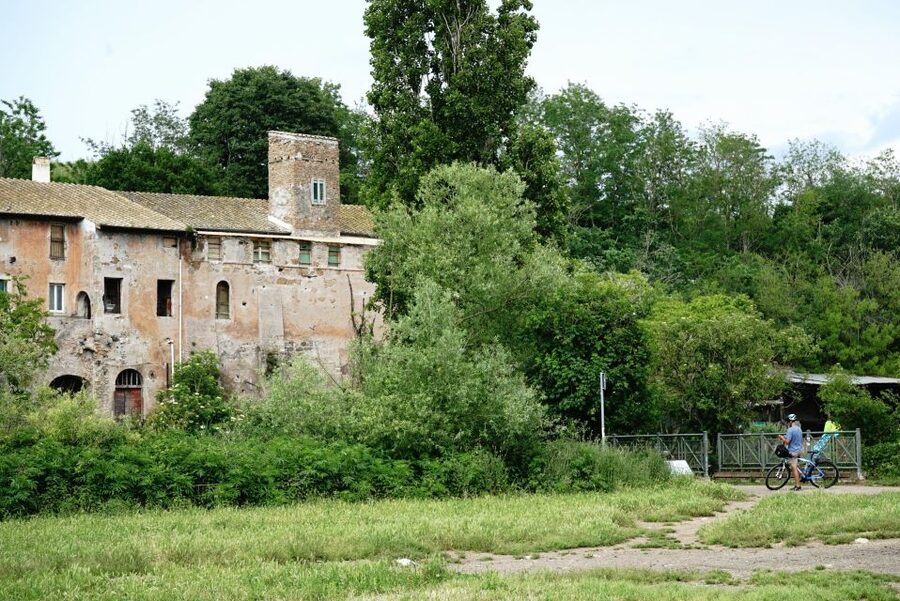
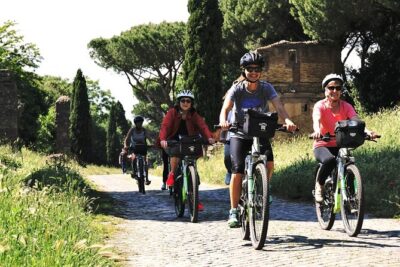
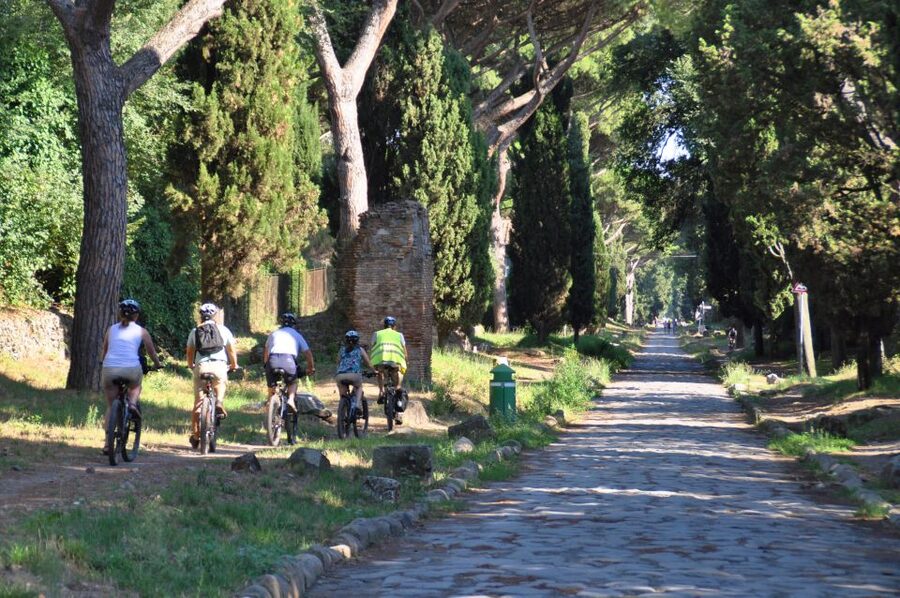
The Ancient Appian Way is the heart of the outing. Built more than 2,300 years ago, it was one of Rome’s major roads, linking the capital with southern Italy. Today, parts of it run through a broad archaeological area where the city gives way to fields, trees, stone walls, and scattered ruins.
You ride over an old road surrounded by evidence of Roman funerary customs, villas, and monumental tombs. The appeal is not one single grand building. It is the long view, the sense of following a route that shaped the growth of Rome, and the way ancient remains appear beside ordinary countryside.
The surface can be uneven, and this is where the e-bike helps. The anti-puncture tires and mountain-bike design are practical choices for the route. Do not expect a smooth paved promenade, though. You need to be comfortable with bumps, loose surfaces, and changing conditions.
I would choose this tour for the Appian Way even if you had already seen the Colosseum, Roman Forum, and Pantheon. Those sites show Rome’s public face. The Appian Way gives you a quieter look at the roads, tombs, estates, and outskirts that supported the ancient city.
Maxentius, Cecilia Metella, and Roman family tombs
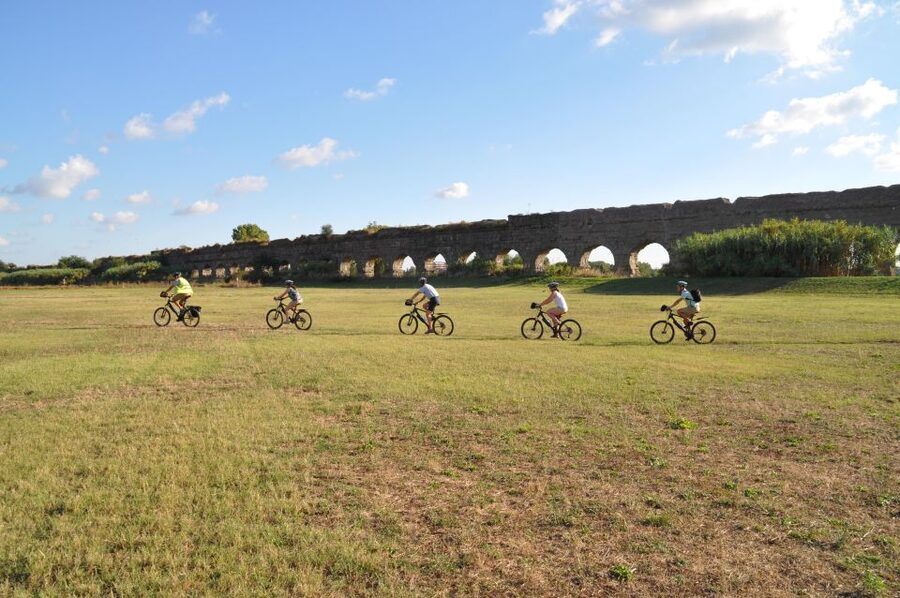
The route includes the Circus of Maxentius and the Tomb of Cecilia Metella. These stops help show how powerful Romans marked the countryside around the road.
The Circus of Maxentius belonged to a large imperial complex. Its remains are spread out rather than packed into one compact monument, so the guide’s explanation adds real value. You begin to understand that the Appian Way was not simply a road between two points. It was lined with estates, ceremonial sites, and memorials.
The Tomb of Cecilia Metella is one of the road’s best-known monuments. Its round form and substantial masonry make it easy to recognize, but the larger point is the way Roman tombs occupied prominent positions along major roads. The dead remained visible to people entering and leaving the city.
These stops are sightseeing pauses rather than long indoor visits. That keeps the ride moving, but it also means you should expect an outdoor overview instead of a detailed archaeological tour at every ruin. The guide supplies the context, and you continue by bike.
More Appian Way rides around Rome:
- Rome: Appian Way & Aqueducts E-Bike Tour (Catacombs & Food)
★ 4.9 · 1,498 reviews - Appian Way Aqueducts Bike Tour (Catacombs & Lunch Option)
★ 5.0 · 975 reviews - Appian Way, Catacombs and Aqueducts Park Tour with Top E-Bike
★ 5.0 · 735 reviews - Rome: Appian Way E-Bike Tour Catacombs, Aqueducts & Picnic
★ 4.6 · 727 reviews
The six-hour Catacombs option
Only the six-hour tour includes the guided catacomb visit. The underground portion lasts about 45 minutes and takes you into corridors associated with early Christian burial in Rome.
This is a useful addition if you want more than views and open-air ruins. The catacombs show another side of ancient life, one hidden below the fields and roads. You descend into an enclosed setting, follow the guide, and learn how early Christian communities used these underground burial areas.
The catacombs are not a universal hit for every age group. One family found the underground visit less interesting for children, while the adults also preferred the cycling and outdoor sections. If your children tire quickly in enclosed historic sites, the four-hour option may suit you better.
I would select six hours if you enjoy archaeology, early Christianity, and a fuller day away from central Rome. Choose four hours if your priority is the Appian Way, aqueducts, parks, and cycling rather than an underground visit.
The catacomb stop also changes the pace. The day is not one continuous ride. You alternate between biking, listening, walking underground, and returning to the bicycle route.
Villa dei Quintili and the Roman countryside
The route continues toward the Villa dei Quintili, an imperial villa complex outside the old city. You see how Roman elites used large suburban estates, with space away from the dense center.
The villa is part of the broader outdoor setting rather than a separate long museum visit. You are moving through a sequence of ruins and countryside, so do not expect every stop to receive the same amount of time. The benefit is variety: one moment you are beside a tomb, then you are riding through a park, then you are looking across open ground toward ancient masonry.
I like this part because it breaks the usual Rome pattern. You are not shuffling from one indoor site to another. The bicycle keeps the day active and lets you cover more ground than a walking tour, while the electric motor prevents the distance from becoming a test of athletic endurance.
That said, the ride is still 27 kilometers. Several riders found parts of it taxing, even with electric assistance. The motor reduces effort on hills and longer stretches, but you should not book this as a passive sightseeing trip.
The Aqueducts Park and Rome’s ancient water system
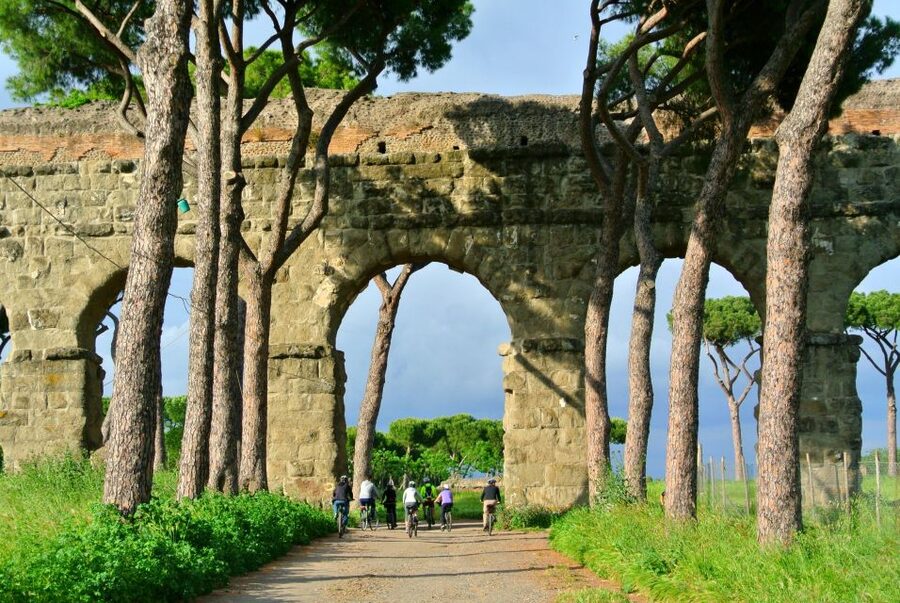
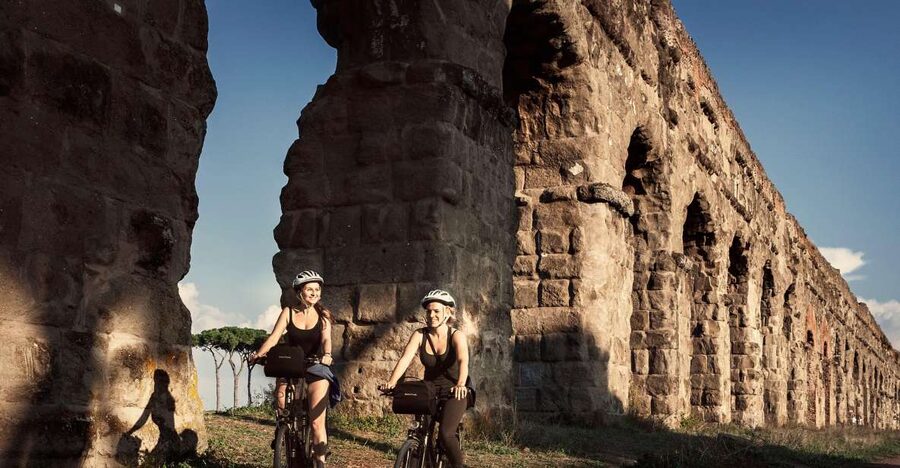
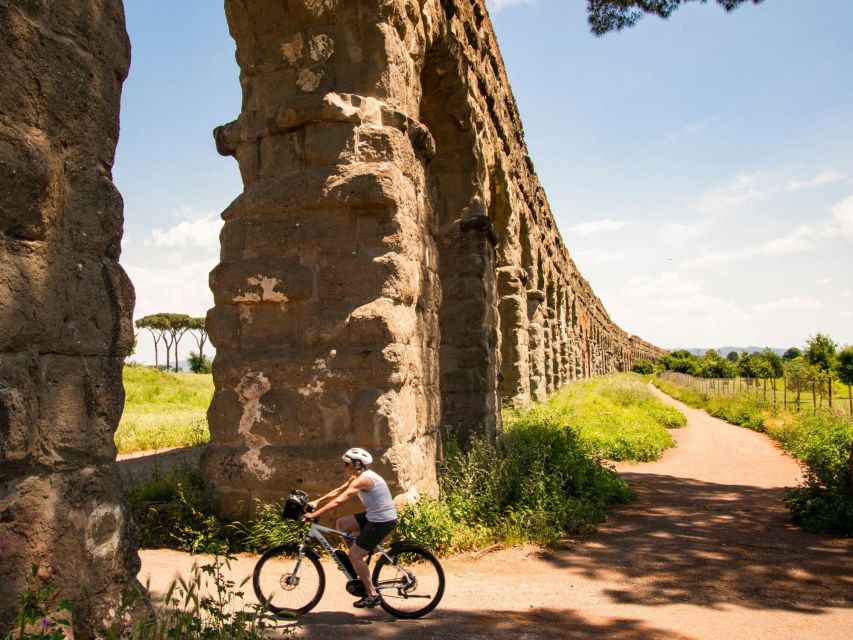
The Aqueducts Park is the visual high point for many people. Tall Roman arches cross the open park, built to carry water toward Rome from distant sources.
The scale is hard to grasp from a city street. Here, the arches stretch across broad open space, and you can see why the Romans’ water system was such a major engineering achievement. The setting also gives you a welcome break from traffic and stone-lined city streets.
About 60 percent of the route is off-road, and the park sections are the easiest places to appreciate that design. There is no traffic while you ride in the parks, which lets you focus on the ruins and the route instead of cars.
The afternoon light can be especially attractive around the aqueducts, according to the tour description. Still, light and heat vary by season. A July ride can feel warm, and one family found the summer conditions more demanding than expected. Spring, autumn, and cooler winter days may be more comfortable, although the tour runs year-round according to availability.
The aqueducts also provide good perspective on Rome. The Appian Way shows how people and goods moved. The aqueducts show how water moved. Together, they explain much about how a large ancient city functioned.
Returning through Caffarella Park
The final park section runs through the Caffarella Valley, a large green area inside Rome. It feels rural, but you are still within the city.
This return route is one of the tour’s strongest ideas. Instead of retracing the same busy streets, you come back through open paths and countryside. After the ruins and aqueducts, the valley gives you space to process what you have seen.
The ride eventually brings you past the Baths of Caracalla before returning to Via Labicana 49. The Baths are another reminder of Rome’s monumental public life, and seeing them from the bicycle route adds a final ancient landmark without requiring a separate museum visit.
The full route is carefully designed, but it is not flat, polished, or effortless at every point. Some sections may feel a bit hairy, particularly where the route connects parks through city streets. Guides work to get groups across intersections safely, and that support is a major part of the experience.
How difficult is the ride?
The tour is rated intermediate. That description matters more than the electric-bike marketing.
You should be able to ride a bicycle, brake confidently, and manage a 27-kilometer outing. A child seat or child extension makes the route harder, and the information specifically calls the ride difficult with those setups.
Children aged 1 to 4 can ride free in a child seat, provided they weigh under 22 kilograms. Children aged 5 to 8 use a child extension. Children aged 9 and above, taller than 140 centimeters, can ride an e-bike.
The equipment has a total weight limit of 300 pounds, or 136 kilograms. Infants under 1 year are not accepted. If you are bringing children, ask yourself whether they can stay comfortable for several hours, including city riding and off-road paths.
For adults, the e-bike makes the tour far more accessible than a standard bicycle trip. One group included a 13-year-old and a 70-year-old, both of whom completed the ride well. Another rider who rarely cycles managed the route with help from the electric motor and the guide.
What you get for $100
At about $100 per person, this is not the cheapest way to see Rome. It is a long small-group outing with a quality bicycle, helmet, water, guide, and, on the six-hour version, the catacomb visit.
The value comes from combining several areas that are awkward to connect on foot. You reach the Appian Way, the catacombs, Villa dei Quintili, the Aqueducts Park, Caffarella Park, and the Baths of Caracalla in one organized route.
A taxi or public transport can move you between some of these places, but it would not give you the same continuous view of the countryside and ancient road. Cycling also lets you notice the transitions between city, park, ruins, and rural paths.
The price is easier to justify if you would otherwise spend a day arranging transport and separate entrance visits. It is less compelling if you only want a short, gentle ride or a quick look at the aqueducts.
The tour offers free cancellation up to 24 hours before departure and allows you to reserve without paying immediately. Starting times vary, so check availability for your date. On Wednesdays, and during January 14 through February 11, 2026, the outing may run up to 30 minutes longer.
Who should book this ride?
I would recommend it to active visitors who want Rome beyond the central monuments. It works especially well for couples, families with older children, and anyone who likes history but does not want to spend every hour indoors.
It also suits nervous cyclists better than an independent ride, provided you accept the intermediate level. Guides lead the way, manage intersections, and adjust to the group, while the electric bicycles make the distance manageable.
I would hesitate to book it for anyone who dislikes bicycles, struggles with uneven surfaces, or wants a completely traffic-free route. The park riding is peaceful, but the city connections are part of the day.
The language choice is generous: English, Italian, Dutch, French, German, and Spanish are available. Small groups are limited to 10, and the minimum is four participants.
Should you book it?
Book this tour if you want to see the Appian Way and aqueducts as part of one active, well-organized day. I especially like the combination of ancient roads, underground catacombs, open parks, and Roman engineering, along with the practical Cannondale bikes and careful guide support.
Choose the four-hour route for the main outdoor sights. Choose six hours if the catacombs matter to you and you are comfortable with a longer day. Just arrive ready to ride, expect some traffic, and remember that electric assistance makes the route easier, not effortless.
FAQ
Where does the e-bike tour start and finish?
The tour starts and ends at the provider’s shop at Via Labicana 49, about a five-minute walk from the Colosseum.
How long is the tour?
You can choose a four-hour or six-hour version. The six-hour tour includes the guided catacomb visit.
How far do you ride?
The route covers 27 kilometers, or about 17 miles.
How much of the route is off-road?
About 60 percent of the route is off-road. The remaining sections include carefully selected city streets, and some traffic is unavoidable.
Are the catacombs included in every tour?
No. The guided catacomb visit is included only in the six-hour version and lasts about 45 minutes.
What type of bicycle is provided?
You ride a Cannondale e-mountain bike with anti-puncture tires and a comfortable saddle. A helmet and bottle of water are also included.
Can children join the tour?
Yes. Children aged 1 to 4 can use a child seat if they weigh less than 22 kilograms. Children aged 5 to 8 use a child extension, and children aged 9 and above who are taller than 140 centimeters can ride an e-bike. Babies under 1 year are not accepted.
Is the tour suitable for beginners?
The ride is rated intermediate. Electric assistance helps with hills and distance, but you still need to handle a bicycle on uneven paths and some city streets. The route is considered difficult with a child seat or child extension.
New e-bike tours around Rome
- Rome E-Bike Tour: Roman Castles, Villages and Lake Views★ 5.0 · 2 reviews
- E-bike tour in the center of Rome★ 3.8 · 9 reviews
- Rome E-Bike Tour: Ultimate Street Food and Market Feast★ 4.9 · 50 reviews
- Best of Rome Electric Bike Tour★ 4.6 · 3 reviews
- Rome: E-Bike Tour on the Appian Way to Castel Gandolfo and the Lake★ 5.0 · 3 reviews
- Rome: Private Appian Way & Albano Lake Full-Day E-Bike Tour★ 5.0 · 2 reviews
- Rome: Appian Way, Aqueducts & Catacombs (Small Group or Private)★ 5.0 · 103 reviews
- Rome E-Bike Small Group Tour of the Appian Way with Private Option★ 5.0 · 130 reviews
Rome E-Bike Tours, side by side.
Rome EBike Tour: Appian Way, Catacombs & Roman Aqueducts
Read our review →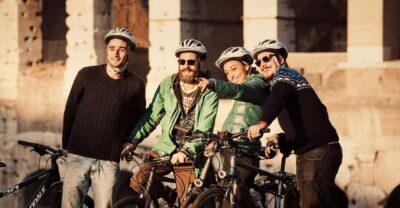
Top Highlights & Hidden Gems Tour by Cannondale E-Bike
Read our review →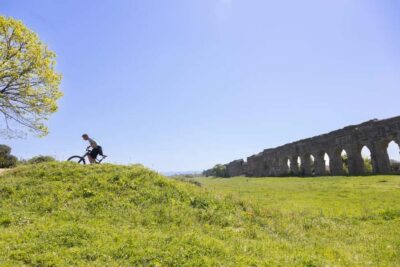
Appian Way & Aqueducts E-Bike Tour (Catacombs & Food)
Read our review →
Rome City Small Group Bike Tour with quality Cannondale EBike
Read our review →
Rome by Night – Ebike Small Group Tour – Food and Wine (Option)
Read our review →