Review · ROME
Rome: Appian Way, Catacombs, & Roman Aqueducts E-bike Tour
The best part of this tour is that it gets you beyond Rome’s crowded center and into a quieter world of ancient roads, grassy parks, ruined villas, and giant aqueduct arches. You ride from the Aurelian Walls along the 2,300-year-old Appian Way, then cross open countryside before following the aqueducts back toward the city.
I like the mix of history and fresh air, and I like that the Cannondale e-bike takes much of the strain out of a 27-kilometer route. Guides such as Arina, Oscar, Bita, and Pablo have been especially good at managing traffic and explaining the sites without turning every stop into a lecture. The main catch is simple: this is not a gentle city bike ride. Uneven ground, gravel, and city traffic mean you should already feel comfortable on a bicycle.
Appian Way E-Bike Tour: Key Points

- A 27-kilometer route: About 60 percent runs off-road through parks and along old Roman roads, while roughly 40 percent connects the route through city streets.
- Two versions to choose from: The four-hour tour includes a short explanation outside the catacombs. The six-hour version adds a guided visit underground.
- Ancient Rome in open country: See tombs, mausoleums, aristocratic villas, the Circus of Maxentius, and the Tomb of Cecilia Metella.
- The aqueducts are the visual high point: The Park of the Aqueducts gives you long views of colossal Roman arches under open sky.
- Small groups help with safety: Groups are limited to 10 people, an important detail when riding through Rome.
- Best for confident cyclists: The electric assistance helps with distance and hills, but it does not remove the need to steer over bumpy paths or ride in traffic.
Why This Tour Shows You a Different Rome
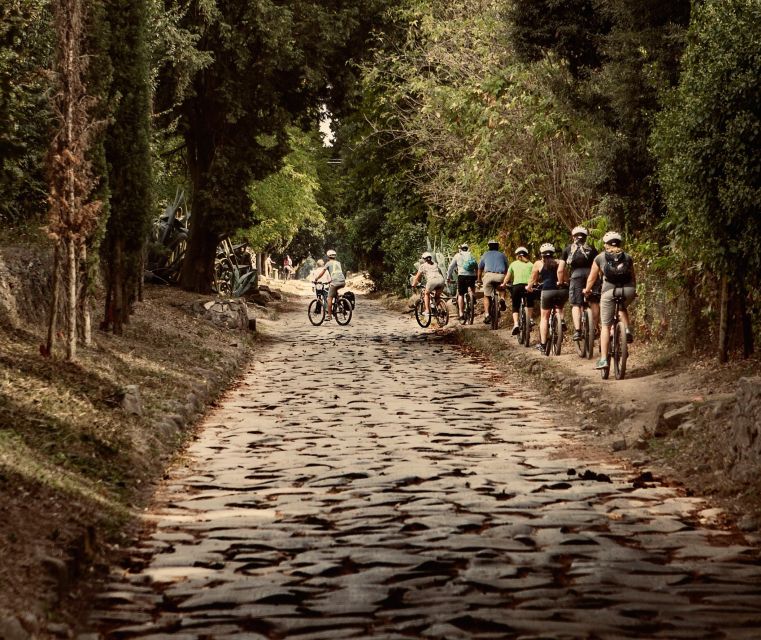
Rome is often reduced to the Colosseum, Trevi Fountain, and Vatican City. Those sights matter, but the Appian Way shows how large and layered the ancient city really was. Outside the old center, Rome opens into fields, pine trees, ruins, and long stretches where the past feels less arranged for tourists.
This route also connects several parts of Roman life. The Appian Way was a major road for movement and trade. The tombs beside it show how wealthy Romans wanted to be remembered. The catacombs point to early Christian burial practices, while the aqueducts reveal the practical engineering that allowed Rome to grow.
I especially like the contrast between the busy opening and the peaceful middle. You begin near the central city, pass through the Aurelian Walls, and then gradually trade traffic and apartment blocks for old stone, grass, and wide skies. It is an excellent choice if you want a half-day that feels active without spending all your time indoors.
The $85 price is fair for the six-hour version, considering that it includes a quality e-mountain bike, helmet, guide, water, handlebar bag, and the catacomb visit. The four-hour tour gives you the main outdoor route for less time and less underground history, but the six-hour option offers the fuller picture and better value if you want to see the catacombs.
More Historic E-Bike Tours in Rome
- Rome EBike Tour: Appian Way, Catacombs & Roman Aqueducts
★ 5.0 · 1,766 reviews - Rome: Appian Way & Roman Aqueducts Guided E-Bike Tour
★ 4.9 · 162 reviews - Rome: Appian Way, Catacombs & Roman Aqueducts Top EBike Tour
★ 4.9 · 101 reviews
Starting at the Aurelian Walls
The meeting point is Via Labicana 49, within walking distance of both the Colosseum and Manzoni Metro stations. From the Colosseum, allow about 10 to 15 minutes. From Manzoni, it is about 10 minutes.
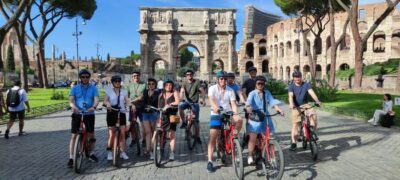
After bike fitting and a safety briefing, you pass through St. Sebastian’s Gate in the Aurelian Walls. This is a fitting beginning. The walls mark the edge of ancient Rome, and the gate leads you toward a road that carried Roman power far beyond the city itself.
The bikes are Cannondale e-mountain bikes with anti-puncture tires. A helmet is required, and you receive a five-liter handlebar bag and a biodegradable bottle of water. The bikes have enough electric assistance to make the long route manageable, but you still need to pedal and control the bike yourself.
If you have never used an e-bike, tell the guide before setting off. Guides such as Ximena have been praised for quickly explaining the gears and power settings. Still, I would not make your first-ever bike ride on Rome’s roads. If you are unsure, practice on an e-bike before booking.
Riding the 2,300-Year-Old Appian Way

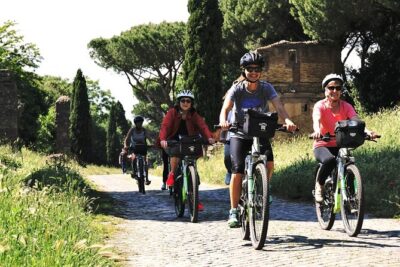
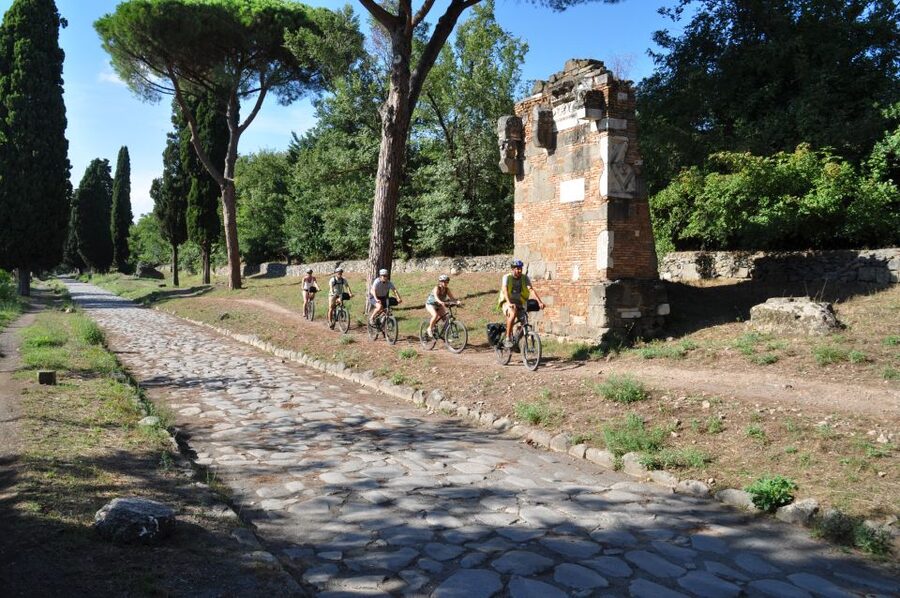
The Appian Way is the heart of the outing. Its ancient paving stones and rough sections are atmospheric, but they are not smooth. You will encounter gravel, uneven ground, and bumpy stretches that call for steady hands and a relaxed pace.
The road passes tombs, mausoleums, and the remains of villas belonging to Rome’s wealthy families. Instead of seeing one isolated monument behind a fence, you get a sense of an entire Roman corridor. The ruins are spread through open country, so the route feels more like a moving archaeological site than a standard sightseeing stop.
The guide usually stops at several points to explain what you are seeing and give you time for photographs. This is where a small group helps. With no more than 10 participants, it is easier to stay together and hear the explanations.
The ride is rated intermediate. That label matters. The e-bike reduces effort, especially on climbs, but it cannot smooth out a rutted track. If you rarely ride, you may find the off-road portions tiring or awkward. Several riders have managed the route despite limited off-road experience, but confidence on a bicycle is still important.
The Catacombs: Choose the Six-Hour Version
The six-hour tour includes a guided visit to the Catacombs of St. Callixtus or St. Sebastian. The exact catacomb depends on the day and operating arrangements, so check the details when booking.
Underground, the focus changes from monumental roads and aqueducts to early Christian burial customs. The narrow corridors and crypts offer a more personal side of Roman history. You are no longer looking at an empire’s public works. You are considering how ordinary communities buried and remembered their dead.
The four-hour tour does not include the underground visit. Instead, you stop briefly at the entrance, with about five minutes for an explanation of the catacombs’ purpose and importance. This is enough to understand the setting, but not enough if the catacombs are a major reason you want to book.
My advice is clear: choose six hours if you care about early Christian Rome or want the complete route. Choose four hours if you prefer outdoor riding, have limited time, or think several hours on a bike is enough.
More Appian Way rides around Rome:
- Rome: Appian Way & Aqueducts E-Bike Tour (Catacombs & Food)
★ 4.9 · 1,498 reviews - Appian Way Aqueducts Bike Tour (Catacombs & Lunch Option)
★ 5.0 · 975 reviews - Appian Way, Catacombs and Aqueducts Park Tour with Top E-Bike
★ 5.0 · 735 reviews - Rome: Appian Way E-Bike Tour Catacombs, Aqueducts & Picnic
★ 4.6 · 727 reviews
Circus of Maxentius and the Tomb of Cecilia Metella
As you continue along the Appian Way, the route brings you past the Circus of Maxentius and the Tomb of Cecilia Metella. These stops help fill out the picture of the road as a place for both public life and private display.
The Circus of Maxentius points to Rome’s taste for grand entertainment. The Tomb of Cecilia Metella shows how prominent families used the Appian Way as a place for impressive memorials. The road was practical, but it was also a stage for status.
You should not expect long indoor visits at every monument. This is a cycling tour, not a succession of museum tours. The value comes from seeing the sites in relation to one another, with the road and countryside tying them together.
Villa dei Quintili and the Roman Countryside
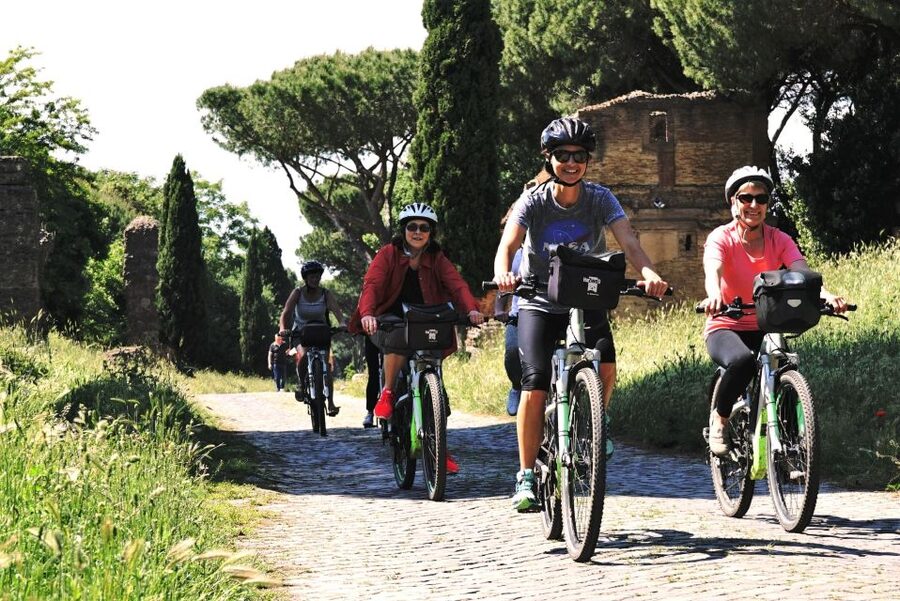
Villa dei Quintili adds another view of aristocratic Rome. The large villa complex suggests the scale and comfort available to the city’s elite outside the crowded center.
The route here is as important as the ruins. You are moving through the Roman countryside, with stretches of quiet road and open space between ancient sites. For many people, this is the moment the tour changes from a sightseeing ride into a proper escape from the city.
The light can be beautiful in the afternoon, especially around the aqueducts, but Rome’s heat is a real factor in summer. Guides have stopped often for water during hot rides, yet you should still bring comfortable clothing and be prepared to buy additional food or drinks along the way. Nothing to eat is included.
The Park of the Aqueducts
The Park of the Aqueducts is the visual payoff. Here, huge arches cross the open park, and the scale of the Roman water system becomes easy to understand. You are not peering at a small fragment in a museum. You are riding beside long stretches of ancient engineering under the sky.
The aqueducts also make the route feel different from the Appian Way. The road gives you tombs and villas close at hand. The aqueduct park gives you distance, height, and broad views. It is one of the best places for photographs and one of the strongest reasons to choose this tour over a standard historic-center walk.
You follow the aqueducts back toward modern Rome. That direction gives the ride a satisfying shape: ancient infrastructure guides you from the outer countryside toward the city that grew around it.
Caffarella Valley and the Ride Back
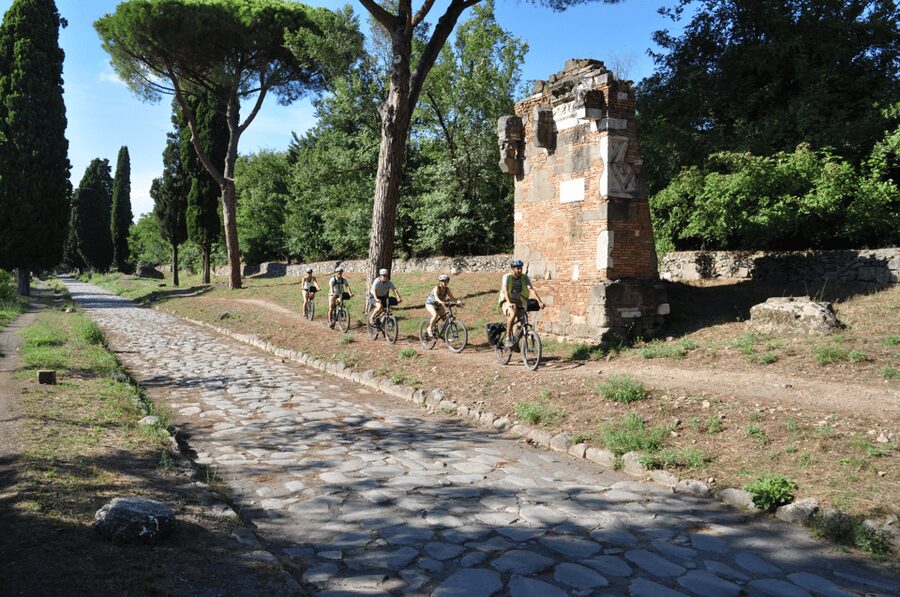
The route then crosses the green Caffarella Valley before turning toward the starting point. This is another peaceful section, with a welcome break from traffic and buildings.
About 60 percent of the tour takes place away from cars in parks or on off-road paths. The remaining 40 percent is in the city, used to connect the Appian Way and the aqueduct park. Your guide chooses quieter streets where possible, but traffic cannot be avoided entirely.
This is where the guide’s riding skill matters most. Arina, Anna, Cas, and Bita have been especially effective at keeping groups together and preparing riders for busier crossings. Several guides have also returned to help when someone had trouble with an e-bike. That support is useful, but you should still be alert and follow instructions closely.
The final sights may include the Baths of Caracalla before you return to Via Labicana 49. The baths give you one last reminder that Roman public life depended on both grand buildings and complex systems of water, roads, and administration.
What the Bikes and Route Feel Like
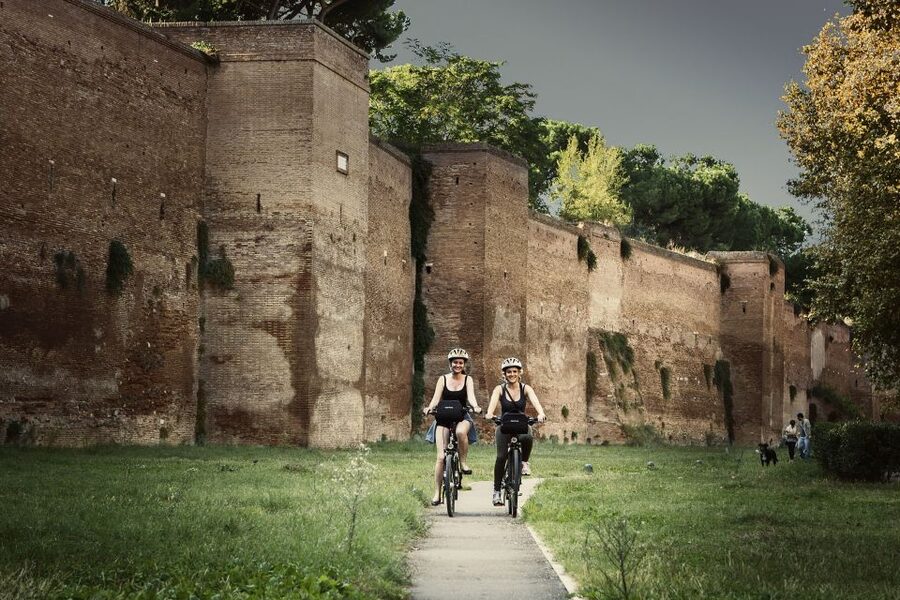
The Cannondale bikes are one of the strongest parts of the package. The electric motor makes the distance feel far less demanding, and riders have completed the full route without feeling worn out. The bikes are sturdy and predictable, with anti-puncture tires and enough power for climbs.
Do not confuse electric assistance with automatic riding. You still need to balance, brake, steer, shift, and handle loose or uneven surfaces. One practical limitation is that the bikes do not have rear suspension, so the roughest parts can feel jarring.
The route covers about 17 miles. That is a substantial ride, even with assistance. Comfortable shoes are essential, and I would also wear clothing suited to sun, dust, and changing temperatures. The tour can run about 30 minutes longer on Wednesdays.
Families and Different Cycling Abilities
The tour allows infants from ages one to four in a child seat, up to 49 pounds or 22 kilograms. Children ages five to eight can use a child extension, and children nine and older can ride their own e-bike.
The operator describes the route as difficult with a child seat or extension. That is worth taking seriously. A family with older children who can ride independently may find the day exciting, while younger children add weight and make the rough portions harder to manage.
The equipment has a total weight limit of 300 pounds, or 136 kilograms. Ask about your specific family setup before booking if you are near that limit.
Guides, Group Size, and Pace
The maximum group size is 10, although some departures are smaller. A compact group is important here because the route includes city roads, crossings, and off-road sections where it is easy to spread out.
The strongest guides combine three jobs: they explain Roman history, control the pace, and keep people safe. Names that have received especially strong praise include Arina, Oscar, Bita, Pablo, Agnese, Ali, Cas, and Sina. Guide quality can vary from day to day, but the repeated pattern is clear: the best guides are friendly, alert, and willing to adapt to the group.
The pace is generally steady rather than rushed. You stop often for sights and photographs, and there may be a food stop at a local pizzeria along the way. Food is not included, so carry some money and do not assume the stop is part of every departure.
Who Should Book This Ride?
I would book this tour if you want ancient Rome with space around it, enjoy active sightseeing, and feel comfortable handling a bicycle. It is particularly good for repeat visitors who have already seen the main center and want a different side of the city.
It also works well for families with older children, couples, and anyone who likes combining nature with history. The electric assistance makes the mileage accessible to a wide range of fitness levels.
I would hesitate if you dislike traffic, have poor balance, or want a slow, fully guided walking experience. The city sections are manageable but real, and the off-road sections are bumpy. A child seat or extension makes the route harder, so families with young children should ask detailed questions before reserving.
Cancellation is free up to 24 hours in advance, and you can reserve now and pay later. The tour operates in English, Italian, Spanish, French, German, and Dutch, with a minimum of four participants required. If that minimum is not reached, you are offered an alternative or a full refund.
Should You Book the Appian Way E-Bike Tour?
Book it if you want to see Rome’s ancient roads, catacombs, aqueducts, and countryside in one well-shaped outing. The six-hour version gives you the fullest experience, while the four-hour option is a sensible choice for a tighter schedule.
The biggest value is not simply the bike rental. It is the route design. You get historic sites that are spread too far apart for a practical walk, plus a guide who handles the route between them. At $85, that combination is strong.
Just be honest about your cycling ability. If you can ride confidently over gravel and cope with a little city traffic, this is one of the most rewarding ways to spend half a day outside Rome’s center. If you cannot, choose another way to reach the Appian Way and aqueducts.
FAQ
How long is the Appian Way e-bike tour?
You can choose a four-hour or six-hour version. The six-hour tour includes a guided catacomb visit, while the four-hour tour includes only a brief explanation outside the catacombs.
How far do you ride?
The route is about 27 kilometers, or 17 miles. Around 60 percent is off-road, with the rest taking place on city streets used to connect the main parks and historic areas.
Are the catacombs included?
A guided catacomb visit is included only with the six-hour tour. The four-hour tour stops at the entrance for a short explanation.
Which catacombs do you visit?
The guided visit is to the Catacombs of St. Callixtus or St. Sebastian. The specific site can vary.
Is the tour suitable for beginners?
The route is rated intermediate. You should be comfortable riding a bicycle because you will encounter gravel, uneven ground, and some city traffic. The e-bike reduces effort but does not remove the need for bike-handling skills.
Are the bikes electric mountain bikes?
Yes. The tour provides Cannondale quality e-mountain bikes with anti-puncture tires. Helmets are included and must be worn.
Is food included?
No. Food and drinks are not included, although you can buy refreshments along the way. Some departures include a stop at a local pizzeria.
Where does the tour meet?
The meeting point is Via Labicana 49. It is about 10 to 15 minutes on foot from the Colosseum Metro station and about 10 minutes from Manzoni Metro station.
Can children join the tour?
Children ages one to four can ride in a child seat, up to 49 pounds or 22 kilograms. Children ages five to eight can use a child extension, and children aged nine or older can ride an e-bike independently.
What happens if the tour does not reach four participants?
A minimum of four participants is required. If that number is not reached, you are offered an alternative or a full refund.
New e-bike tours around Rome
- Rome E-Bike Tour: Roman Castles, Villages and Lake Views★ 5.0 · 2 reviews
- E-bike tour in the center of Rome★ 3.8 · 9 reviews
- Rome E-Bike Tour: Ultimate Street Food and Market Feast★ 4.9 · 50 reviews
- Best of Rome Electric Bike Tour★ 4.6 · 3 reviews
- Rome: E-Bike Tour on the Appian Way to Castel Gandolfo and the Lake★ 5.0 · 3 reviews
- Rome: Private Appian Way & Albano Lake Full-Day E-Bike Tour★ 5.0 · 2 reviews
- Rome: Appian Way, Aqueducts & Catacombs (Small Group or Private)★ 5.0 · 103 reviews
- Rome E-Bike Small Group Tour of the Appian Way with Private Option★ 5.0 · 130 reviews
Rome E-Bike Tours, side by side.
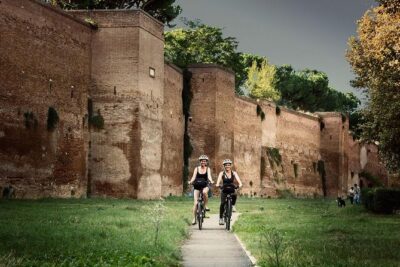
Rome EBike Tour: Appian Way, Catacombs & Roman Aqueducts
Read our review →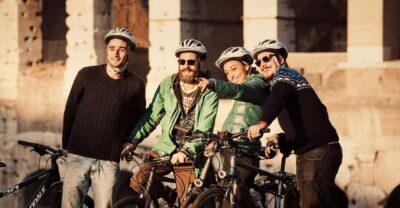
Top Highlights & Hidden Gems Tour by Cannondale E-Bike
Read our review →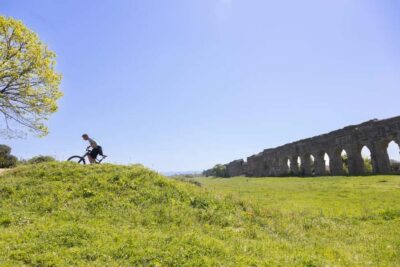
Appian Way & Aqueducts E-Bike Tour (Catacombs & Food)
Read our review →
Rome City Small Group Bike Tour with quality Cannondale EBike
Read our review →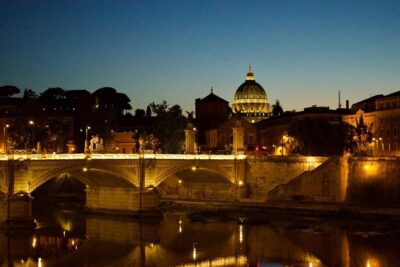
Rome by Night – Ebike Small Group Tour – Food and Wine (Option)
Read our review →