
Review · KYOTO
Kyoto: Memory Kyoto E-Bike Tour
Kyoto is at its best when you move between its famous sights, not just from one crowded entrance to the next. This six-hour small-group e-bike tour links Kitano Tenmangu, Kinkakuji, Tenryuji, and the Arashiyama Bamboo Forest by way of quieter neighborhood streets.
I like two things here. First, the electric bikes make a long day of sightseeing much easier, especially in Kyoto’s summer heat. Second, the route gives you more than postcard views: you ride past ordinary homes, local streets, and less crowded paths. The main consideration is that you still need basic cycling confidence and enough energy for a full day that mixes riding with walking.
- Four major Kyoto sights in one day: Visit a historic shrine, gold-covered Zen temple, UNESCO World Heritage temple, and famous bamboo grove.
- A group capped at eight people: The small size makes it easier to ask questions and stay together on city streets.
- Electric bikes and helmets provided: The motor assistance helps with the six-hour route and hot weather.
- Local streets between the landmarks: You see everyday Kyoto instead of spending the entire day on main roads.
- Guides who add history and humor: Pohan, Jody, Benjamin, Diego, Jorge, and others have led this route, depending on the departure.
- A good mix of movement and sightseeing: Expect guided walks inside the sites, photo stops, and steady cycling between them.
Why This Six-Hour Ride Works for Kyoto
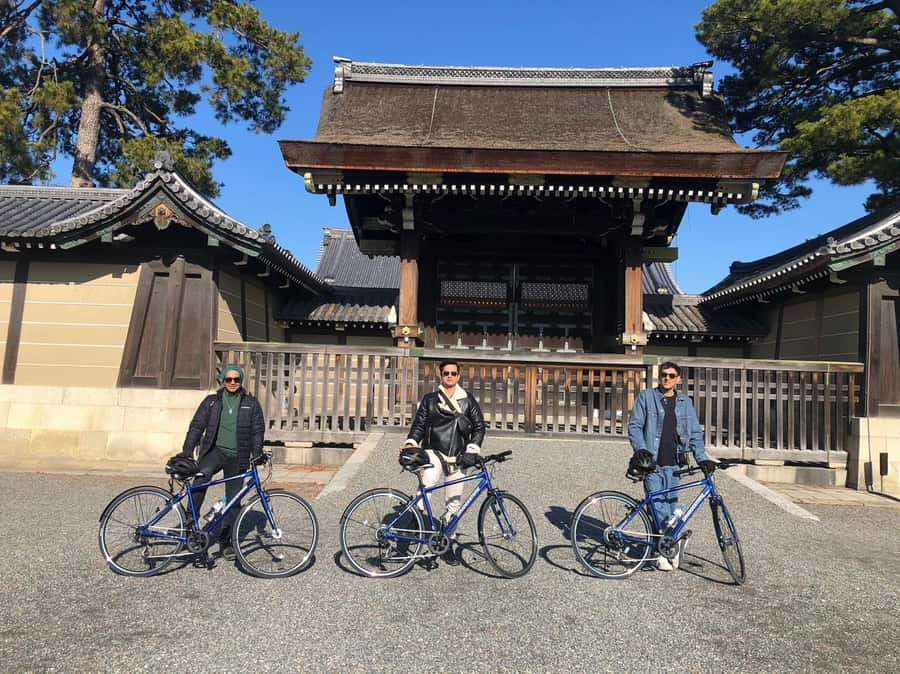
Kyoto’s best-known sights are spread across the city. Public transport can get you near them, but it often leaves you waiting, changing lines, or walking along busy roads. This tour uses the gaps between the sights well. You pedal from one place to another, see residential Kyoto along the way, and arrive with a guide ready to explain what you are looking at.
The tour starts at the Memory Kyoto bike tour meeting point, opposite the Kirindo drug store. After fitting your bike and helmet, you set out with an English-speaking guide and a group limited to eight participants. The small size matters. A guide can keep an eye on the group, answer questions, and adjust the pace more easily than on a large bus excursion.
You should expect a full six hours, not six hours of nonstop cycling. The day is split between riding, temple and shrine visits, photography, and walking. That balance is one of the tour’s strongest features. You get an active view of the city without spending the whole day in the saddle.
Kitano Tenmangu and the Story of Sugawara no Michizane
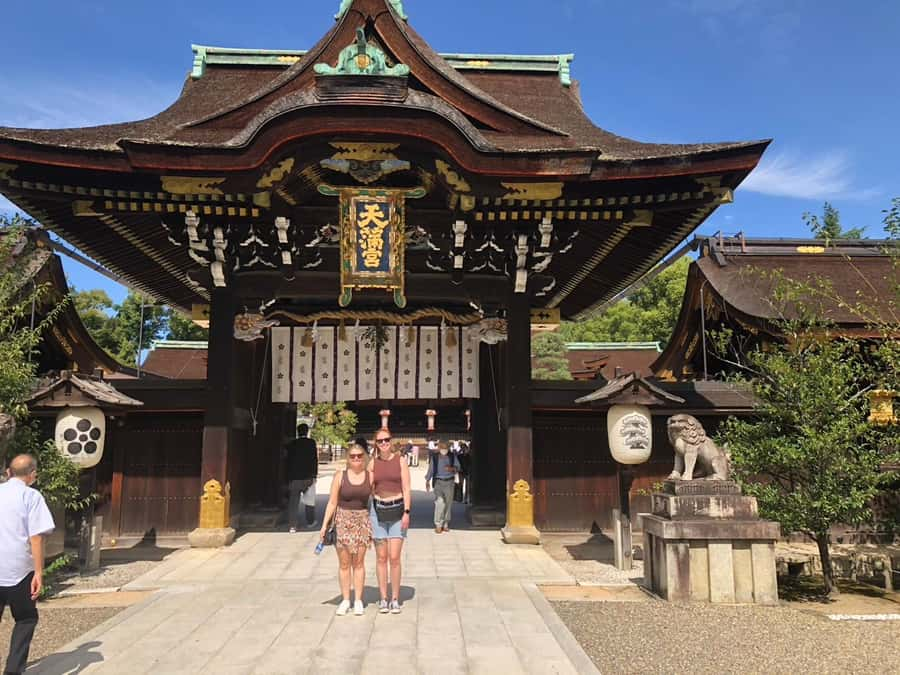
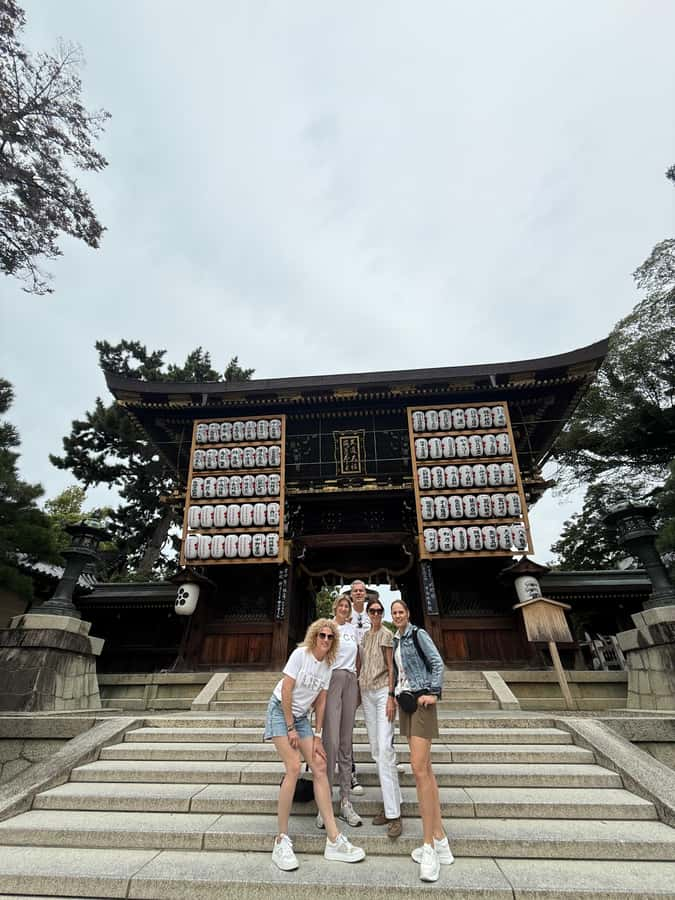
Kitano Tenmangu Shrine is the first major stop. This is not simply a place to take a quick photograph. The shrine is closely tied to Sugawara no Michizane, a respected scholar and government official who became associated with Tenjin, the Shinto deity of learning.
Your guide explains the traditions and religious meaning of the shrine before you continue. That context helps you understand the rituals and objects you see across Kyoto. Without it, a shrine visit can become a series of attractive gates, roofs, and lanterns. With a guide, you get a clearer idea of why Kitano Tenmangu matters.
The scheduled visit is about 30 minutes, including guided sightseeing and cycling time. That is enough for an introduction, though not enough for every corner of the grounds. If you want a long, quiet shrine visit, you may find this stop brisk. If your goal is to understand the site and see several major places in one day, the timing works well.
Kitano Tenmangu also gives the ride a strong beginning. You start with a place tied to local belief and scholarship, rather than opening with a purely visual attraction. From here, the route moves through Kyoto’s northern streets toward Kinkakuji.
More e-bike tours around Japan:
- Hidden Kyoto E-Biking tour
★ 5.0 · 1,843 reviews - Tokyo Top Highlights 3h Guided E-bike Tour
★ 5.0 · 714 reviews - 3h Tokyo E-Bike Tour: Hidden Gems, and Local Life with guide
★ 5.0 · 670 reviews
Kinkakuji, Kyoto’s Gold-Covered Image
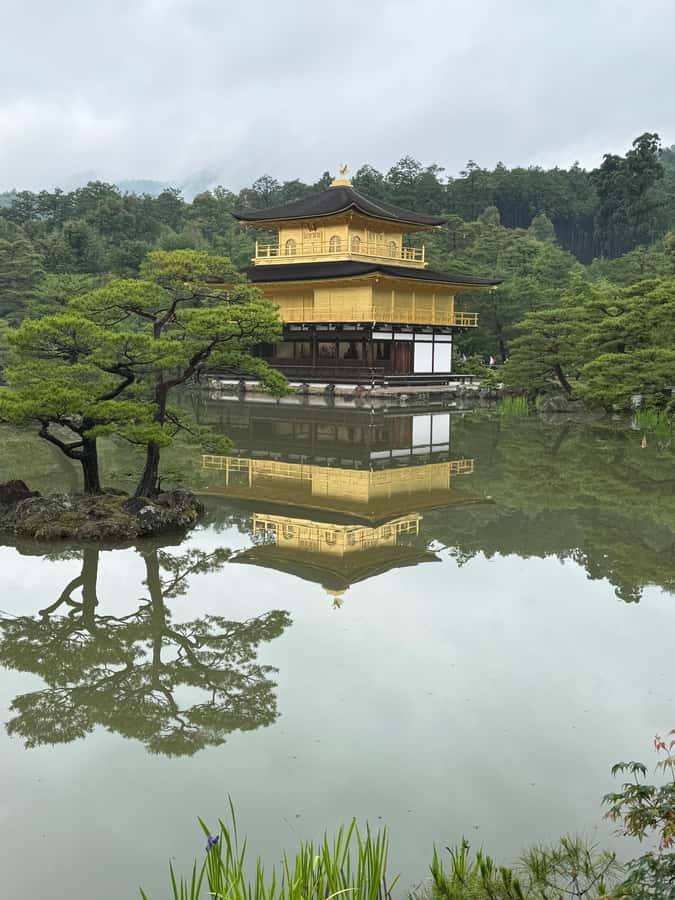
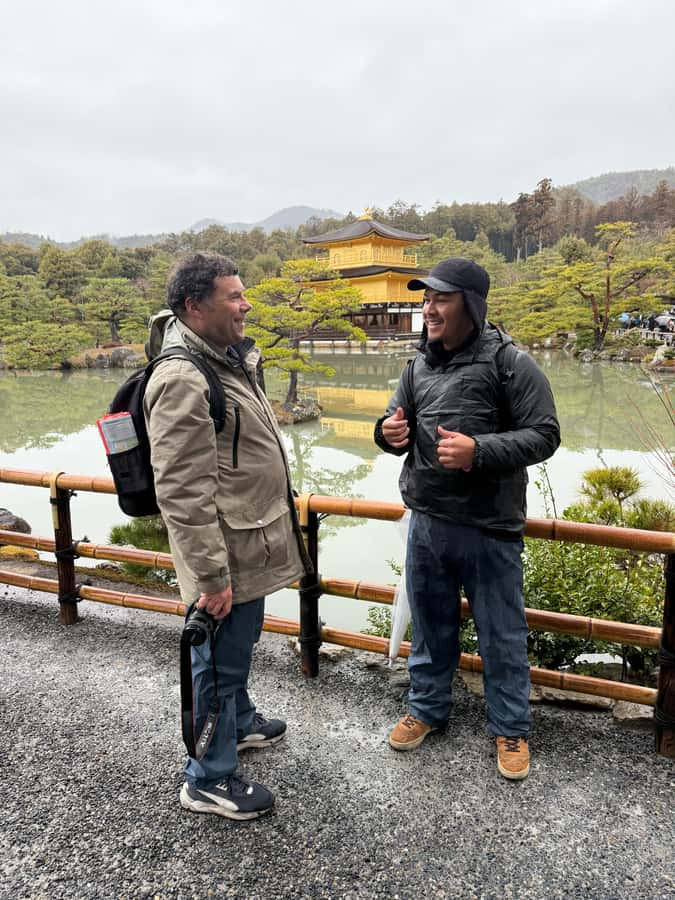
Kinkakuji, also called the Golden Pavilion, is one of Kyoto’s most recognizable sights. Its upper floors are covered in gold leaf, and the pavilion reflects over a pond in the temple grounds. The setting is carefully arranged, so the first view is genuinely striking.
The tour allows about 45 minutes for guided sightseeing and cycling around Kinkakuji. Your guide supplies the historical and Zen context, helping you look beyond the gold exterior. The pavilion you see today is a reconstruction, but the site remains one of Kyoto’s essential stops.
This is also one of the places where crowds can affect your experience. Kinkakuji is popular for good reason, and the main viewing area can feel busy. The small group and a guide who knows how to keep people moving help, but you should not expect solitude here.
The value of visiting by bike is clear at this point. You do not need to find a parking space or work out another bus connection after leaving the temple. You simply regroup, climb onto the bike, and continue through quieter streets.
Riding Through Everyday Kyoto
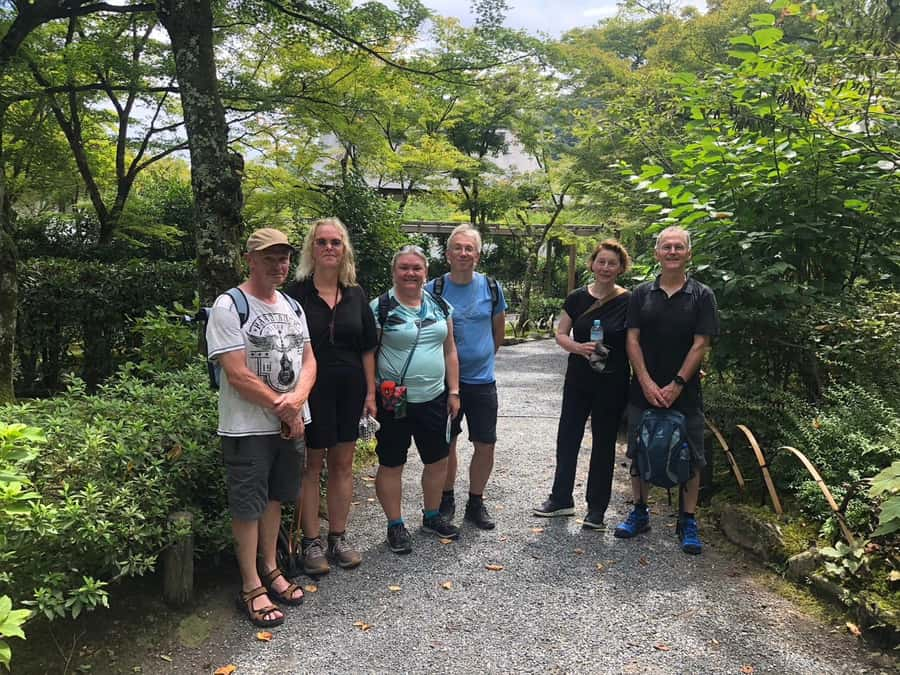
The stretches between the famous sites may be the most distinctive part of the day. You ride through backstreets and residential areas instead of seeing Kyoto only from a taxi window or a crowded pavement.
That change of pace gives you a more useful sense of the city. You pass homes, small streets, and everyday spaces that do not appear on a standard sightseeing checklist. The guides also use the ride to point out local details and explain how the major temples fit into Kyoto’s wider culture.
The e-bikes make this practical for a wider range of riders. Several people on the tour had never used an e-bike before and found the motor assistance made the transport much easier. The bikes were also repeatedly described as well maintained, with helmets supplied.
Still, electric assistance does not remove every concern. You must pay attention to traffic, other cyclists, pedestrians, and the guide’s signals. One useful tip from the day’s feedback is to bring a reasonable level of fitness and road awareness. This is a guided city ride, not a slow sightseeing vehicle.
Arashiyama Bamboo Forest and a Change of Mood
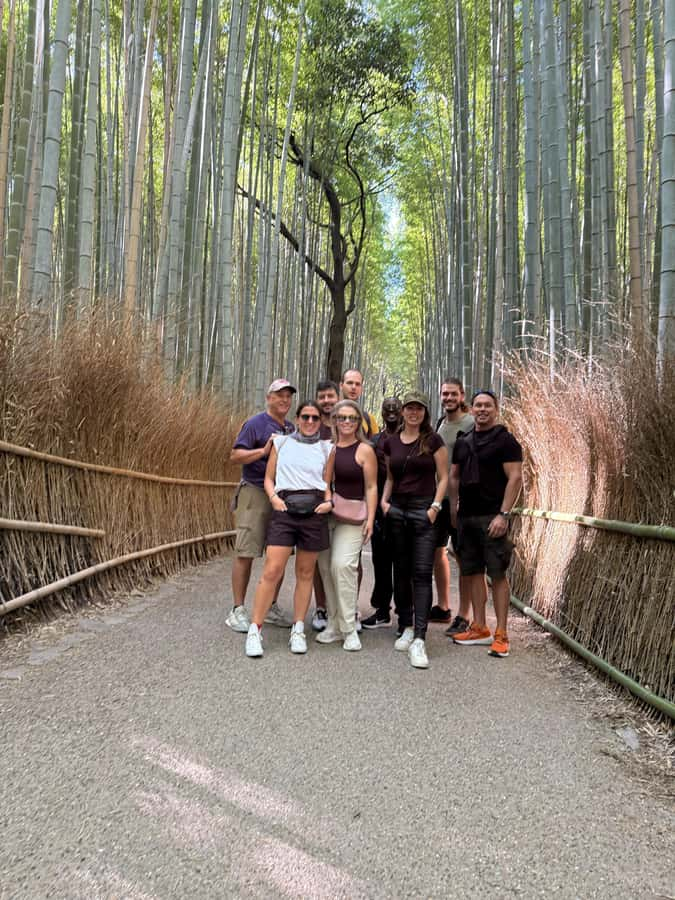
The Arashiyama Bamboo Forest is the tour’s most atmospheric stop. Tall bamboo rises on both sides of the path, creating a narrow green corridor that feels very different from the open temple courtyards.
The scheduled time is about 45 minutes, including a photo stop, guided sightseeing, walking, and cycling. That gives you time to enter the grove and take pictures, but the visit will not cover every part of the wider Arashiyama district. The grove is famous, so it can be crowded. A guide can help you move through the area efficiently, but no tour can guarantee an empty path.
One particularly useful detail from the route is the chance to see a lake near the bamboo forest. This is the sort of extra stop you could easily miss if you were following only the most obvious tourist route. It adds a calmer view after the narrow bamboo paths and gives you another place for photographs.
The e-bike is especially helpful here because Arashiyama can take time to reach on foot from other parts of Kyoto. You arrive with the day’s energy still intact rather than spending your morning walking between distant transport stops.
Same saddle, a different route:
- 5 Top Highlights of Kyoto Full Day Bike Tour (E-bike option)
★ 5.0 · 511 reviews - Tokyo: 3-Hour Bike or E-Bike City Highlights Tour
★ 4.8 · 435 reviews - Tokyo: 3-hour Guided E-Bike Tour of the City’s Hidden Gems
★ 4.8 · 251 reviews - Osaka E-Bike Tour with a Local Guide
★ 5.0 · 219 reviews
Tenryuji’s Zen Garden
Tenryuji Temple follows the bamboo grove, and the pairing makes sense. The forest gives you a dramatic natural setting. Tenryuji gives you a more composed, formal garden shaped by Zen design.
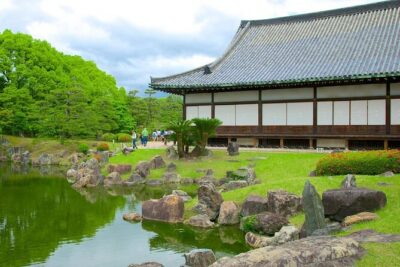
Tenryuji is a UNESCO World Heritage Site and one of Kyoto’s important Zen temples. The garden is the main reason to pay attention here. Its pond, rocks, trees, and borrowed views are arranged for quiet observation rather than quick spectacle.
The visit lasts about 45 minutes, including a guided walk, sightseeing, photography, and cycling. Your guide explains the temple’s history, Zen Buddhism, and the way the garden is meant to be viewed. This is where the tour’s interpretation earns its keep. A garden can look beautiful without explanation, but you gain much more when someone points out how space, water, and planting work together.
As at Kinkakuji, the time limit means you will not explore every building or take an extended period for personal reflection. The trade-off is that Tenryuji is part of a larger route rather than the only stop of the day.
What the Guides Add
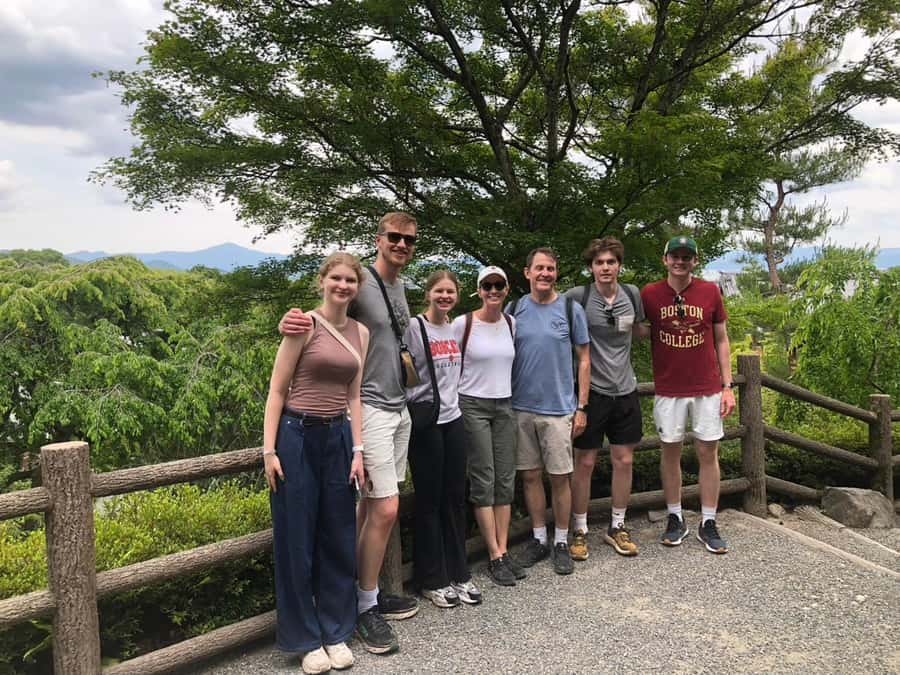
The guide can shape the day more than the bicycle itself. The tour has been led by people including Pohan, Jody or Jodie, Benjamin, Diego, Jorge, Jordan, Beau, Boram, and others. Your assigned guide will vary, but the consistent expectation is an English-speaking local guide who explains the sites and leads the group safely.
Pohan has been praised for keeping the group safe, answering questions, and finding less crowded photo spots. Jody is described as patient with children, funny, and clear in his explanations. Benjamin is noted for his friendly manner and historical detail, while Diego has been appreciated for his easygoing style and local suggestions.
Jorge is remembered for adding lively facts and enthusiasm to the history of Kyoto. That matters because the day contains several religious sites with unfamiliar traditions. You will hear about Shinto, Zen Buddhism, shrine customs, and the people connected with the places you visit.
The guide also helps with practical matters. At least one group stopped at a local diner for lunch, with food paid separately, and received help ordering. Lunch is not listed as an included feature, so bring money and do not assume a meal is covered in the $91 price.
Is $91 a Fair Price?
At $91 per person, this tour is not the cheapest way to see Kyoto’s temples. You are paying for six hours, an e-bike, helmet, water bottle, site fees and taxes, an English-speaking guide, and the planning needed to connect four major sights.
The value improves if you want structure. On your own, you would need to plan the order of Kitano Tenmangu, Kinkakuji, Arashiyama, and Tenryuji, then work out transport between them. You would also miss much of the neighborhood riding and would need to research the religious background in advance.
The price is less compelling if you already know Kyoto well, prefer slow temple visits, or dislike group schedules. You may want more time at one site than this route allows. You also pay separately for lunch, and the long duration means the day can feel demanding in hot or wet weather.
For a first visit, I think the package is strong. The bike, guide, entry costs, and route cover a lot of ground without turning the day into a bus ride. The excellent 4.8 rating from 297 bookings also fits the main strengths of the experience: friendly guides, safe riding, well-kept bikes, and good use of time.
Weather, Fitness, and Family Considerations
Kyoto can be hot and humid. Several riders found the moving air from cycling more comfortable than walking all day, but summer heat still matters. Water is provided, though you should dress for active sightseeing and be prepared for time outdoors.
Rain can change the plan. One group was offered a move to the next day because of bad weather, which shows some flexibility, but you should confirm the current policy when booking. Free cancellation is available up to 24 hours before the tour for a full refund.
The tour is not suitable for children under two. Older children can take part if they can manage a six-hour day and follow cycling instructions. A 10-year-old and a 14-year-old both enjoyed the route, and guides have also been patient with children in mixed-age groups.
You do not need to be an athletic cyclist, since the e-bikes provide assistance. You do need to feel comfortable steering, stopping, and riding attentively in a city setting. If you are nervous on a bike, tell the guide at the start and stay close to the group.
Who Should Book This Kyoto Bike Tour?
I would choose this tour if you want to see several major sights while also getting a feel for Kyoto’s ordinary streets. It suits first-time visitors, active couples, small families with confident older children, and anyone who prefers movement to standing in transport queues.
It is also a good choice for travelers who want history explained in plain English. The religious background at Kitano Tenmangu and Tenryuji is easier to appreciate when someone connects the buildings, customs, and people behind them.
I would hesitate if your priority is photography in empty locations. Kinkakuji and the bamboo grove can be crowded, and the schedule gives you a set amount of time at each stop. I would also choose another plan if you want a relaxed café day or a private guide with complete control over the route.
Should You Book It?
Book this tour if you want an active, well-organized day covering Kyoto’s northwest highlights without handling every transport detail yourself. The strongest reasons are the small group, helpful guides, quality bikes, quiet neighborhood routes, and the smart mix of temples, shrine, bamboo, and garden.
Skip it if cycling feels stressful or if you prefer to spend half a day at one temple. For most first-time visitors who can ride confidently, $91 is a reasonable price for the amount of Kyoto covered, especially when you consider the guide, equipment, and included site fees.
FAQ
How long does the Memory Kyoto E-Bike Tour last?
The tour lasts six hours, including cycling, guided visits, photography, and walking at the temples and shrine.
What sights are included?
The route includes Kitano Tenmangu Shrine, Kinkakuji, Arashiyama Bamboo Forest, and Tenryuji Temple.
Where does the tour start and finish?
It starts and finishes at the Memory Kyoto bike tour location, opposite the Kirindo drug store.
Is an English-speaking guide included?
Yes. An expert English-speaking guide leads the tour and explains the history and significance of the places visited.
How many people are in each group?
The group is limited to eight participants.
Are the bicycle and helmet included?
Yes. The tour includes use of an e-bike, a helmet, and a water bottle.
Are entry fees and taxes included?
Yes. All fees and taxes are included in the tour price.
Is lunch included?
Lunch is not listed among the inclusions. A guide may take the group to a local restaurant, but you should expect to pay for your own meal.
Can children join the tour?
Children under two are not suitable for this activity. Older children may join if they can manage the cycling and six-hour schedule.
New e-bike tours around Japan
- Ride around the Castle. Slurp like a Local★ 5.0 · 5 reviews
- 3 Hours E Bike Tour around Chiyoda Tokyo Prefecture★ 5.0 · 2 reviews
- Half Day Private Rural E-Bike Tour in Hida★ 5.0 · 101 reviews
- 3-Hour Tokyo Private E-Bike Tour Starting from Your Hotel★ 5.0 · 117 reviews
- Tokyo: 3h Private E-bike Tours, Starting at Your Hotel★ 5.0 · 36 reviews
- Historical Kyoto E-Bike Tour★ 5.0 · 181 reviews
- 1-Day Private Rural E-Bike Tour in Hida★ 5.0 · 188 reviews
- E-Bike Nara Highlights – Todaiji, Knives, Deer, Shrine★ 4.8 · 186 reviews
Kyoto E-Bike Tours, side by side.
5 Top Highlights of Kyoto Full Day Bike Tour (E-bike option)
Read our review →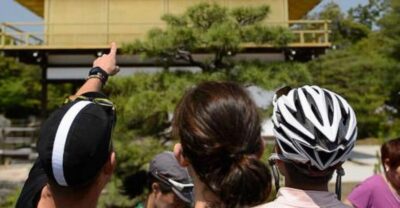
Hidden Gems E-Bike Tour with Local Japanese Guide
Read our review →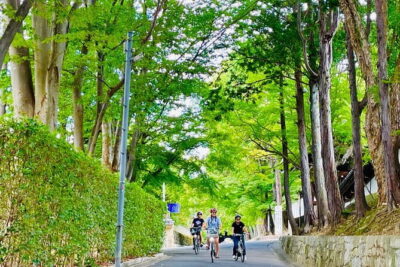
Pedal Adventure Kyoto’s iconic landmarks on an e-bike tour
Read our review →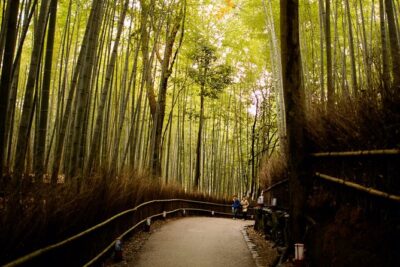
This ride also appears in