
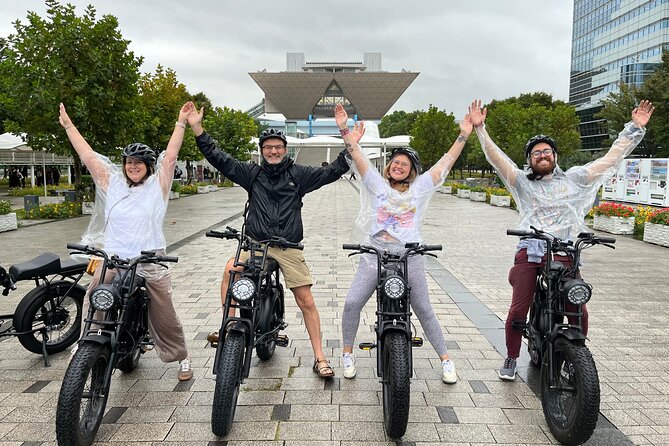
Review · TOKYO
Tokyo Top Highlights 3h Guided E-bike Tour
Tokyo is a huge city, and an e-bike gives you a clever way to connect the pieces. In three to four hours, you can pedal from Tsukiji through local streets to temples, gardens, government buildings, Tokyo Bay, or Tokyo Tower, depending on the route you choose. The small-group format keeps the ride personal, with a maximum of six people.
I like two things especially. First, the electric assistance makes hills and long stretches far easier than they would be on a standard bicycle. Second, the guides, including Hiro, FK, Shinobu, Miky, Sho, and Takuro, add useful context about customs, temples, and city history while keeping an eye on the group. The included Japanese snack is a small but welcome touch.
The main consideration is that this is real city cycling, not a park ride. You will ride on Tokyo streets with traffic, and you need basic cycling skill, moderate fitness, and enough confidence to follow the guide safely. Traffic signals and group spacing matter, so this tour is not ideal if you are uneasy on roads.
Key points to know before booking
- Three distinct routes: Choose the Tokyo City Route, Tokyo Bay Sunset and Night Route, or Tokyo Tower Route.
- Maximum of six people: A small group allows a steadier pace and more direct help from the guide.
- E-bike assistance: The bikes are simple to operate and reduce the effort on hills and longer city stretches.
- Local stops beyond the headline sights: Expect shrines, temples, gardens, neighborhood streets, and major landmarks.
- Japanese snack included: The break may feature mochi or another traditional convenience snack selected by the guide.
- Tsukiji start and finish: All routes begin and end at the same e-bike shop at 6-chōme-11-5 Tsukiji.
Why an e-bike works so well in Tokyo
Tokyo is easy to explore by train, but trains can separate you from the streets between the famous sights. Walking gives you local detail, yet the distances between districts can eat up much of your day. An e-bike sits nicely between those two options.
You can cover more ground than on foot without spending the whole morning underground. You also get a better sense of how Tokyo’s districts connect, from Tsukiji and Ginza to the waterways, gardens, shrines, and modern waterfront.
The bikes are described as easy to operate, with no complicated gear changes. That matters if you have not cycled in a while. Several guides have also been praised for adjusting the pace, stopping for explanations, and helping riders feel safe.
Still, do not mistake electric assistance for a motorized sightseeing vehicle. You pedal, steer, watch the road, and ride as part of a group. One participant found the guide’s pace too quick at times, with concern about following through traffic lights. That is an important reminder: stay alert, keep a safe distance, and never cross against a red signal simply to remain with the group.
More City E-Bike Tours in Japan
- 3h Tokyo E-Bike Tour: Hidden Gems, and Local Life with guide
★ 5.0 · 670 reviews - 5 Top Highlights of Kyoto Full Day Bike Tour (E-bike option)
★ 5.0 · 511 reviews - Tokyo: 3-Hour Bike or E-Bike City Highlights Tour
★ 4.8 · 435 reviews
Starting in Tsukiji and getting ready to ride
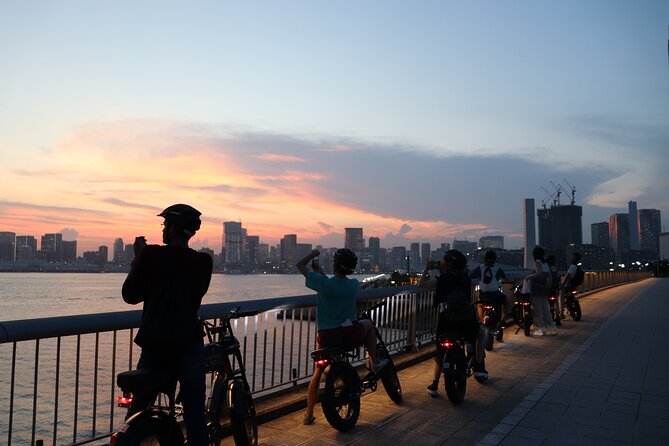
The meeting point is at 6-chōme-11-5 Tsukiji, Chuo City. You should arrive 15 minutes before the stated start time for the e-bike briefing. If you arrive earlier, the shop may still be closed, so do not assume something has gone wrong. The guide is expected to arrive shortly before the meeting time.
The briefing is useful for checking the bike, learning the controls, and asking any last questions before heading into the streets. Helmets are provided, as are winter gloves. You can leave luggage at the e-bike shop, and a knapsack can be rented free of charge.
All three routes return to the starting point. That circular design is practical. You do not need to find your way back from a distant neighborhood or plan a separate train journey at the end.
The activity lasts about three to four hours, though traffic can delay the finish by roughly 30 minutes. Keep the rest of your day flexible, especially if you have a restaurant reservation or timed attraction afterward.
Tokyo City Route: gardens, shrines, and central Tokyo
The Tokyo City Route is the best choice if you want a broad introduction to central Tokyo with a mix of famous architecture and quieter cultural stops. It passes through Ginza, the luxury shopping district, but you only ride through. Your wallet gets a break.
Tokyo Station
The first major stop is Tokyo Station, built in 1914. Its Western-style facade contrasts with the tall modern buildings around it, giving you a quick lesson in how old and new Tokyo sit side by side.
The stop lasts about 15 minutes. It is mainly a photo and orientation stop rather than a long architectural visit, so you will get the outside view and some background before moving on.
Same saddle, a different route:
- Hidden Kyoto E-Biking tour
★ 5.0 · 1,843 reviews - Kyoto: Memory Kyoto E-Bike Tour
★ 4.8 · 297 reviews - Tokyo: 3-hour Guided E-Bike Tour of the City’s Hidden Gems
★ 4.8 · 251 reviews - Osaka E-Bike Tour with a Local Guide
★ 5.0 · 219 reviews
Ningyocho Street
Ningyocho is known as doll town, though you should not expect to find a row of traditional doll shops waiting for you. The appeal is the older neighborhood atmosphere and the chance to try a traditional sweet.
The stop lasts about 20 minutes. This is one of the moments that makes the ride feel less like a checklist of major sights. You are seeing a district with a local identity, then tasting something connected to Japanese food culture.
Kiyosumi Teien
Kiyosumi Teien provides a calm pause after the city streets. This Japanese garden is less familiar to many international visitors, and the tour includes admission.
You can walk through the garden for about 25 minutes. The stop is not just a photo opportunity. It gives you time to slow down, look at the landscaping, and enjoy the quiet rhythm of a traditional Japanese garden before getting back on the bike.
Tomioka Hachimangu
The route then reaches Tomioka Hachimangu in the historic Fukagawa area. This is one of Tokyo’s important Shinto shrines and has a connection to the early development of sumo.
The stop lasts about 30 minutes. A guide can help explain the difference between a shrine and a Buddhist temple, as well as the role such places play in local life. If you want a cultural introduction rather than only city views, this is one of the strongest stops on the city route.
The city route is likely the best match for a first visit, especially if you want gardens, temples, local streets, and central landmarks in one outing. It does not offer the dramatic waterfront skyline of the bay route, but it gives you a more varied look at everyday Tokyo.
Tokyo Bay Sunset and Night Route: water, Odaiba, and city lights
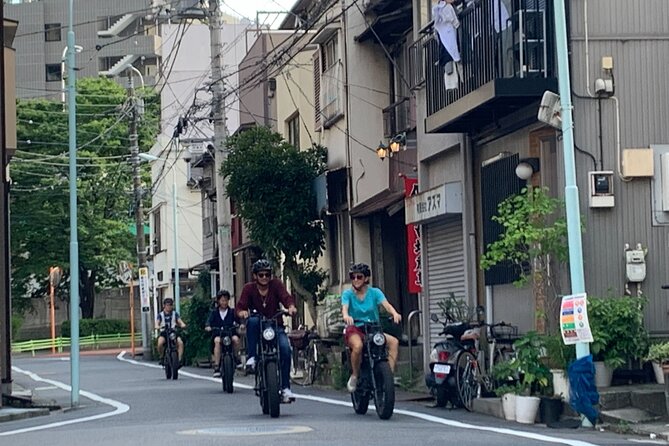
The Tokyo Bay Route is the most visual option, especially in the late afternoon. A start around 3:45 or 4 p.m. can let you see the bay in daylight, catch sunset, and continue into the city lights.
Sumiyoshi Shrine and Tsukuda Tendai Jizoson
The first stop is Sumiyoshi Shrine, located in a more local part of Tokyo. The ride there lets you see residential streets and get a sense of how people live away from the large commercial centers.
After about 15 minutes at the shrine, you continue to Tsukuda Tendai Jizoson, a small temple in a tucked-away location. The stop is only about five minutes, but its appeal is precisely that you might not find it on your own.
These early stops give the route some balance. The bay views are the big draw, but the ride also includes places that would be easy to miss if you only followed the standard sightseeing circuit.
Tokyo Skytree and teamLab Planets
You pass Tokyo Skytree, the world’s tallest radio tower, without a planned extended visit. The listed stop is about one minute, so treat it as a moving viewpoint and photo moment rather than a tower visit.
The ride also passes teamLab Planets Tokyo, the modern art museum. Again, this is a brief pass-by. You will not enter the museum as part of the cycling activity, so book a separate ticket if you want to see the installations inside.
Tokyo Big Sight
Tokyo Big Sight is Japan’s largest exhibition hall, known for its unusual architecture. The stop lasts about 10 minutes and gives you time for photos.
This is a good example of the route’s range. You move from a shrine to a futuristic art venue and then to a major convention complex, all within the same ride. The bay route is less about extended indoor visits and more about seeing how Tokyo uses its waterfront.
Gundam Base Tokyo and Aqua City Odaiba
The giant Gundam statue is one of the route’s most playful stops. At 19.7 meters high, it is far larger and more detailed than you may expect from an anime landmark. You have about 10 minutes to look and take pictures.
The final stop is Aqua City Odaiba, a shopping complex where you get a quick break and a Japanese convenience snack selected by the guide. Some participants have specifically enjoyed mochi on the ride. The break lasts about 30 minutes, making it the longest pause on this route.
The Tokyo Bay Route is the strongest pick for sunset photographs, modern Tokyo, and nighttime views. It is also the route most affected by weather and changing light. If the sky is clear, the timing can be excellent. If rain arrives, the operator may cancel or offer a date change, refund, or alternate format.
Tokyo Tower Route: temples, hills, parliament, and Hibiya Park
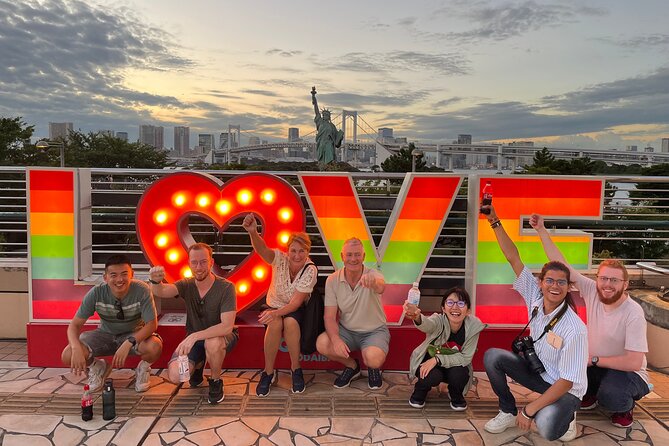
The Tokyo Tower Route combines classic Tokyo sights with a little more climbing. The e-bike matters most here, since Atago Shrine sits on a small hill.
Zojo-ji Temple and Tokyo Tower
Zojo-ji Temple is the first main stop, with about 30 minutes to look around. Its connection to the powerful Tokugawa shogun family gives the guide a useful opening for explaining how religion, politics, and the growth of Tokyo have overlapped.
You also pass Tokyo Tower, the 333-meter landmark. The route does not include a tower admission, but seeing it from street level gives you a clear sense of its scale and its place among the surrounding buildings.
Atago Shrine
Atago Shrine is reached by a hilly road. Without electric assistance, this could be a hard section, especially in hot weather. With the e-bike, the climb is more manageable, though you still need to pedal and control the bike.
The stop lasts about 20 minutes. This is a worthwhile choice if you like small religious sites and do not mind a little effort. It also gives the ride more physical variety than a flat waterfront route.
National Diet Building and Hibiya Park
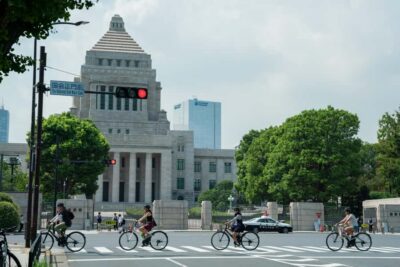
The National Diet Building, completed in 1936, is a brief five-minute stop. You will see the exterior and hear about its role in Japan’s government.
On the way, the group picks up a traditional Japanese snack at Hibiya Park. The final stop lasts about 20 minutes, giving you time to eat and look around a park known for about 150 types of trees and 350 types of flowers.
The route also passes the Imperial Palace area, including a pond where ducks may be seen. You do not enter the palace grounds as part of this ride, so keep expectations focused on exterior views and the surrounding area.
Guides, group size, and the feel of the ride
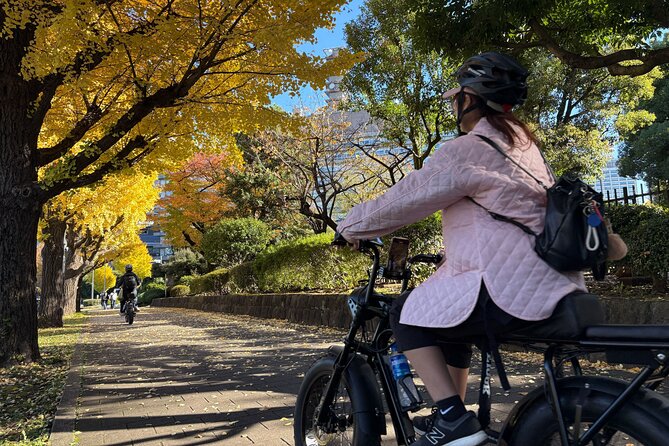
The maximum group size is six, which is one of the tour’s strongest practical features. A small group makes it easier to hear explanations, ask questions, and receive help at crossings or stops.
The guides bring different personalities. Hiro is frequently praised for clear English, humor, historical explanations, and careful attention to safety. FK is noted for making the bay route informative and fun. Shinobu has led family groups, while Miky has been praised for combining cultural information with thoughtful photos. Sho is described as friendly and well informed about Tokyo, and Takuro has received credit for confidently guiding riders through city traffic.
Guide quality can vary from person to person, but the repeated strengths are clear: explanations at the stops, a friendly manner, help with pacing, and attention to rider comfort. Some guides use an iPad to show historical background, which can make a building or shrine easier to understand than a quick verbal explanation alone.
Price, value, and who should book
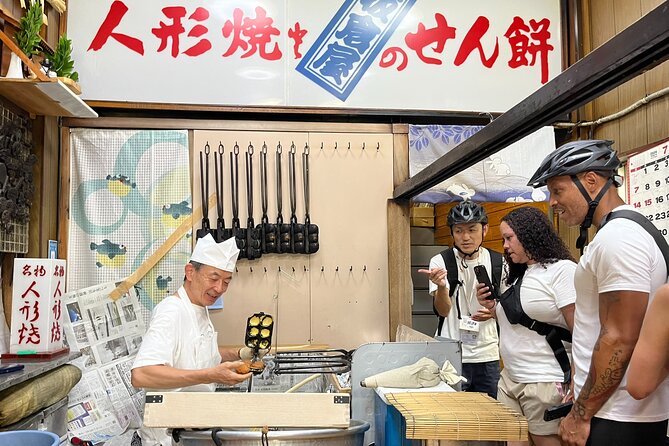
At $63.67 per person, this is not the cheapest way to move around Tokyo, but it offers reasonable value if you want transport, guiding, equipment, and several sightseeing stops in one package. You also receive a helmet, winter gloves when needed, luggage storage, and a snack.
The price makes the most sense if you would otherwise pay for a separate walking tour, local transport between districts, and a snack stop. It is less attractive if you only want a short bicycle rental or prefer to explore at your own speed.
You must be at least 147 centimeters tall, at least 13 years old, and no more than 120 kilograms. A moderate level of fitness is required. The operator cannot accommodate allergies or vegetarian diets, so the included snack should not be treated as a custom food service.
Free cancellation is available if you cancel at least 24 hours before the start time. Poor weather can also lead to a cancellation, with a different date or full refund offered. If the weather changes during the ride, safety concerns may lead to cancellation.
Should you book the Tokyo e-bike tour?
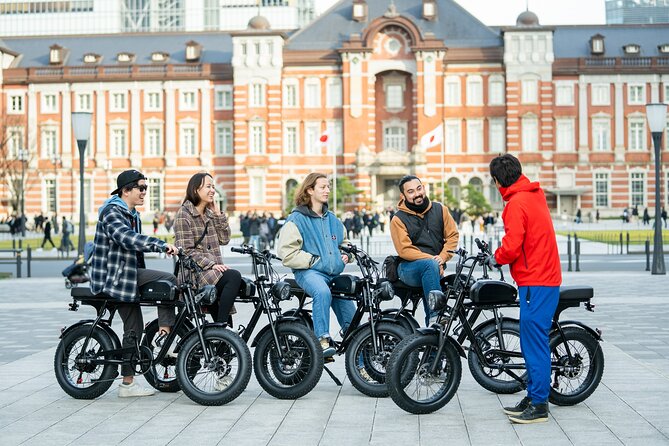
Book it if you want to see several parts of Tokyo in one half-day, enjoy learning from a guide, and feel comfortable cycling on city streets. I would choose the Tokyo City Route for a first broad look, the Tokyo Bay Route for sunset and modern waterfront views, and the Tokyo Tower Route for temples, government buildings, and a manageable hill.
Skip it if you dislike traffic, cannot ride confidently, need a fully accessible sightseeing option, or require vegetarian or allergy-safe food. Also avoid scheduling it too close to another fixed appointment because traffic may extend the finish by 30 minutes.
For most reasonably fit visitors who can ride a bicycle, this is a smart way to get beyond the train stations and see Tokyo at street level. The best booking decision comes down to the route: choose the places you most want to see, then arrive early, listen carefully at crossings, and let the e-bike do the heavy work.
FAQ
Where does the Tokyo e-bike tour start and finish?
The tour starts and ends at the e-bike shop at 6-chōme-11-5 Tsukiji, Chuo City, Tokyo 104-0045, Japan.
How long does the tour take?
The activity lasts approximately three to four hours. Traffic can delay the finish by about 30 minutes.
How many people can join the tour?
The maximum group size is six participants.
Which routes can I choose?
You can choose the Tokyo City Route, Tokyo Bay Sunset and Night Route, or Tokyo Tower Route. The stops differ by route, so check the selected route before booking.
What equipment is included?
The tour includes an e-bike and helmet. Gloves are provided during winter. Luggage storage is available at the e-bike shop, and a knapsack can be rented free of charge.
Is the tour suitable for children?
Participants must be at least 13 years old. Anyone 12 or younger cannot join.
Is there a height or weight requirement?
Participants must be at least 147 centimeters tall and must not weigh more than 120 kilograms.
What happens if it rains?
The tour requires good weather. If poor weather causes cancellation, you may be offered another date or a full refund. The operator may also offer an alternate itinerary or rental arrangement in some situations.
Can the tour accommodate food allergies or vegetarian diets?
No. The operator states that allergies and vegetarian dietary needs cannot be accommodated.
More three-hour rides around Japan
- Tokyo: 3-Hour Bike/E-Bike Tour of the City’s Highlights
★ 5.0 · 209 reviews - 3-Hour Tokyo Private E-Bike Tour Starting from Your Hotel
★ 5.0 · 117 reviews - Tokyo: 3h Private E-bike Tours, Starting at Your Hotel
★ 5.0 · 36 reviews - 3 Hours E Bike Tour around Chiyoda Tokyo Prefecture
★ 5.0 · 2 reviews
New e-bike tours around Japan
- Ride around the Castle. Slurp like a Local★ 5.0 · 5 reviews
- 3 Hours E Bike Tour around Chiyoda Tokyo Prefecture★ 5.0 · 2 reviews
- Half Day Private Rural E-Bike Tour in Hida★ 5.0 · 101 reviews
- 3-Hour Tokyo Private E-Bike Tour Starting from Your Hotel★ 5.0 · 117 reviews
- Tokyo: 3h Private E-bike Tours, Starting at Your Hotel★ 5.0 · 36 reviews
- Historical Kyoto E-Bike Tour★ 5.0 · 181 reviews
- 1-Day Private Rural E-Bike Tour in Hida★ 5.0 · 188 reviews
- E-Bike Nara Highlights – Todaiji, Knives, Deer, Shrine★ 4.8 · 186 reviews
Tokyo E-Bike Tours, side by side.
3h Tokyo E-Bike Tour: Hidden Gems, and Local Life with guide
Read our review →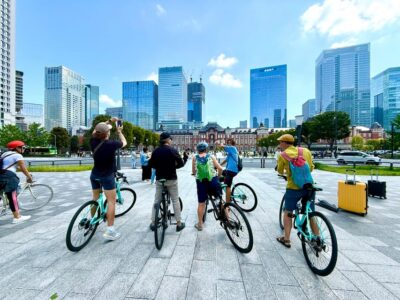
3-hour Guided E-Bike Tour of the City’s Hidden Gems
Read our review →
3-Hour Tokyo Private E-Bike Tour Starting from Your Hotel
Read our review →
3h Private E-bike Tours, Starting at Your Hotel
Read our review →
3 Hours E Bike Tour around Chiyoda Tokyo Prefecture
Read our review →This ride also appears in