
Review · JAPAN
E-Bike Nara Highlights – Todaiji, Knives, Deer, Shrine
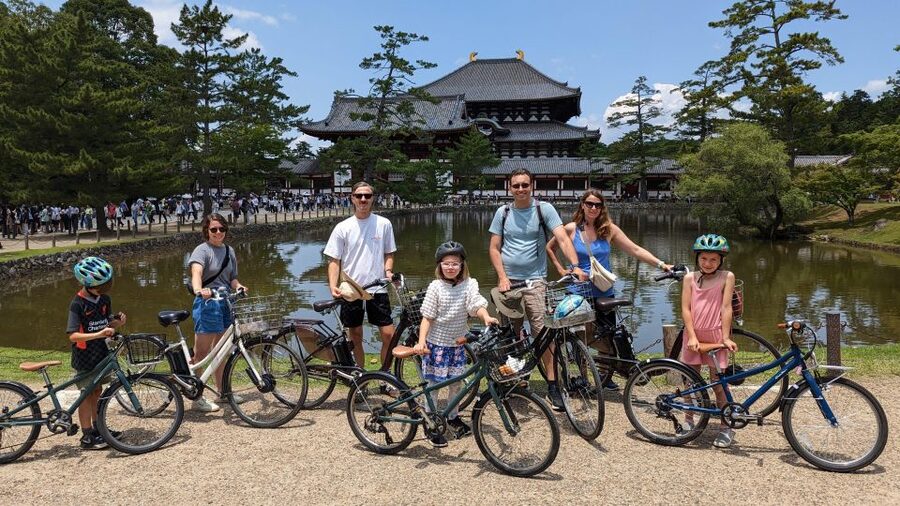
Nara’s great sights are spread across a wide park, and this tour gives you a practical way to link them. You’ll ride an e-bike past deer, stop at the huge Nandaimon Gate, enter Todaiji, visit Kasuga Taisha, and finish with a look at Japanese cutlery. I especially like the amount of ground covered and the chance to see Nara at street level instead of from a bus or train.
I also like the useful local touches: your guide shows you how to feed the deer properly, explains the knife-making tradition, and can help with a purchase. The main consideration is pace. The ride is not always slow and leisurely, and one report noted that a bike needed better maintenance and was less comfortable for a taller rider.
Quick reasons to consider this Nara e-bike tour

- Todaiji and Nandaimon in one visit: Enter one of Japan’s best-known temples after seeing its massive wooden gate.
- A smarter route through Nara Park: E-bikes reduce the walking between the deer park, temple, shrine, pond, and mountain views.
- Japanese knives with shopping help: Visit Kikuichimonjushirokanenaga honten for an introduction to cutlery and assistance if you want to buy.
- Deer-feeding guidance: You receive deer crackers and learn the local way to interact with the animals.
- A small-group feel: Private and small-group options are available, with English and French guides.
- A useful choice in hot or limited-time conditions: The bikes help you see more without spending the whole day on foot.
Why the e-bike works so well in Nara Park
Nara is easy to underestimate on a map. Todaiji, Kasuga Taisha, Wakakusayama, the central deer areas, and Ukimido are all close enough to seem walkable, but the distances add up quickly. Add crowds, summer heat, temple grounds, and the occasional uphill stretch, and a walking day can become tiring.
The e-bike changes the rhythm. You can ride between major stops, then park and explore on foot where it matters. The electric assistance is especially useful near Mt. Wakakusa, and one family traveling with a teenager found that the bikes made the hills easy. Another rider in his 60s and out of shape still managed the route comfortably.
This is not a downhill sightseeing ride. You still need to handle a bicycle properly, and the cycling portions may move at a forward pace. You should feel comfortable riding around other people and stopping when directed. Bicycle insurance is not included, so take that responsibility seriously when booking.
The equipment has generally been well received, with several people praising the condition and ease of use. Still, the quality may not be identical on every departure. One report raised concerns about maintenance and fit for a tall rider, so mention your height or any bike concerns before setting off.
More City E-Bike Tours in Japan
- Tokyo Top Highlights 3h Guided E-bike Tour
★ 5.0 · 714 reviews - 3h Tokyo E-Bike Tour: Hidden Gems, and Local Life with guide
★ 5.0 · 670 reviews - 5 Top Highlights of Kyoto Full Day Bike Tour (E-bike option)
★ 5.0 · 511 reviews
Starting near Kintetsu Nara Station
The meeting point is at 16-1 Takamaichō, in front of Building LIFE 21, at the bike base. It is less than a five-minute walk from Kintetsu Nara Station, which makes the start convenient if you arrive on the Kintetsu line.
Take care here: this is not near JR Nara Station. The two stations are not the same, so allow extra time if you are arriving by JR. Arrive 15 minutes before departure. Look for the guide in a JTA uniform, with a navy cap and red polo shirt.
The tour lasts 210 minutes, or three and a half hours. Guides have included Chris, Remi, Robert, Melody, Elodie, Jean-Yves, and others. The language offered is English or French, but French is not guaranteed on a shared tour. If a French-speaking guide matters to you, contact the operator before booking.
A single person can book, but the tour needs at least two participants to operate. If that minimum is not met, the departure may be canceled with a rescheduling option or full refund. That is worth knowing if your Nara schedule is tight.
Meeting Nara’s deer the right way
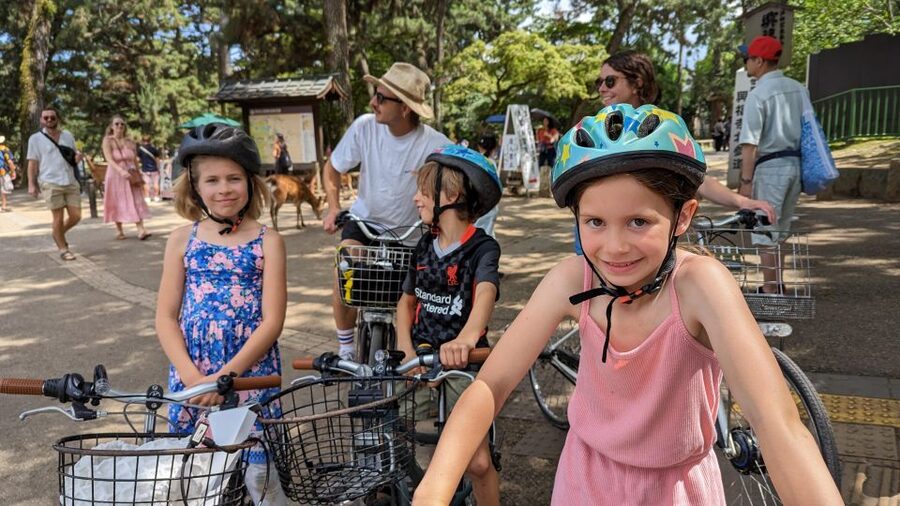
The first ride takes you into Nara Park, where deer wander freely among the paths and temple grounds. You receive deer crackers, called shika senbei locally, and your guide explains how to offer them.
The useful lesson is not simply how to hold a biscuit. You learn to pay attention to the deer, offer the crackers in a controlled way, and finish with empty hands. Deer are accustomed to people, but they are still animals, not tame pets. Keeping food out of sight when you have none left is sensible.
The deer are part of Nara’s charm, but the park is more than a photo stop. Riding through it gives you changing views of wooded paths, open lawns, temple roofs, and visitors moving between the main sights. Your guide can also help you avoid wasting time on awkward routes.
The tour includes only the initial deer cookies. Extra cookies, food, and drinks cost more, so do not assume you can keep feeding the deer all afternoon without spending extra.
Nandaimon Gate and the first look at Todaiji

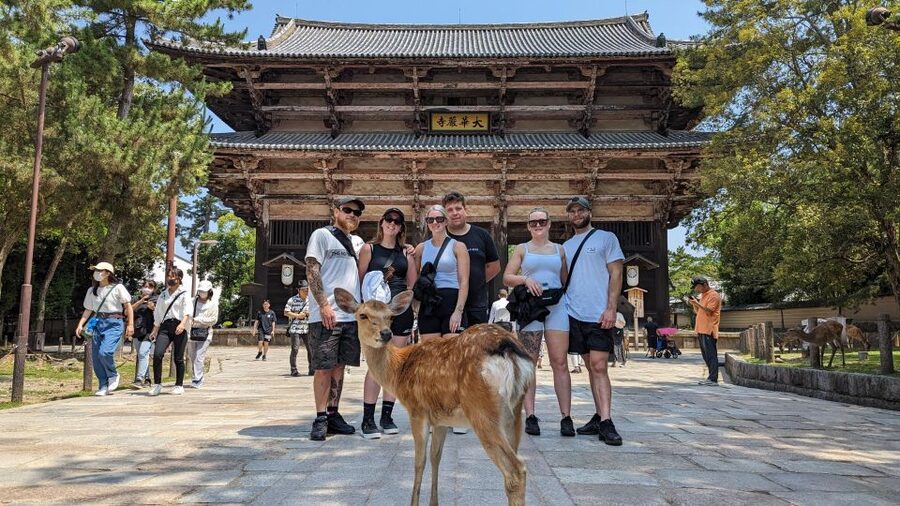
Nandaimon Gate is one of the strongest visual moments early in the tour. Its scale gives you an immediate sense of the power and ambition behind Todaiji. You stop for photographs and spend roughly 20 minutes with the guide before moving toward the temple itself.
This is a good place to listen rather than rush for a picture. The gate and its guardian statues provide context for the temple visit, and the guide can explain how Buddhist architecture and religious practice fit into Nara’s story.
At Todaiji, you have about 45 minutes. The entrance fee is included, which keeps the visit simple. Inside, you have free time and a self-guided portion, so do not expect the guide to lead every step of the temple interior.
Todaiji’s great hall is one of the essential sights in Nara. The building, the statue of the Great Buddha, and the sheer interior scale make the visit worthwhile even if you have already seen many Japanese temples. The allotted time lets you enter, look around, take photographs where permitted, and browse nearby shops without turning the stop into a hurried march.
The tradeoff is that 45 minutes is an introduction, not a full study visit. If you want to read every sign or spend a long time in the surrounding temple grounds, you may wish you had more time. For a first visit, though, the arrangement works well.
Same saddle, a different route:
- Hidden Kyoto E-Biking tour
★ 5.0 · 1,843 reviews - Tokyo: 3-Hour Bike or E-Bike City Highlights Tour
★ 4.8 · 435 reviews - Kyoto: Memory Kyoto E-Bike Tour
★ 4.8 · 297 reviews - Tokyo: 3-hour Guided E-Bike Tour of the City’s Hidden Gems
★ 4.8 · 251 reviews
Passing Mt. Wakakusa without losing time
After Todaiji, the route passes Mt. Wakakusa. You get a photo stop and scenic views for about 15 minutes rather than a climb to the summit.
That distinction matters. This is not a hiking excursion, and the tour does not promise a long mountain walk. Instead, the e-bike lets you enjoy the setting and keep the day moving. The electric assist is helpful on this stretch, especially for riders who would rather save their legs for the temple and shrine grounds.
The route also benefits from changing light. One afternoon departure moved from full sun toward sunset, giving the park a different feel as the ride continued. Conditions vary, of course, but the timing can add variety to what might otherwise be a string of similar temple stops.
The knife stop at Kikuichimonjushirokanenaga honten
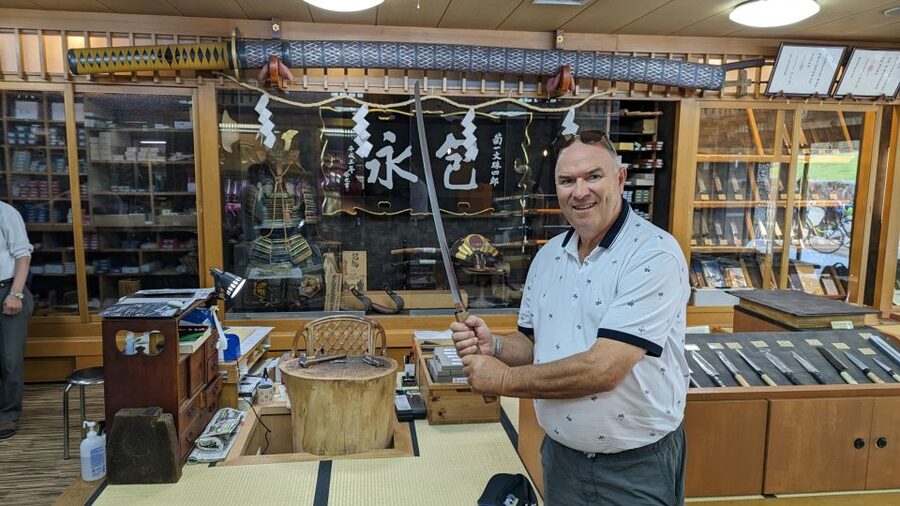
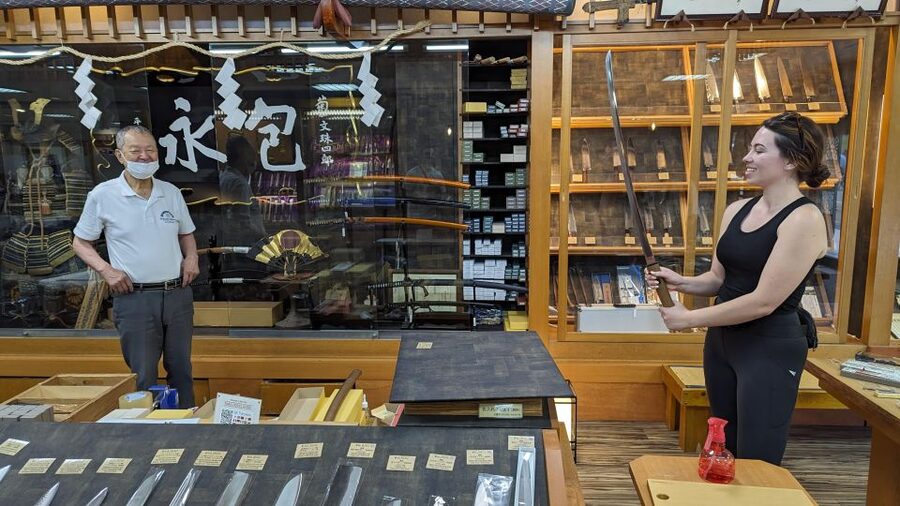
The cutlery visit gives this tour more character than a standard Nara highlights loop. At Kikuichimonjushirokanenaga honten, you spend about 30 minutes learning about Japanese knives, their uses, and the craft behind them.
The shop has a family connection to sword making, which gives the introduction a clear link between older Japanese metalwork and modern kitchen tools. You can browse, ask questions, and get help if you are choosing a knife or souvenir.
Shopping assistance is included, but buying is not required. That said, the stop is persuasive. One rider arrived determined not to purchase anything and left wishing for a full set or several gifts. Another later used the knives at home and praised their sharpness.
Bring cash, as requested by the operator, and remember that a knife purchase creates a practical travel question. Ask the shop or your guide about packing and transport before buying. The tour provides guidance, but the final responsibility for taking your purchase home is yours.
You also receive one Japanese snack called Kanoko. It is a small local touch, not a meal, so plan to eat before or after the tour and carry water or money for additional drinks.
Kasuga Taisha and its rows of lanterns
Kasuga Taisha is the tour’s main shrine stop, with about 30 minutes for photographs, sightseeing, and a walk. The approach has a different mood from Todaiji. Instead of a large Buddhist temple hall, you encounter a Shinto shrine setting tied to forest, stone lanterns, and long rows of bronze lanterns.
The thousand lanterns are the visual feature most people remember, though the exact experience depends on access and lighting during your visit. Your guide can help explain the difference between Shinto and Buddhism, a subject several guides have handled especially well.
You should not expect an extended shrine study. Thirty minutes gives you time to see the key areas and absorb the setting, but not to inspect every corner. The bike makes the limited stop more useful because you are not spending much of the afternoon walking from one location to the next.
Deer also appear around the shrine grounds. That combination of sacred buildings, forest paths, lanterns, and animals is one of the reasons Nara feels different from a standard city sightseeing day.
Ukimido and the final ride through the park
The route returns through Nara Park for about 20 minutes before stopping at Ukimido. You have roughly 15 minutes there for photographs and views.
Ukimido is a small pavilion associated with the water and open scenery of the park. It offers a pause after the denser temple and shrine visits. You can slow down, take pictures, and enjoy a quieter part of the route before the final 10-minute ride back.
The last section is not another major attraction. It is simply the return through the park to the bike base, with a chance to see the surroundings from a different angle. After several hours, that simple ending is welcome.
What the $90 price really covers
At $90 per person, this is not the cheapest way to see Nara. You can walk through much of the park for free and pay separately for temple or shrine-related costs. A bicycle rental without a guide would also cost less in many cases.
The value comes from the combination. Your price includes the e-bike, Todaiji admission, deer crackers, a local bilingual guide, the knife introduction, and the Kanoko snack. You are also paying for a route that links several spread-out sights in three and a half hours.
I consider the price fair if you have one day in Nara, dislike long walks, or want historical explanation without planning the route yourself. It is less compelling if you already know Nara well, prefer lingering at one temple, or want a very slow cycling experience.
The strongest value is time. Several stops would take much longer on foot, especially in hot weather. One family specifically appreciated not having to work out which paths bicycles could use or how to connect the sights. That planning help is part of what you are buying.
Still, some people have found the cost a little high compared with similar tours. Private departures offer more control, but the price concern becomes more noticeable there. Small groups are likely the better balance if you want guidance without paying for a fully private outing.
Who will enjoy this ride most
I would choose this for a first visit to Nara, especially if you have a half-day and want the major sights in one organized route. It suits couples, families with older children, and active adults who prefer riding to walking.
It also works well in hot weather. Several hours on foot can be tiring, while the e-bike reduces the effort between stops. The bikes are also useful for families, and child seats can be provided for children under 10, with one seat per e-bike.
You should reconsider if you cannot ride a bicycle confidently, need bicycle insurance included, or want a gentle, slow-paced outing. The ride can move briskly, and comfort may vary by bike and rider height.
Rain does not automatically end the experience. A wet departure still went ahead and remained enjoyable, but you should bring suitable clothing and understand that outdoor stops are weather dependent. Comfortable shoes and clothing are recommended, along with a passport and cash.
My booking advice
Book this tour if you want maximum coverage in limited time, enjoy a little activity, and value a guide who can explain the temples, shrine customs, deer, and knife craft. The route gives you more variety than a simple Todaiji visit and keeps the day from becoming a long walk between attractions.
I would be especially happy to have guides such as Chris, Remi, Robert, Melody, or Elodie, all of whom have handled the route with warmth and useful detail. Guide quality is one of the experience’s biggest strengths, though the exact person depends on the date and language.
Skip it if your priority is quiet contemplation, extensive temple photography, or a completely unhurried pace. For most first-time visitors with only a day in Nara, though, the e-bike is a sensible way to see the deer, Todaiji, Kasuga Taisha, Wakakusayama, Ukimido, and a memorable knife shop without wearing yourself out.
FAQ
Where does the Nara e-bike tour meet?
You meet at 16-1 Takamaichō, in front of Building LIFE 21 at the bike base. It is less than a five-minute walk from Kintetsu Nara Station, not JR Nara Station.
How long does the experience last?
The tour lasts 210 minutes, or three and a half hours. Starting times depend on availability.
What languages are available?
The listed tour languages are English and French. French is not guaranteed on a shared tour, so contact the operator in advance if you need a French-speaking guide.
Are Todaiji entrance fees included?
Yes. Todaiji admission is included in the tour price.
Are deer crackers included?
Yes. Deer cookies for feeding the animals are included. Extra cookies, food, and drinks are not included.
Can children under 10 join?
Yes. Child seats can be provided for young riders, with a maximum of one child seat per e-bike.
What should I bring?
Bring your passport, comfortable shoes, comfortable clothes, and cash. Helmets are available if requested, subject to availability.
New e-bike tours around Japan
- Ride around the Castle. Slurp like a Local★ 5.0 · 5 reviews
- 3 Hours E Bike Tour around Chiyoda Tokyo Prefecture★ 5.0 · 2 reviews
- Half Day Private Rural E-Bike Tour in Hida★ 5.0 · 101 reviews
- 3-Hour Tokyo Private E-Bike Tour Starting from Your Hotel★ 5.0 · 117 reviews
- Tokyo: 3h Private E-bike Tours, Starting at Your Hotel★ 5.0 · 36 reviews
- Historical Kyoto E-Bike Tour★ 5.0 · 181 reviews
- Arashiyama Bamboo Forest E-Biking Tour★ 5.0 · 183 reviews
- Pedal Adventure Kyoto’s iconic landmarks on an e-bike tour★ 5.0 · 189 reviews
Japan E-Bike Tours, side by side.

3h Tokyo E-Bike Tour: Hidden Gems, and Local Life with guide
Read our review →
5 Top Highlights of Kyoto Full Day Bike Tour (E-bike option)
Read our review →

3-hour Guided E-Bike Tour of the City’s Hidden Gems
Read our review →
This ride also appears in