Review · ROME
Appian Way Aqueducts Bike Tour (Catacombs & Lunch Option)
Rome’s best ancient sights are not all inside the city center. This e-bike tour takes you through Porta San Sebastiano, along the Appian Way, and beneath the giant aqueducts, where sheep, trees, and open fields replace Rome’s traffic and crowds. The 5-hour version adds St. Callixtus Catacombs and a meal or aperitif.
I like the way the electric bikes make a long ride possible for ordinary cyclists, and I like the range: ancient roads, parks, tombs, aqueducts, and major ruins in one outing. Guides such as Ava, Alex, Chris, Iman, and Paolo are praised for clear safety instructions and lively storytelling. The catch is simple: this is still four to five hours on a bike, with rough cobbles, dirt paths, traffic, and some hills.
Key points to know before you book
- The aqueducts are the visual highlight: Ride beneath huge Roman water channels in the open Parco degli Acquedotti.
- The 5-hour tour adds the most value: It includes the guided catacombs visit and lunch or an afternoon aperitif.
- You need solid bike skills: E-bikes help with hills, but they do not remove traffic, uneven stones, tight paths, or fatigue.
- The route escapes central Rome: Caffarella Park and the Appian Way bring fresh air, fields, ruins, and a quieter side of the city.
- Groups are limited to 12 people: That gives the guide room to watch the riders and explain the sites.
- Children have specific limits: A child aged 6 to 10 must be under 143 centimeters and uses a trailer bike rather than riding alone.
Why this ride shows you a different Rome
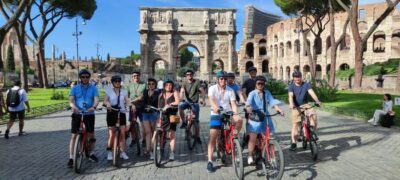
Rome can feel like one long queue between famous monuments. This tour changes the rhythm. You begin at Roma STARBIKE on Via dei SS. Quattro, a short distance from the Colosseum, then ride out through the ancient southern gateway of the city.
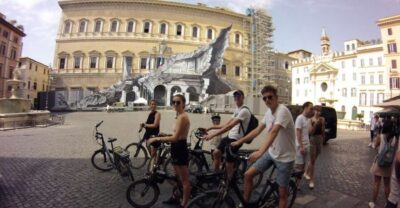
The first city streets require attention. You are not dropped straight onto a quiet bike path. You ride with the group through Rome, and the guide manages turns, traffic, and spacing. This is where guides such as Alex, Ava, Chris, Iman, and Paolo have earned praise for patience and safety.
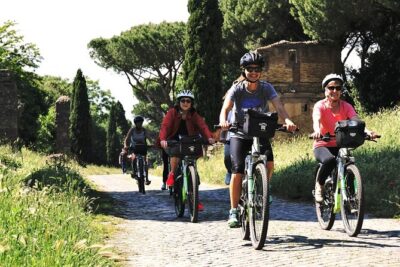
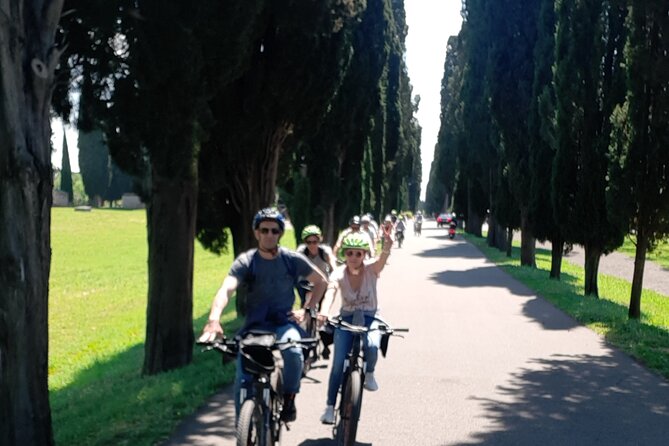
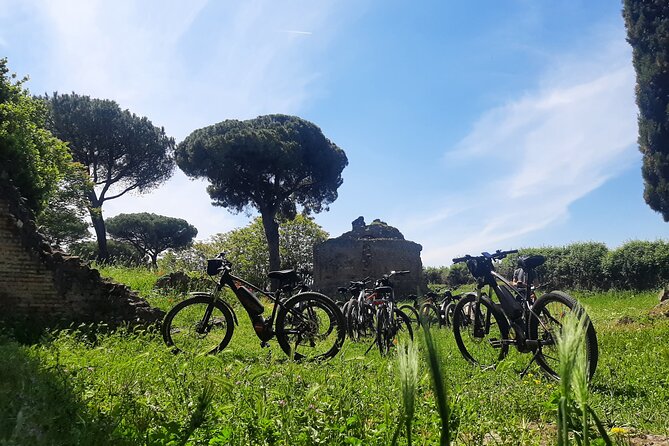
Once you pass through the Aurelian Walls, the mood shifts quickly. The route reaches Parco della Caffarella, a large green area within the Appia Antica Regional Park. You trade horns and buses for dirt paths, trees, old farm buildings, and scattered ruins.
I like this contrast. You see how quickly Rome gives way to open country, yet the ancient city never disappears. Roman tombs sit beside modern roads. Aqueducts cross fields. The past is not fenced off in one polished museum complex. It is spread through the countryside.
More E-Bike Tours with Lunch in Italy
- Rome: Appian Way E-Bike Tour Catacombs, Aqueducts & Picnic
★ 4.6 · 727 reviews - Rome: Appian Way Aqueducts Bike Tour (UPG Catacombs & Lunch)
★ 4.9 · 692 reviews - Rome in a Day Cannondale E-Bike Tour with Typical Italian Lunch
★ 5.0 · 265 reviews
Porta San Sebastiano and the first ancient road
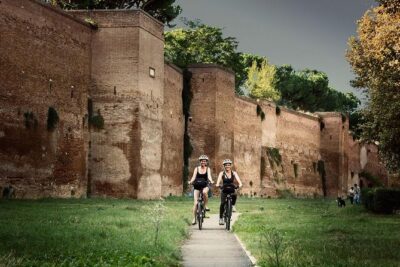
Porta San Sebastiano is one of the most imposing gates in the Aurelian Walls. Built around 275 AD, it marks the beginning of the historic Via Appia Antica. The gate also carries medieval graffiti left by pilgrims who passed through over the centuries.
Your stop here lasts about 15 minutes. That is enough time to look closely, hear the basic story, and understand why the route matters before you begin the longer ride.
This first section also gives you a chance to settle in on the e-bike. The guide fits your helmet and checks the bike before departure. A mobile phone holder and handlebar holder are included, along with a child seat when needed.
The bikes are electric-assisted, not automatic. You still pedal, steer, brake, and balance. Several riders found the bikes easy to operate, while others found the seats uncomfortable after hours in the saddle. If you have not cycled in years, that distinction matters.
The Appian Way, Rome’s ancient highway
The Via Appia Antica was known as the Regina Viarum, or Queen of Roads. Construction began in the 4th century BC under Appius Claudius, initially linking Rome with Capua. Later extensions carried it all the way to Brindisi, the major port in southern Italy.
The road was built to move Roman troops, but it also carried merchants, officials, pilgrims, and ordinary people. Today, the surviving route gives you one of Rome’s most unusual sightseeing settings.
Some stretches are paved, some are dirt, and some retain large, uneven stones. The ancient paving can be rough enough to demand concentration. Deep gaps between stones and occasional downhill sections reward a light touch on the handlebars and careful braking.
The electric assist helps on short climbs and reduces the effort in warm weather. It does not smooth the road. You should expect a sore backside, especially if you are not used to cycling for several hours.
The reward is a close view of Roman engineering without the usual city-center crush. You can stop for photos, hear stories about the road, and keep moving at a pace that connects the separate ruins into one larger picture.
Caffarella Park and the Nymphaeum of Egeria
Parco della Caffarella is one of the largest green spaces in Rome and forms part of the Appia Antica Regional Park. It is a working-looking stretch of countryside rather than a formal garden. Paths pass through trees and open ground, with ancient remains appearing along the way.
The ride through the park lasts about 50 minutes. This is one of the tour’s best sections for anyone who wants a break from museums and crowded squares. The setting can feel surprisingly rural, with the city still close but no longer demanding your full attention.
The Nymphaeum of Egeria adds a storybook pause. According to Roman legend, the nymph Egeria loved Numa Pompilius, Rome’s second king. After his death, her grief became a spring.
The stop lasts about 20 minutes. The story is less about proving every detail than about seeing how Romans connected water, nature, religion, and royal power. The site also gives you a quieter place to pause before returning to the road.
More Appian Way rides around Rome:
- Rome EBike Tour: Appian Way, Catacombs & Roman Aqueducts
★ 5.0 · 1,766 reviews - Rome: Appian Way & Aqueducts E-Bike Tour (Catacombs & Food)
★ 4.9 · 1,498 reviews - Rome: Appian Way, Catacombs, & Roman Aqueducts E-bike Tour
★ 4.9 · 1,421 reviews - Appian Way, Catacombs and Aqueducts Park Tour with Top E-Bike
★ 5.0 · 735 reviews
Cecilia Metella and the medieval fortress
The Mausoleum of Cecilia Metella is one of the best-preserved tombs on the Appian Way. The round pagan monument dates to the 1st century BC and later became part of the Caetani fortress complex.
You can also see remains of a medieval Caetani house and the perimeter walls of the church of San Nicola. This layering is typical of Rome. A Roman tomb became part of a medieval stronghold, and the surviving structure now sits within an archaeological park.
The stop is about 20 minutes. It is not a long guided visit inside a monument, so you should think of it as a focused roadside stop with time for photographs and explanation. The value is in the setting: the tomb, road, fields, and medieval remains make sense together.
The 5-hour option: catacombs and a meal
The longer tour includes St. Callixtus Catacombs, the official funerary complex of the Church of Rome. The underground corridors extend for about 20 kilometers. The site is linked with more than 50 martyrs, 16 popes, and hundreds of thousands of Christian burials.
The guided visit lasts about 50 minutes. It changes the tone of the day from open-air cycling to a darker, enclosed look at early Christian burial practices. If underground religious history interests you, this is a strong reason to choose the longer version.
The catacombs are not included in the 4-hour tour, so check your booking carefully. The shorter ride still covers a good portion of the route, but you give up one of the most distinctive stops.
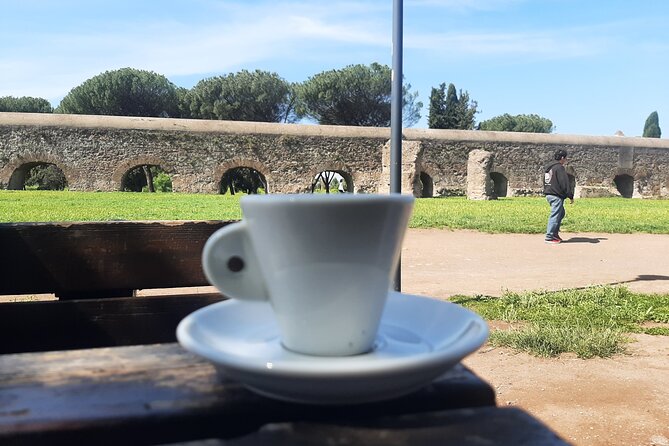
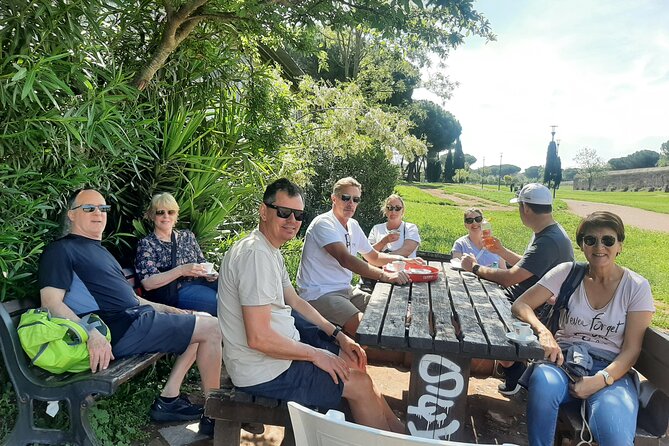
The 5-hour version also includes food. In the morning, lunch is provided, while the afternoon departure includes an aperitif instead. The schedule describes a simple sit-down meal at a restaurant near the aqueducts rather than something you should treat as a full gourmet event.
This pause matters after several hours of riding. In hot weather, it gives you a chance to eat, drink, and reset before the return route. The tour description also refers to a boxed lunch, so exact food arrangements may depend on the departure and current setup. If lunch is important to you, confirm the details when booking.
The aqueducts: the ride’s big visual reward
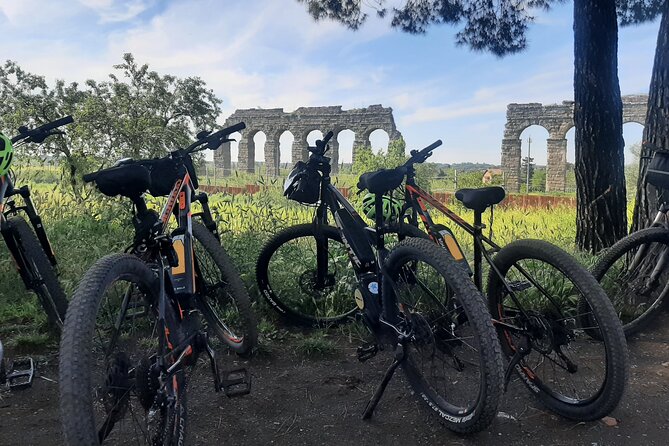
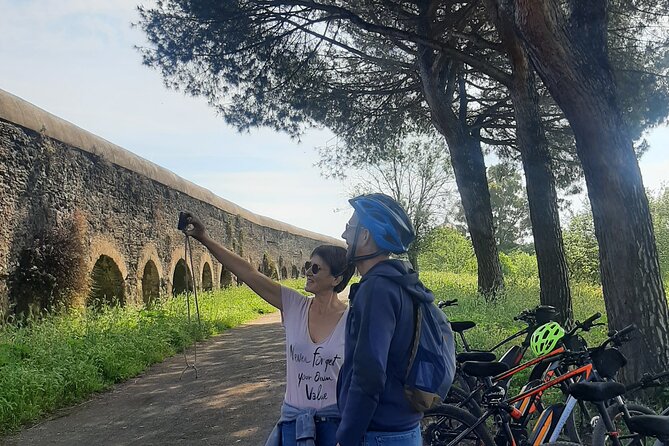
Parco degli Acquedotti is the point many people remember most. The park preserves the remains of Roman aqueducts, including the Claudio aqueduct, with enormous arches crossing the open space.
The scale is hard to grasp from a city street. Here, you can ride beside the structures and see how far they run across the fields. Some water channels are remarkably well preserved, and some sections remain in use.
The aqueduct stop on the extended itinerary lasts about 40 minutes for the meal or aperitif, followed by about 20 minutes of riding and explanation. The open setting gives you wide views and excellent photo chances without the tight crowds found around the Colosseum.
This is also where the e-bike earns its keep. The terrain is mostly manageable, but the route includes dirt and uneven surfaces. Riders with mountain-bike experience may find it easy. Occasional cyclists should stay close to the guide and take the rough sections slowly.
Circus of Maxentius and the Baths of Caracalla
The Circus of Maxentius lies along the Appian Way and is one of the best-preserved Roman circuses. Its central spine, or spina, is still visible. The obelisk once associated with it was later moved to Piazza Navona, where it forms part of Bernini’s Fountain of the Four Rivers.
The stop lasts about 20 minutes. It provides a useful comparison with the Circus Maximus, which you pass later on the return to the city. The Circus of Maxentius feels quieter and more complete, while the Circus Maximus is larger and more central but survives in a more open, less intact form.
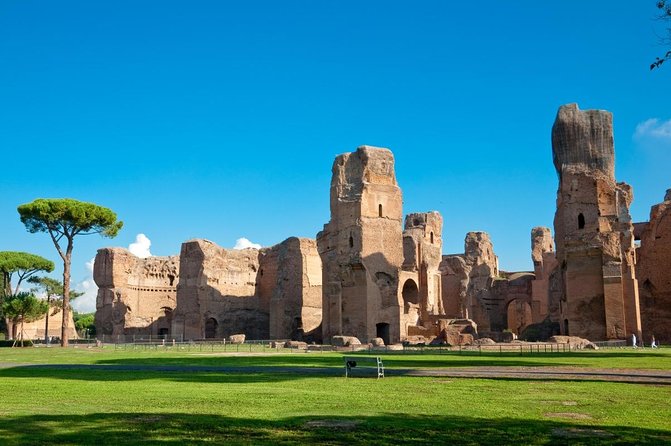
The final major stop is the Baths of Caracalla. Built by Emperor Caracalla, these baths were the largest public bath complex in the Roman world for about a century. Much of the structure remains, including the huge walls and vaulted spaces that show the scale of Roman public life.
The tour allows about 15 minutes here. That is enough for a short explanation and a look at the remains, but not a full visit to every part of the baths. Think of it as a strong final Roman landmark before you return the bikes.
How difficult is the cycling?
The tour requires a moderate fitness level and good bike skills. The route includes paved streets, dirt paths, cobblestones, short hills, and rough sections of the ancient Appian Way. You also need to handle city traffic at the start and end.
The e-bike reduces the work, especially on hills and in hot weather. Several riders found the bikes easy to use, and suspension helps on uneven ground. Still, an electric bike cannot solve balance problems or make rough cobbles comfortable.
You should be comfortable with:
- Starting and stopping without wobbling
- Braking on downhill sections
- Riding near other people
- Handling large stones and dirt tracks
- Cycling for several hours with short stops
Wear practical clothes and closed shoes. Bring water and expect the seat to become noticeable after a while. If your cycling experience is limited, the 4-hour option is the safer choice, but even that version is not a gentle sightseeing ride.
Is the small group worth it?
The maximum group size is 12 people. That is a useful limit on a route that includes traffic, narrow paths, and uneven ground. A guide can see more of the group and stop when someone needs help.
The strongest guides do more than lead the way. Alex is praised for checking riders in traffic and bringing Roman and medieval history to life. Chris is known for clear explanations and time for photographs. Ava is described as friendly and attentive, while Iman combines strong group control with detailed historical stories. Paolo is praised for his warmth and for helping after a fall.
Guide quality can vary from day to day, of course, but the repeated pattern is clear: safety briefings and storytelling are central to the experience. A good guide makes the road crossings less stressful and turns scattered ruins into a connected story.
Price, timing, and practical value
At $78.60 per person, the price is fair if you choose the 5-hour version and use the included bike, helmet, catacombs visit, and meal or aperitif. Renting an e-bike separately and arranging transport to the Appian Way would take extra planning, and you would lose the guide’s route knowledge.
The 4-hour tour may suit you better if you want the ride without a longer day. The 5-hour version offers better value for anyone who specifically wants the catacombs and food stop.
The tour is commonly booked about 38 days ahead, so do not leave it until the last day of a short Rome visit. It operates in English and uses a mobile ticket. The activity starts and ends at Roma STARBIKE, making the return simple.
Free cancellation is available up to 24 hours before the start time. Poor weather can also lead to a new date or full refund. Since the experience runs outdoors and requires safe riding, weather is a real concern rather than a minor footnote.
Families, height limits, and who should skip it
A child seat is available up to 25 kilograms. Children aged 6 to 10 can receive a reduced rate only if they are under 143 centimeters tall, because they use a trailer bike rather than riding independently.
That arrangement may work well for a confident family, but the route still includes traffic and rough surfaces. A six-year-old needs to remain comfortable for several hours, not just manage a short park ride.
The maximum rider weight is 120 kilograms. You must know how to ride a bike well. The tour suits active families, couples, and anyone who wants history with fresh air and movement.
It is not a good match if you dislike cycling, have not ridden for many years, or want a smooth, passive sightseeing trip. The e-bike helps, but it does not turn the experience into a bus tour.
Should you book the Appian Way e-bike tour?
Book it if you want to see a quieter, more open side of Rome and you are comfortable spending most of the day on a bike. The aqueducts, Appian Way, Caffarella Park, catacombs, and Roman tombs create a varied route that no standard city walk can match.
Choose the 5-hour version if the catacombs and meal matter to you. Choose 4 hours if you want less saddle time and can accept skipping those extras.
I would not book this as your first-ever bike ride. I would book it for an active day after you have seen the central monuments, when the city’s crowds begin to wear you down. Bring water, wear sensible shoes, listen closely to the guide, and treat the rough cobbles as part of the ancient-road experience.
FAQ
Where does the Appian Way Aqueducts Bike Tour start?
It starts at Roma STARBIKE, located at Via dei SS. Quattro, 58, in central Rome, a short distance from the Colosseum.
Where does the tour end?
The tour returns to the same bike shop where you collect and return the e-bike and helmet.
How long does the tour last?
The tour lasts approximately four to five hours, depending on the version you choose.
Is the catacombs visit included?
The guided visit to St. Callixtus Catacombs is included only with the 5-hour tour.
Is lunch included?
Lunch is included with the 5-hour morning tour. The 5-hour afternoon version includes an aperitif instead. Food is not included with the 4-hour tour.
Are e-bikes and helmets provided?
Yes. A high-quality electric-assisted bike and helmet are included. A mobile phone holder and handlebar holder are also provided.
Do I need to be fit to take the tour?
You need moderate physical fitness and must know how to ride a bike well. The route includes city streets, dirt paths, cobblestones, short hills, and several hours of cycling.
Can children join?
Children can join, but the reduced rate for ages 6 to 10 applies only to children under 143 centimeters tall. They use a trailer bike rather than riding a bike alone. A child seat is available up to 25 kilograms.
How many people are in the group?
The group can include a maximum of 12 people.
What happens if the weather is poor?
If the tour is canceled because of poor weather, you will be offered another date or a full refund. You can also cancel for a full refund up to 24 hours before the start time.
More E-Bike Tours with Lunch in Rome
- Electric Bike Beach Adventure with Tequila Tasting and Lunch
★ 5.0 · 1,162 reviews - Saint-Emilion Electric Bike Day Tour with Wine Tastings & Lunch
★ 5.0 · 696 reviews - Saint-Emilion Small-Group Electric Bike Wine Tour Tastings & Lunch from Bordeaux
★ 5.0 · 383 reviews - Kelowna Wine Tour by E-bike, Okanagan Valley Views and Lunch
★ 5.0 · 277 reviews
New e-bike tours around Rome
- Rome E-Bike Tour: Roman Castles, Villages and Lake Views★ 5.0 · 2 reviews
- E-bike tour in the center of Rome★ 3.8 · 9 reviews
- Rome E-Bike Tour: Ultimate Street Food and Market Feast★ 4.9 · 50 reviews
- Best of Rome Electric Bike Tour★ 4.6 · 3 reviews
- Rome: E-Bike Tour on the Appian Way to Castel Gandolfo and the Lake★ 5.0 · 3 reviews
- Rome: Private Appian Way & Albano Lake Full-Day E-Bike Tour★ 5.0 · 2 reviews
- Rome: Appian Way, Aqueducts & Catacombs (Small Group or Private)★ 5.0 · 103 reviews
- Rome E-Bike Small Group Tour of the Appian Way with Private Option★ 5.0 · 130 reviews
Rome E-Bike Tours, side by side.
Rome EBike Tour: Appian Way, Catacombs & Roman Aqueducts
Read our review →
Top Highlights & Hidden Gems Tour by Cannondale E-Bike
Read our review →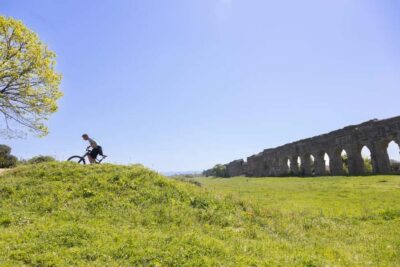
Appian Way & Aqueducts E-Bike Tour (Catacombs & Food)
Read our review →
Rome City Small Group Bike Tour with quality Cannondale EBike
Read our review →
Rome by Night – Ebike Small Group Tour – Food and Wine (Option)
Read our review →