
Review · MONTEVIDEO
Montevideo Electric Bicycle Tour
Montevideo is spread out, and this private e-bike tour gives you a practical way to connect its old squares, football landmarks, parks, beaches, and coastal neighborhoods in one morning. You cover roughly 18 to 19 kilometers, but the electric assist keeps the ride manageable.
I like the route for two clear reasons: you get real city time along Avenida 18 de Julio and the Rambla, and you can reach neighborhoods that a walking tour would have to skip. The bikes are comfortable, new-looking, and easy to use, while guides such as Santiago and Felipe add local context without burying you in facts.
The main consideration is pace. You stop often, but most stops are brief, so this is best for seeing many parts of Montevideo rather than exploring any one museum, square, or neighborhood in depth. You also need moderate fitness and decent weather.
Why this Montevideo bike tour works so well
- About 18 to 19 kilometers in one morning: You see far more than you could on foot, without committing to a full-day ride.
- Comfortable electric bikes: You can pedal lightly or use more assistance, making the route suitable for many riders over 65 as well as active adults.
- A route with real variety: The ride moves from university buildings and football history to colonial squares, parks, beaches, and the Rio de la Plata shore.
- Strong cycling infrastructure: Much of the route uses bike paths, including protected lanes running through major streets.
- English and Spanish support: Your guide speaks English or Spanish, and an audio guide is also available in both languages.
- A small, personal operation: Santiago, Felipe, and Fabiola provide a more direct experience than a large coach tour, with room to adjust to the group.
Starting near La Gaceta at 10 a.m.
The meeting point is La Gaceta 1282 in Montevideo, and the tour begins at 10:00 a.m. It finishes back at the same location. The address is in a residential area, not an obvious storefront, so do not assume you have been dropped at the wrong place. One useful detail is that it is easy to reach by Uber from the cruise port, though it may take extra planning if you are staying in Ciudad Vieja.
This is a private activity, meaning only your group participates. That matters on a bicycle. You are not trying to keep up with a large pack of riders, and the guide can pay attention to your comfort and riding ability. One group of eight was managed through city traffic and traffic lights, but you should still expect an active urban ride, not a quiet countryside excursion.
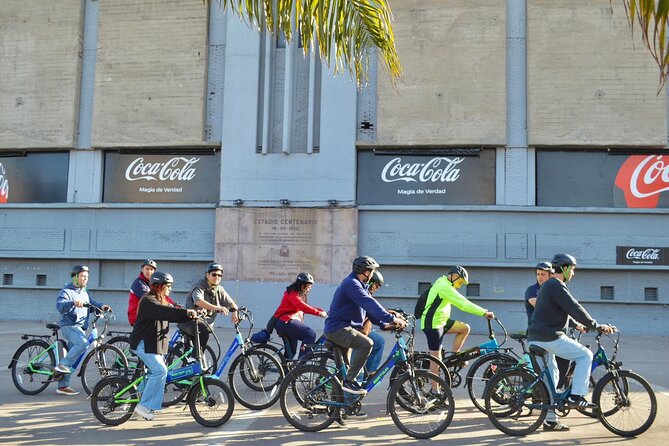
Before setting off, you receive an electric bike. Helmets and reflective vests are offered, and the bikes have received especially strong praise for their comfort and condition. If this is your first e-bike, the controls are simple enough to learn at the start. You can choose a light workout or let the motor handle more of the effort.
More e-bike tours around the world:
- 3-Hour Porto Highlights on a Electric Bike Guided Tour
★ 5.0 · 4,392 reviews - Lisbon: Hills, Alfama, and Mouraria Tour by Electric Bike
★ 4.8 · 3,438 reviews - Athens Scenic Electric Bike Tour with optional Acropolis visit
★ 5.0 · 3,350 reviews
Batlle Park, football, and Montevideo’s green spaces
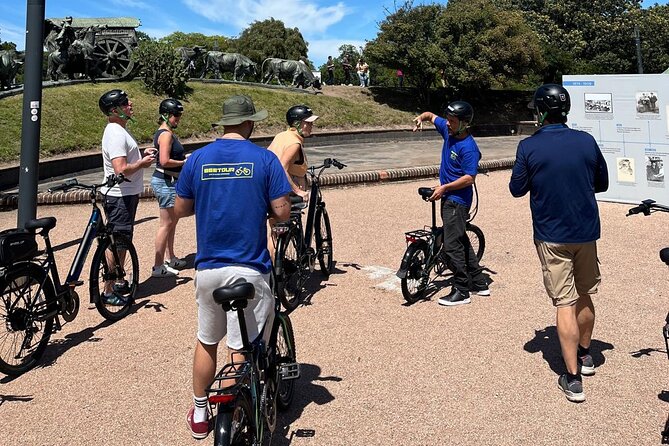
The opening section introduces Montevideo through public institutions, sport, and open space. The Hospital Universitario of UDELAR is a useful first stop because it shows the importance of the university and public health in Uruguay. You spend only about five minutes there, so treat it as a quick orientation rather than a visit inside.
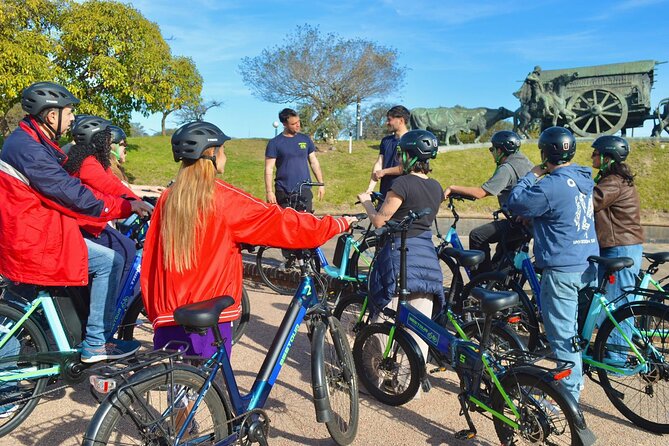
The route then passes one of Montevideo’s three major green areas before reaching La Carreta, a distinctive monument in Batlle Park. The sculpture represents traditional transport and Uruguayan art. It is a quick photo stop, but it helps explain how the city honors its rural past even while you are riding through a modern capital.
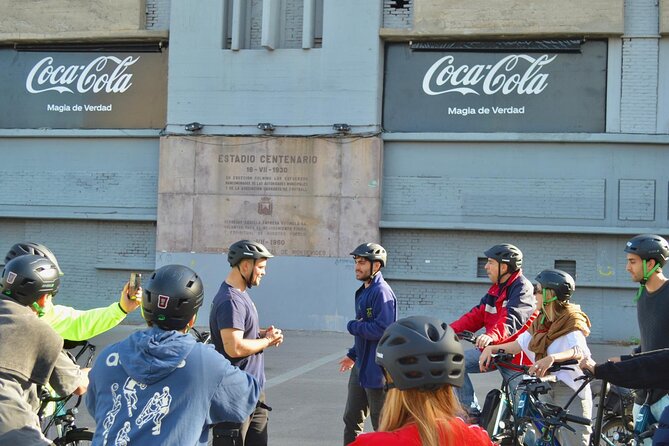
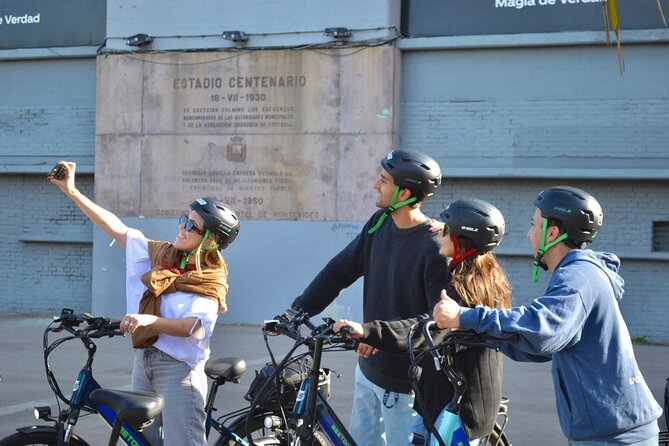
Football fans will appreciate the stop at Estadio Centenario. This is the historic stadium used for the first World Cup in 1930, and the ten-minute visit gives the stadium its proper place in Uruguay’s national story. You will not have time for a match or a full stadium tour, but the stop works well for a first look at a site central to the country’s football identity.
The nearby Municipal Velodrome adds another sporting note. It is used for cycling competitions and events, making it a natural stop on a bicycle tour. Then comes the Obelisco a los Constituyentes, a monument tied to the Constituent Assembly of 1830. Together, these stops show two sides of Montevideo: a city proud of sport and a country shaped by civic and political institutions.
Avenida 18 de Julio and the city center
A longer stop, about 30 minutes, comes along Avenida 18 de Julio. This is one of the most useful parts of the tour because you are not simply looking at monuments. You ride through the city’s main urban artery, with shops, cafés, traffic, and daily life around you.
The avenue also gives you a chance to notice Montevideo’s architecture, including art deco buildings that are easy to miss from a bus. The guide can point out details as you move, while the bike keeps you close to street-level life. The ride is not just a collection of photo stops. It gives you a feel for how the city works.
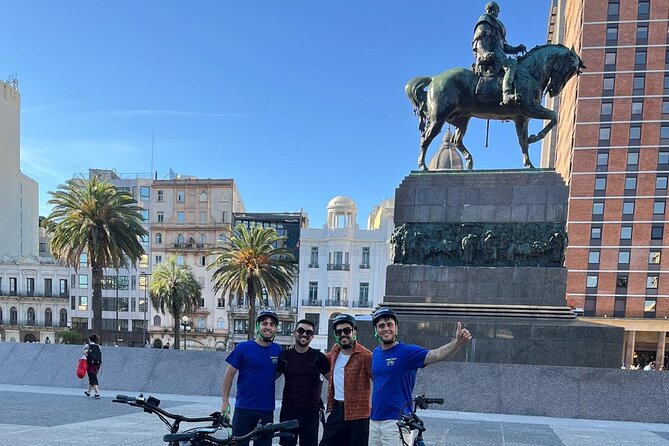
The route continues to Plaza Independencia, Montevideo’s most important central square. Here you find the monument to José Artigas and the transition toward the Old City. This is a key point in the route because it connects the modern center with the colonial quarter.
Nearby Palacio Salvo is one of Montevideo’s best-known buildings. It was once the tallest building in South America, and its unusual architecture makes it an easy landmark to remember. You stop for about five minutes, enough for an explanation and photos, but not enough to explore the building inside.
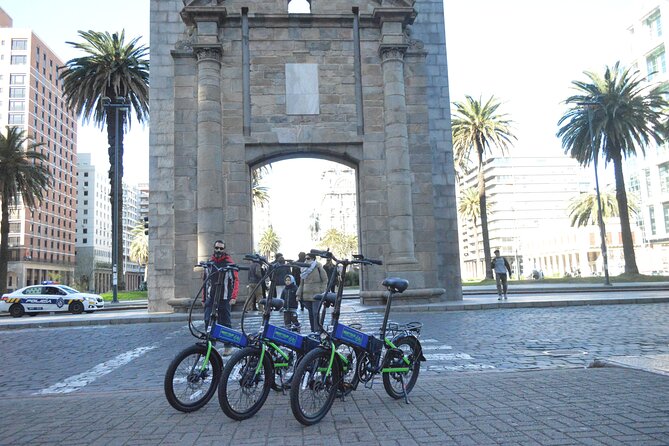
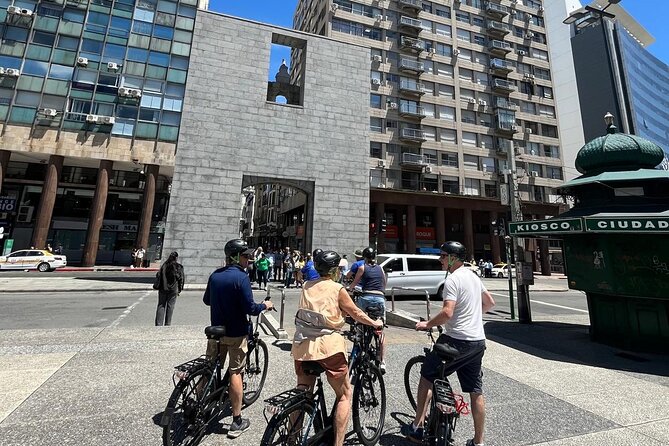
At the Puerta de la Ciudadela, you see one of the old entrances to the colonial city. This is where the present-day center gives way to the older quarter, and the change is clear even during a short stop.
Sarandí, Plaza Matriz, and the older city
Peatonal Sarandí is a ten-minute stop on a pedestrian street lined with shops, galleries, and cafés. The street is a good place to notice Montevideo at walking speed after spending much of the morning on wheels. You may want to return later if you are looking for food, shopping, or a slower look at the Old City.
Plaza Matriz is another ten-minute stop and one of the most important historical spaces on the route. It is described as the country’s oldest square, with major events taking place there across the eighteenth, nineteenth, and twentieth centuries. The square provides the historical anchor for the city center.
The itinerary also includes one of Latin America’s important theaters, noted for its architecture and cultural programming. The stop is brief, so the value comes from seeing the building and hearing its place in Montevideo’s cultural life rather than attending a performance.
This section is where the tour’s short-stop format becomes most noticeable. You receive a useful introduction to several places, but you will not have time to linger in every square or enter every building. I see that as a strength if you are visiting Montevideo for a short stay, and a limitation if your main goal is detailed architectural study.
Same saddle, a different route:
- Porto: City Highlights 3-Hour Guided Electric Bike Tour
★ 4.8 · 3,092 reviews - Red Rock Canyon eBike Half-Day Tour
★ 5.0 · 1,870 reviews - Hidden Kyoto E-Biking tour
★ 5.0 · 1,843 reviews - Rome EBike Tour: Appian Way, Catacombs & Roman Aqueducts
★ 5.0 · 1,766 reviews
The Rambla and the Rio de la Plata
The ride along the Rambla de Montevideo is the emotional high point for many people. This long coastal promenade opens views across the Rio de la Plata and gives you room to ride after the denser streets of the center.
The tour allows about 30 minutes along the Rambla, though the actual experience includes several points of interest along the shore. Bike paths make this section feel less stressful than riding with traffic, and the coastline gives the tour a different rhythm. You are still in the capital, but the open water and broad promenade create a calmer setting.
The Rambla is also where the e-bike earns its price. You cover a long stretch without arriving worn out, leaving enough energy for the parks and neighborhoods later in the route. On a warm day, the electric assist helps keep the ride pleasant. In cooler months, bring a jacket. One ride in May or June felt chilly, and coastal wind can make a mild morning feel colder.
The route passes the headquarters of the regional bloc, a symbol of cooperation among South American countries. The stop adds a modern political layer to the older monuments and constitutional history seen earlier.
Parque Rodó and Montevideo’s outdoor side
Parque Rodó is one of the capital’s three major green lungs, along with Parque Rivera and the park in Prado. With gardens, lakes, and space to pause, it is a sensible place for a 15-minute break.
This is not a formal garden visit. You will get a taste of the park and its role in city life, then continue. Still, the stop matters because Montevideo is not only avenues and old buildings. Its parks and public waterfront spaces are part of how people spend their free time.
The route also passes an important educational building known for modern architecture and an outdoor cultural venue used for concerts and events. Their exact appeal depends on your interests, but both stops broaden the picture of Montevideo beyond the colonial center.
At the Memorial al Holocausto del Pueblo Judio, the tone changes. This five-minute stop is a place for remembrance and reflection, honoring the victims of the Holocaust. It is a quiet, serious pause in an otherwise active morning. The short visit is appropriate, but you should not expect time for an extended memorial visit or museum experience.
Punta Carretas, Pittamiglio, and Pocitos
Punta Carretas brings the ride into one of Montevideo’s more polished coastal neighborhoods, with cafés, shops, and a waterfront setting. The area also includes a former prison now used as a shopping center, giving the guide a chance to explain how an old institutional building has taken on a new role.
A short stop at Universo Pittamiglio, also called the Alchemist’s Castle, adds one of the tour’s strangest sights. This unusual building is tied to stories, symbols, and local legends. You will have about ten minutes, enough to admire its odd design and hear why it is considered mysterious. It is a quick look, not a full interior visit.
Pocitos follows with its beach, restaurants, and relaxed coastal feel. The stop is only about five minutes, but the ride through the neighborhood helps you see how Montevideo shifts from civic center to beach district.
The final major stop is the Mirador Panorámico de Montevideo, where you can photograph the famous city sign and look toward the Rio de la Plata. Allow about 15 minutes. It is a natural closing point because you can look back on the wide area covered during the morning.
What the electric bike changes
The motor does not remove the physical side of cycling, but it changes the effort. You still need to steer, brake, watch traffic, and ride for several hours. The electric assist helps most on longer stretches and keeps the group moving at an even pace.
The route has been described as easy to follow, with regular stops and a safe feel on many designated paths. Some riding takes place through city streets, so you should be comfortable paying attention around traffic lights and other road users. The guides manage the group and keep riders together, but this is still an urban bicycle tour.
The distance is substantial for a casual sightseeing outing. The useful part is that you see many districts without ending the morning exhausted. One rider over 65 covered about 19 kilometers and found the bike easy enough to finish without feeling tired. Your experience will depend on fitness, weather, and how much motor assistance you use.
Is $59 a fair price?
At $59 per person, the tour costs more than a basic walking tour but gives you a much wider view of Montevideo. You receive the bike, helmet and reflective vest, English or Spanish guiding, and audio support. There are no stated admission charges for the main stops, and the tour is private for your group.
The value is strongest if you have only one or two days in the city. In three hours and 15 minutes, you connect the Old City, central avenues, parks, football landmarks, the coast, Punta Carretas, and Pocitos. A walking tour would need to cut most of that route, while a bus would not give you the same street-level contact.
The value is less certain if you want long visits inside buildings or museums. Most stops last from five to 15 minutes, with longer periods on Avenida 18 de Julio and the Rambla. Think of this as a broad introduction that helps you decide where to return later.
Who should book this ride?
I would choose this tour early in a Montevideo visit. It gives you a useful map of the city, and the guide can offer suggestions for later meals and sightseeing. The route is also a good fit for cruise passengers because the meeting point can be reached by Uber from the port and the tour returns there.
It suits couples, families with cycling experience, solo visitors, and active older adults. The private format helps if your group has different comfort levels, though everyone should be prepared for the full distance and a moderate level of physical activity.
It may not suit you if you dislike bikes, have difficulty riding in city traffic, or want a slow museum-focused morning. It is also weather-dependent. You can cancel up to 24 hours before the start for a full refund, and a weather cancellation brings the choice of another date or a full refund.
FAQ
How long is the Montevideo Electric Bicycle Tour?
The tour lasts approximately 3 hours and 15 minutes.
How much does the tour cost?
The listed price is $59 per person.
Where does the tour start and finish?
It starts at La Gaceta 1282, 11300 Montevideo, and returns to the same meeting point.
What time does the tour begin?
The scheduled start time is 10:00 a.m.
Are bikes and safety equipment included?
Yes. Bicycle use is included, and a helmet and reflective vest will be offered.
Is the tour available in English?
Yes. An English and Spanish guide is included, and an audio guide is available in both English and Spanish.
Can I cancel for a refund?
You can cancel at least 24 hours before the start time for a full refund. Cancellations or changes made less than 24 hours before the start are not refunded or accepted. Poor weather or failure to meet the minimum number of participants may result in another date or a full refund.
Should you book it?
Book this tour if you want a broad, active first look at Montevideo rather than a slow visit to a few sights. The strongest parts are the comfortable e-bikes, the long Rambla ride, the mix of old and modern city areas, and the personal guiding from Santiago, Felipe, or Fabiola.
I would especially recommend it for a short stay, a cruise stop, or the first morning of a longer visit. Bring a light jacket in cooler months, expect regular short stops, and be ready to ride close to 19 kilometers. If that sounds appealing, $59 buys an efficient and unusually complete introduction to the city.
New e-bike tours around the world
- Franschhoek: Private E-bike Ride & Wine Experience★ 5.0 · 6 reviews
- Franschhoek: E-Bike & Wine Tour (Shared Tour)★ 5.0 · 10 reviews
- Franschhoek: Explore The Valley Of Dreams With E-Bikes★ 5.0 · 7 reviews
- Frankfurt: Unique E-Bikes Tours★ 4.8 · 22 reviews
- Forte Dei Marmi: E Bike Tour and hidden gems with a local★ 4.7 · 3 reviews
- eBike Guided Tour of Fort Worth★ 5.0 · 4 reviews
- Formentera: discover our fast ferry + electric bike package.★ 4.4 · 51 reviews
- Private E-Bike Tour: Piazzale Michelangelo & Florence hills★ 5.0 · 5 reviews