
Review · KYOTO
Pedal Adventure Kyoto’s iconic landmarks on an e-bike tour
Kyoto’s best moments often happen between the headline sights. This four-hour e-bike tour links Gion, Higashiyama, Fushimi Inari, Tofuku-ji, quiet residential lanes, and the Kamogawa River without making you depend on crowded buses. You get the major names, but also the ordinary Kyoto streets that give the city its character.
I like the small maximum group of eight, which makes it easier to ask questions and keep a comfortable pace. I also like the guides’ personal approach. Maki and Mika are praised for explaining Japanese customs through family stories, local knowledge, and plain English rather than offering only dates and names.
The main consideration is the weather. This is an outdoor ride, and summer heat or rain can affect the experience. The ride is not described as strenuous, but you still need to feel comfortable cycling on city streets and following a guide through traffic.
Key points to know before you book
- Four major Kyoto stops in one ride: Gion, Higashiyama, Fushimi Inari Shrine, and Tofuku-ji.
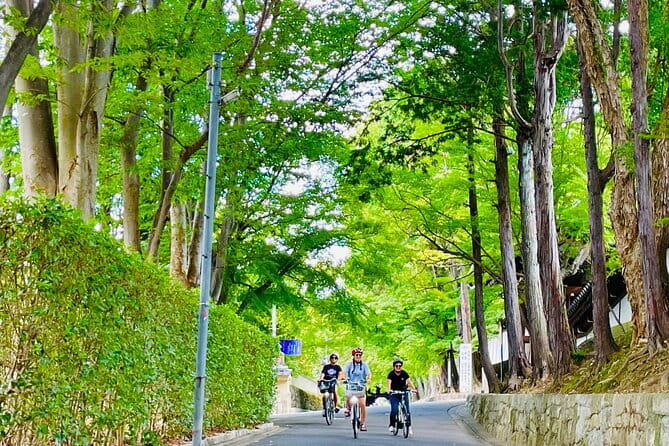
- Quiet routes matter: You use side streets, neighborhood lanes, bike paths, and the riverbank, not only main roads.
- Maki and Mika bring the culture to life: Expect explanations of geisha and maiko, Buddhism, Shinto, samurai, customs, and everyday Japanese details.
- E-bikes keep the pace easy: The bikes are described as comfortable, well maintained, and fitted with baskets.
- Small groups add flexibility: The tour accepts no more than eight people, and the guide can adjust the pace and answer questions.
- Practical extras are included: You receive a bicycle, helmet, bottled water, and snacks. Lunch is not included.
Why an e-bike makes sense in Kyoto
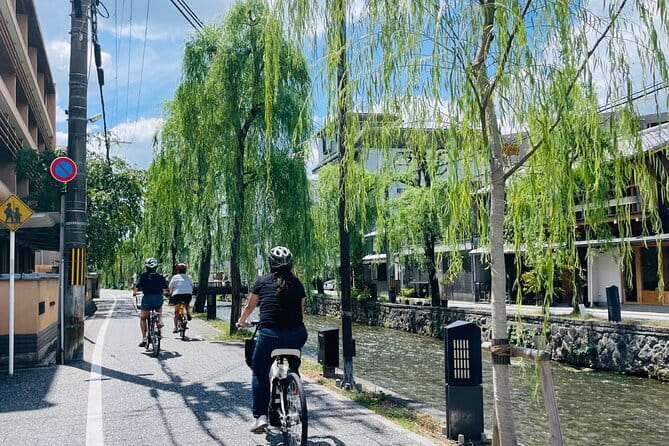
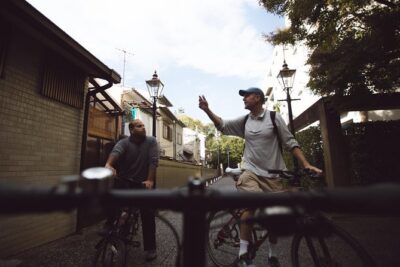
Kyoto is fairly spread out, and its famous sights sit in different parts of the city. You can use trains and buses, but a bike gives you a better sense of how the neighborhoods connect. It also lets you slip down narrow lanes and follow the river, places you might simply pass on a bus.
The electric assistance is the key. You still pedal, but the motor takes the edge off the effort. The ride includes large streets, small side roads, and scenic paths, and the route is described as having very few hills. That makes this a practical choice if you want to cover ground without committing to a hard cycling day.
The bikes come with baskets, a small feature that matters once you have a backpack, jacket, or extra water. Helmets and bottled water are included. Several people also found the bikes comfortable and easy to handle, which is important when you are riding for roughly four hours.
You should still expect normal city cycling. The route uses roads as well as quieter paths, so you need to pay attention, follow hand signals, and stay with the group. Maki is specifically praised for using clear hand signals and taking safety seriously.
More e-bike tours around Japan:
- Hidden Kyoto E-Biking tour
★ 5.0 · 1,843 reviews - Tokyo Top Highlights 3h Guided E-bike Tour
★ 5.0 · 714 reviews - 3h Tokyo E-Bike Tour: Hidden Gems, and Local Life with guide
★ 5.0 · 670 reviews
Starting near Shogoin and heading toward Gion
The meeting point is at 19 Shogoin Higashimachi in Sakyo Ward, near public transportation. After you are fitted with an e-bike and helmet, the first cycling section takes about 10 minutes before reaching Gion.
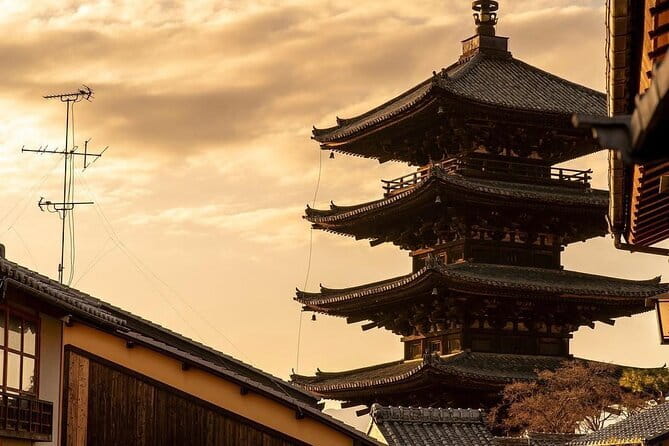
Gion is Kyoto’s best-known geisha district, but it is more than a photo stop. The area gives your guide a natural place to explain geisha and maiko culture, as well as the difference between staged tourist images and the working traditions behind them. You will see Kyoto scenery and traditional streets, though the listed stop itself is brief, at about 10 minutes.
That short timing is worth understanding. Gion is not treated as a long walking visit with extended time at every lane or building. Instead, it is an opening introduction before the ride moves on. If Gion is your main reason for booking, you may want to return separately for a slower look.
I like this beginning because it gets you into Kyoto’s historic core quickly. You are not spending the first hour on orientation or a long transfer. You are on a bike, seeing the city at street level, and learning how the neighborhood fits into Kyoto’s wider culture.
Higashiyama brings temples, stories, and a snack
From Gion, you cycle for about 15 minutes to the Higashiyama area. Your guide takes you to a temple with less obvious details and shares stories about the site. The stop lasts around 50 minutes and includes a quick snack.
Higashiyama is one of the best parts of Kyoto for understanding how temples, homes, shops, and narrow lanes sit together. The value here is not only the temple itself. It is the explanation of what you are seeing: Buddhist and Shinto practices, objects placed outside homes, and customs that can be easy to miss when you explore alone.
Maki and Mika are praised for answering broad questions about Japan as well as small ones. That can mean learning why a particular object appears near a doorway, how shrine rituals differ from temple customs, or how traditions connect to daily life. The guides also discuss samurai and the role of religion in Japanese culture.
The snack is a modest but useful touch. It breaks up the ride and gives you a pause before the longer section toward Fushimi Inari. Water and snacks are included, but lunch is not, so eat beforehand if you tend to get hungry during active outings.
Fushimi Inari offers the tour’s biggest visual moment
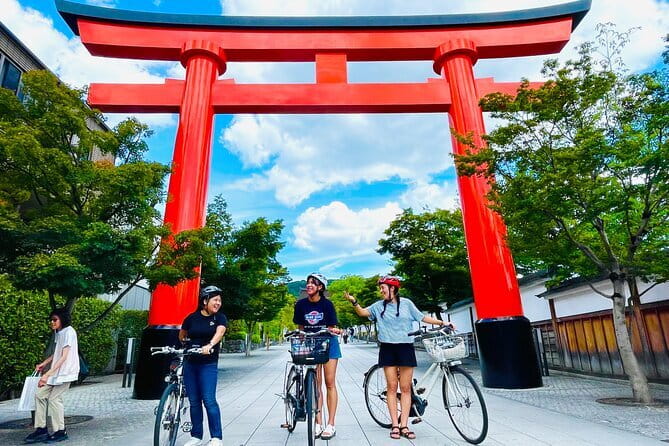
The route continues to Fushimi Inari-taisha Shrine, with about 40 minutes at the shrine gates. This is the tour’s most famous stop and likely the place you already know from photographs.
The rows of shrine gates create a memorable sight, but a guide can help you understand why the shrine matters instead of treating it as a red-orange corridor for pictures. This is a Shinto site, and the stop gives you another chance to compare Shinto practices with the Buddhist traditions discussed earlier.
Forty minutes is enough for an introduction and time to look around, but it is not a full exploration of every path connected with Fushimi Inari. The shrine complex can reward a much longer visit, especially if you want to walk farther uphill. Think of this tour as a well-paced first encounter, not a complete Fushimi Inari hike.
The bike is especially useful here because it connects Fushimi Inari with the earlier stops without forcing you to make your own transit plan. You can see the shrine, hear the cultural context, and then continue by bike rather than retracing your steps on foot.
Same saddle, a different route:
- 5 Top Highlights of Kyoto Full Day Bike Tour (E-bike option)
★ 5.0 · 511 reviews - Tokyo: 3-Hour Bike or E-Bike City Highlights Tour
★ 4.8 · 435 reviews - Kyoto: Memory Kyoto E-Bike Tour
★ 4.8 · 297 reviews - Tokyo: 3-hour Guided E-Bike Tour of the City’s Hidden Gems
★ 4.8 · 251 reviews
Tofuku-ji and the ride beside the Kamogawa River
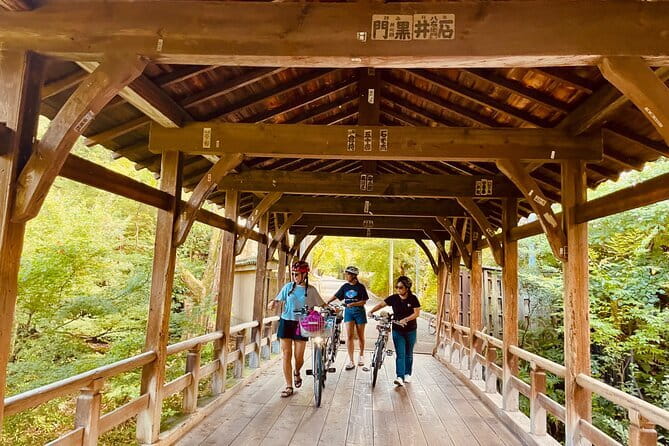
After Fushimi Inari, it is about 10 minutes by bike to Tofuku-ji Temple. The temple complex receives roughly 20 minutes, then the route follows the Kamogawa River back toward the starting point.
Tofuku-ji gives the outing a quieter temple setting after the fame and crowds associated with Fushimi Inari. The stop is short, but it adds another style of religious architecture and another chance to ask questions. You are not simply collecting famous names. You are seeing how different sacred places fit into Kyoto’s city fabric.
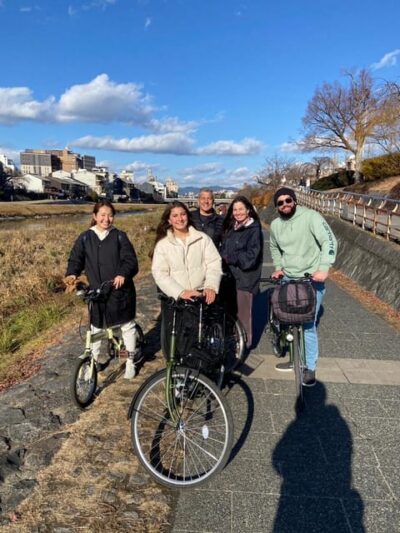
The return beside the river is one of the most appealing parts of the route. Cycling along the Kamogawa offers a change of pace after streets and shrine grounds. Several people especially liked the river section, along with the residential neighborhoods and older lanes encountered earlier.
This final stretch also helps explain why cycling works so well here. You are moving through the city rather than looking at it through a vehicle window. The route back is part sightseeing and part decompression, with the river providing an easy visual finish before you return to the meeting point.
A guide-led look at Kyoto beyond the monuments
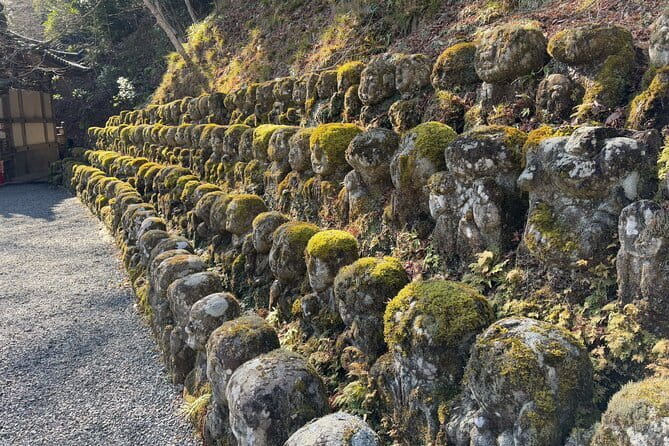
The strongest reason to book this outing is the guide. Maki is described as the owner and guide, while some experiences identify Mika as the guide. Both names appear in the supplied tour feedback, so check the current booking details if having a particular person matters to you.
The guide’s role goes beyond navigation. You can ask about Buddhism, Shintoism, samurai, geisha, maiko, family customs, and ordinary street details. Personal stories are a recurring part of the experience, and that gives abstract cultural topics a human scale.
This style suits you if you like to ask questions. The group size allows conversation, and the guide is described as checking the group’s comfort and adjusting the pace. One outing even included time for children to try fortune telling at a shrine, showing how the experience can respond to a family’s interests.
The cultural explanations also seem to be a major reason people remember the tour. You may learn why certain chopstick customs are considered taboo, what shrine objects mean, or how Japanese traditions appear in everyday settings. These small points can change the way you look at the rest of your Kyoto visit.
Heat, rain, and the practical side of the ride
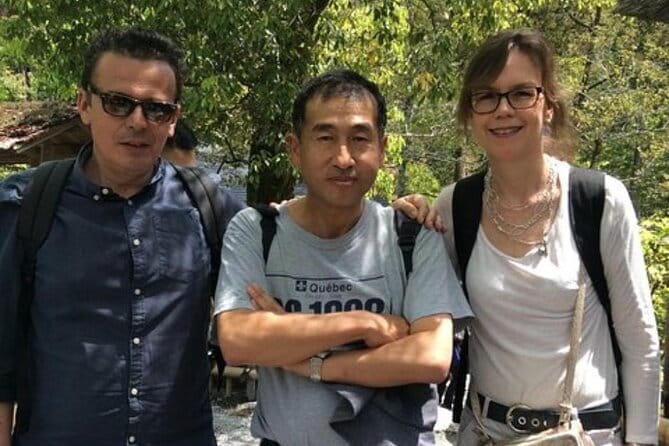
Kyoto can be very hot in summer. One particularly warm ride included extra water, rest stops, and cooling body spray, but you should not rely on that alone. Bring additional water, and consider an electrolyte drink during hot weather. The route may stop at a convenience store if more drinks are needed, but carrying your own supply is the safer plan.
Rain is another factor. The experience requires good weather, and the provider may cancel for poor conditions, offering another date or a full refund. Light, changeable weather can still affect the ride, so wear clothes that dry reasonably quickly and protect anything in your basket.
Most people can participate, but you should be comfortable riding a bicycle. The tour does not list lunch, and the schedule includes several hours of cycling, stops, and standing. Families have enjoyed it, but very young children or anyone uneasy on city streets may prefer a walking or vehicle-based tour.
The activity starts and ends at the same meeting point. That is convenient if you are staying nearby or using public transportation, though you should allow time to reach 19 Shogoin Higashimachi before the start.
Is $86.22 a fair price?
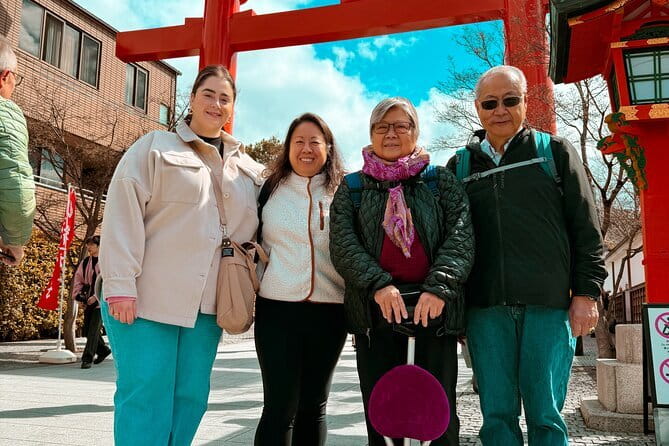
At $86.22 per person, this is not the cheapest way to see Kyoto’s temples. The price includes the e-bike, helmet, water, snacks, and an English-speaking route coordinator, but not lunch or separate admission charges. The listed stops do not require an admission ticket as part of the tour.
The value comes from the combination of transport and guiding. You are covering several districts, avoiding the work of planning a route, and receiving explanations that can be hard to get from signs alone. If you would otherwise rent a bike, find your own way to four major areas, and pay for a separate guide, the price looks sensible.
I would be less convinced if you want long, quiet visits at each monument. The schedule gives you a broad introduction, with around 10 minutes in Gion, 50 minutes in Higashiyama, 40 minutes at Fushimi Inari, and 20 minutes at Tofuku-ji. It favors variety and movement over a deep visit to one site.
The maximum of eight people improves the value. A small group means less waiting and more opportunity to ask about the things you notice along the way.
Who will enjoy this Kyoto e-bike tour most?
I would recommend it to first-time visitors who want a clear introduction to Kyoto’s major cultural areas. It is also a good fit if you have limited time and want to connect several places in one morning or afternoon.
Families may like the easy pace, baskets, snacks, and the guide’s willingness to engage children. Couples and small groups who prefer local streets to a fixed sightseeing bus should also find it appealing.
It is less suitable if your priority is a long hike through Fushimi Inari, a slow photographic tour of Gion, or a full meal during the outing. Strong heat, rain, or discomfort with cycling are also good reasons to choose another activity.
Free cancellation is available up to 24 hours before the start time. Changes or cancellations inside that window are not accepted for a refund, and the provider may cancel if the weather is poor or the minimum group size is not met.
Should you book it?
Book this tour if you want Kyoto culture explained while you move, not just a sequence of famous photo stops. The combination of e-bike travel, quiet backstreets, shrine and temple visits, and the Kamogawa River makes good use of four hours.
I especially recommend it for travelers who value a personable guide. Maki and Mika are praised for warmth, clear English, safety, humor, and personal stories. That human connection is the part you cannot reproduce with a map or audio guide.
Skip it if you dislike cycling, need guaranteed indoor shelter, or want to spend most of the day at one major sight. For everyone else, $86.22 buys an active, thoughtful introduction to Kyoto with enough famous places to feel satisfying and enough local streets to keep it from feeling like a standard city loop.
FAQ
How long does the Kyoto e-bike tour last?
The tour lasts approximately four hours.
What places does the tour visit?
The route includes Gion, the Higashiyama area, Fushimi Inari-taisha Shrine, and Tofuku-ji Temple. It also includes cycling through backstreets, neighborhoods, scenic paths, and beside the Kamogawa River.
Where does the tour start?
The meeting point is 19 Shogoin Higashimachi, Sakyo Ward, Kyoto, 606-8325, Japan.
Where does the tour end?
The activity ends back at the meeting point.
How much does the tour cost?
The listed price is $86.22 per person.
What is included in the price?
The price includes use of a bicycle, a helmet, bottled water, snacks, and an English-speaking route coordinator.
Is lunch included?
No. Lunch is not included.
How many people can join the tour?
The maximum group size is eight travelers.
Do I need to be an experienced cyclist?
The tour information says most travelers can participate, and the e-bikes are described as comfortable and easy to ride. You should still feel comfortable cycling on city streets and following the guide’s safety instructions.
What happens if the weather is bad?
The experience requires good weather. If the provider cancels because of poor weather, you can receive a different date or a full refund.
Can I cancel for a refund?
Yes. You can cancel at least 24 hours before the experience start time for a full refund. Cancellations or changes made less than 24 hours before the start time are not accepted.
New e-bike tours around Japan
- Ride around the Castle. Slurp like a Local★ 5.0 · 5 reviews
- 3 Hours E Bike Tour around Chiyoda Tokyo Prefecture★ 5.0 · 2 reviews
- Half Day Private Rural E-Bike Tour in Hida★ 5.0 · 101 reviews
- 3-Hour Tokyo Private E-Bike Tour Starting from Your Hotel★ 5.0 · 117 reviews
- Tokyo: 3h Private E-bike Tours, Starting at Your Hotel★ 5.0 · 36 reviews
- Historical Kyoto E-Bike Tour★ 5.0 · 181 reviews
- Arashiyama Bamboo Forest E-Biking Tour★ 5.0 · 183 reviews
- 1-Day Private Rural E-Bike Tour in Hida★ 5.0 · 188 reviews
Kyoto E-Bike Tours, side by side.

5 Top Highlights of Kyoto Full Day Bike Tour (E-bike option)
Read our review →
Hidden Gems E-Bike Tour with Local Japanese Guide
Read our review →
This ride also appears in