
Review · TOKYO
Tokyo: 3h Private E-bike Tours, Starting at Your Hotel
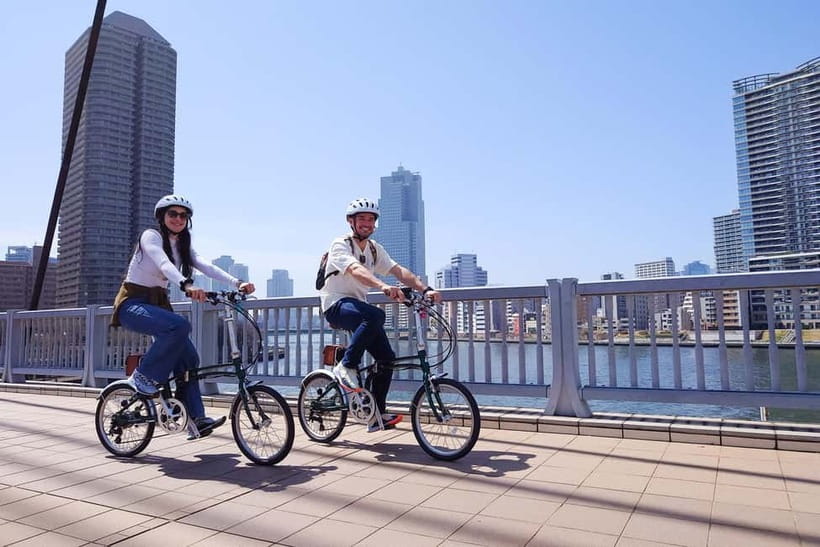
Tokyo is easiest to understand when you move through it at street level. This private e-bike tour lets you ride from your hotel through a mix of grand avenues, small back streets, shrines, riverside paths, and famous districts, rather than spending the whole day underground.
I like the hotel pickup and drop-off, especially for a first morning in Tokyo when train stations can feel like a puzzle. I also like the electric assistance: you can cover 15 to 20 kilometers without turning the outing into a fitness test. The main consideration is fit. Riders should be 145 to 185 centimeters tall and under 100 kilograms, and you must wear practical shoes and trousers or shorts.
The guide, Kazuma, receives especially strong praise for careful riding, clear English, local knowledge, patience, and thoughtful route planning. The trade-off is price: at $141 per person, this is not a cheap way to rent a bicycle. You are paying for a private guide, hotel service, safety support, and a tailored look at Tokyo.
Key points to know before booking
- Hotel-to-hotel convenience: Meet your guide in the lobby and finish at a selected hotel-area drop-off, with 23 pickup and 23 drop-off areas listed.
- Three hours on an e-bike: Expect roughly 15 to 20 kilometers, with motor assistance on hills and longer city stretches.
- A truly private route: You can request districts, landmarks, a different starting time, or a longer tour, though extra fees may apply.
- Tokyo beyond the headline sights: Possible stops range from Shibuya Crossing and Tokyo Tower to old lanes, shrines, riversides, and local neighborhoods.
- Safety receives serious attention: Kazuma adjusts bikes, gives instructions, controls the pace, and does not allow photos or video while you are riding.
- Best for confident beginners and active families: Children under 10, riders under 145 centimeters, and people over 100 kilograms cannot join.
Why a private bike is a smart way to see Tokyo
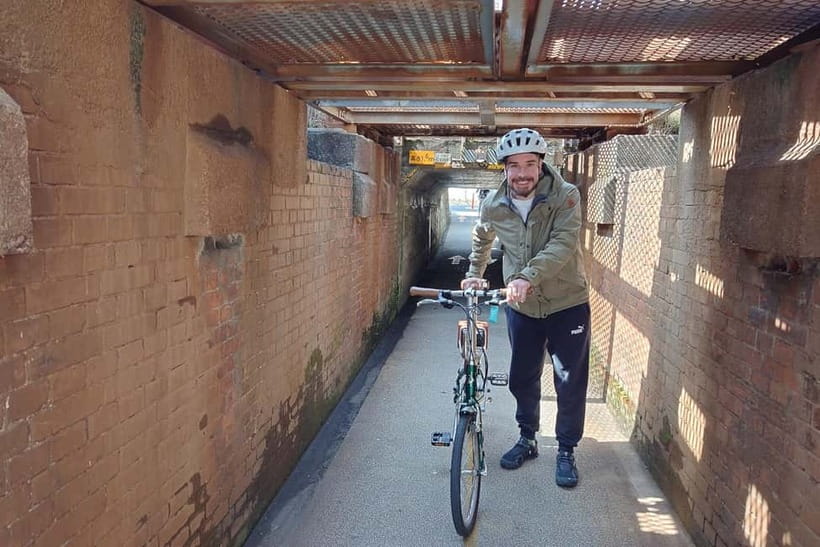
Tokyo is huge, but many of its most interesting changes happen within a few blocks. One minute you may be beside a glass office tower. A few turns later, you may be passing a shrine, a narrow restaurant lane, or a quiet residential street.
A train is faster for getting across town, but a bicycle lets you notice those transitions. You can stop without searching for an exit, and you avoid the time spent walking through stations. In three hours, the tour can connect districts that would otherwise require several separate train rides.
The electric motor matters more than it may first appear. Tokyo is not a mountain town, but even modest slopes and a long route can wear you down. The motor assists as you pedal, so you still participate without arriving exhausted. That makes this a good middle ground between a walking tour and a serious cycling outing.
The group is private, so the guide can adjust the pace. That is useful if one person in your party is a novice rider, or if you want more time for photos at a shrine and less time at a large modern district. The tour is not a fixed parade from one sight to the next.
More Private E-Bike Tours in Japan
- 1-Day Private Rural E-Bike Tour in Hida
★ 5.0 · 188 reviews - 3-Hour Tokyo Private E-Bike Tour Starting from Your Hotel
★ 5.0 · 117 reviews - Half Day Private Rural E-Bike Tour in Hida
★ 5.0 · 101 reviews
Meeting Kazuma at your hotel
The practical advantage begins before you get on the bike. You meet the guide in your hotel lobby five minutes before the scheduled pickup time, looking for a person with a bicycle helmet. That saves you the common Tokyo problem of finding an unfamiliar meeting point in a large station area.
Pickup and drop-off areas include Shinjuku, Shibuya, Ginza, Asakusa, Ueno, Akihabara, Tokyo Station and Marunouchi, Roppongi, Shinagawa, Ebisu, Toranomon, Hamamatsucho, Nihonbashi, and several other central districts. If your hotel falls outside the normal range, you can discuss another starting point, but an extra charge may apply.
Kazuma is the guide most closely associated with this experience. He adjusts each bicycle before departure and gives a safety briefing. That small setup period is important. A poor saddle height or unfamiliar brake position can spoil a ride quickly, while a properly adjusted e-bike makes the outing much easier.
You should arrive wearing closed-toe shoes and comfortable clothing. High heels, sandals, flip-flops, and skirts are not allowed. Smoking, alcohol, and drugs are also prohibited.
Tokyo Metropolitan Government Building and western Shinjuku
The listed itinerary includes a 10-minute photo stop at the Tokyo Metropolitan Government Building. This is a useful opening point because it places you in the heart of Shinjuku, one of Tokyo’s most recognizable high-rise districts.
From here, your route may include the streets around Omoide Yokocho, also called Memory Lane. The contrast is the attraction. A tiny lane of compact food stalls and old-style drinking spots feels worlds away from the wide roads and tall towers nearby. You will likely only stop briefly, since this is a cycling route rather than a food tour, but the area gives you a quick look at an older, tighter version of Tokyo.
A private guide can also shape the Shinjuku portion around your interests. You might prefer architecture and city views, or you might want more time in back streets. The limitation is that three hours passes quickly. If you ask for many stops, you will cover less ground.
Shibuya, Aoyama, and the Olympic-era city
Shibuya Crossing is one of Tokyo’s famous postcard scenes. Seeing it by bicycle gives you a sense of the roads and buildings around the crossing, though you should not expect to ride through the pedestrian scramble. The guide will handle where to stop and when to dismount.
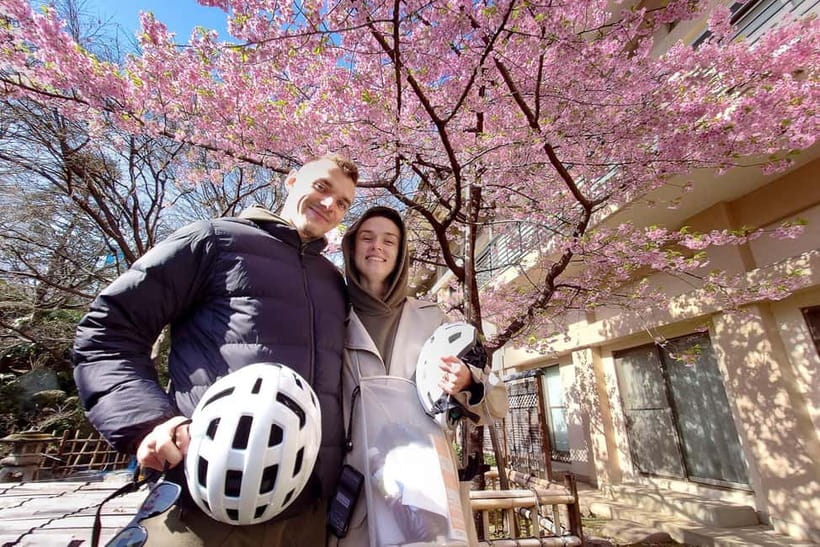
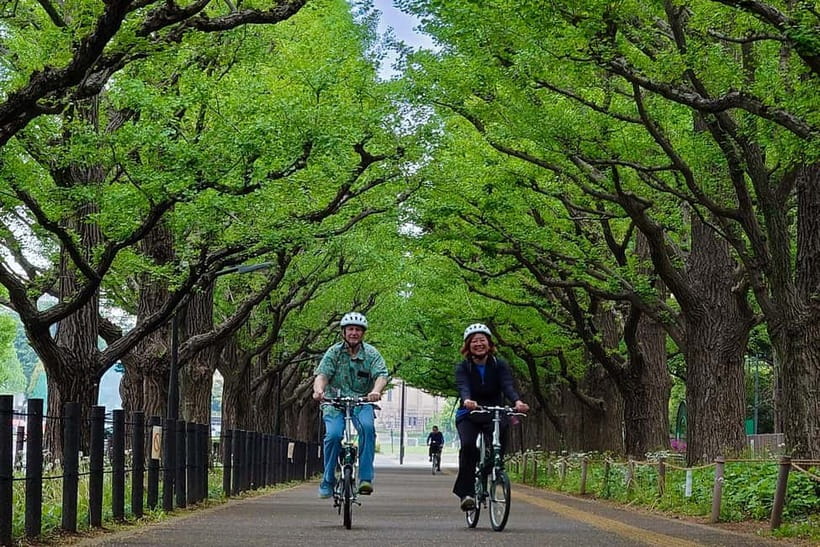
The route may continue toward Aoyama, where the Gaien Ginkgo Tree Avenue provides a broad, formal setting quite different from Shibuya’s signage and crowds. Nearby, Aoyama Cemetery Cherry Blossom Street offers another change of pace. Seasonal conditions affect what you see, so do not book this expecting a guaranteed cherry blossom display.
The National Stadium, built for the Tokyo Olympics, may also appear on the route. This section helps connect modern Tokyo with the city’s public spaces and major sporting history. The bicycle is particularly useful here because these districts are spread out enough to make walking tiring but close enough for an easy ride.
Same saddle, a different route:
- Hidden Kyoto E-Biking tour
★ 5.0 · 1,843 reviews - Tokyo Top Highlights 3h Guided E-bike Tour
★ 5.0 · 714 reviews - 3h Tokyo E-Bike Tour: Hidden Gems, and Local Life with guide
★ 5.0 · 670 reviews - 5 Top Highlights of Kyoto Full Day Bike Tour (E-bike option)
★ 5.0 · 511 reviews
Shrines, parks, and the Imperial Palace area
Tokyo’s appeal is partly its constant change of scale. A possible stop at Hatonomori Hachiman Shrine gives you a quieter setting and a chance to see a place of worship within the modern city. The tour is not built around long formal visits, so expect a short stop and explanation rather than a full temple lecture.
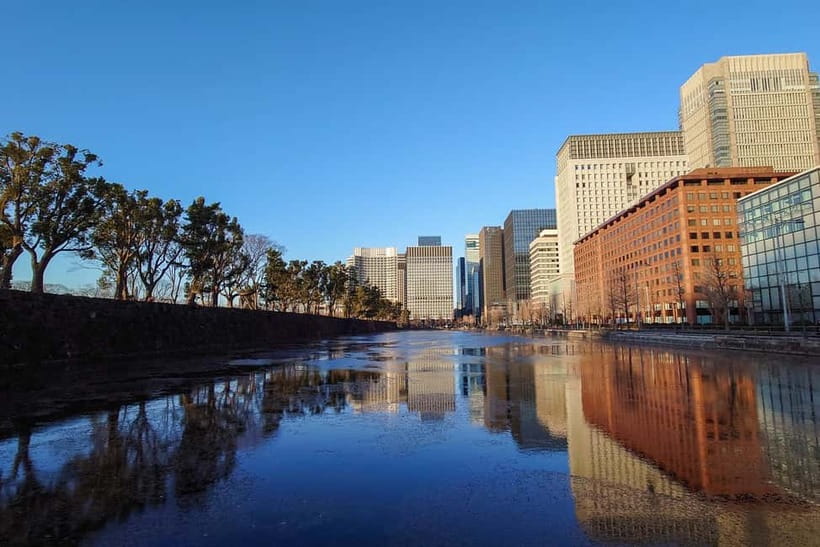
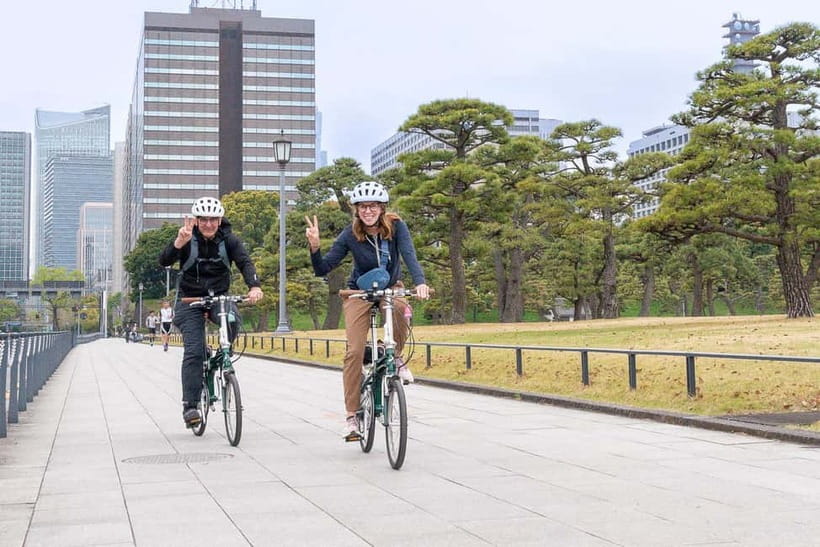
Hibiya Park, described as Tokyo’s first Western-style park, offers another useful pause. It is close to major business and government districts, yet it feels more open and relaxed. If your tour includes the Imperial Palace area, you will see one of the city’s most important central spaces and a sharp contrast between formal grounds, office towers, and broad roads.
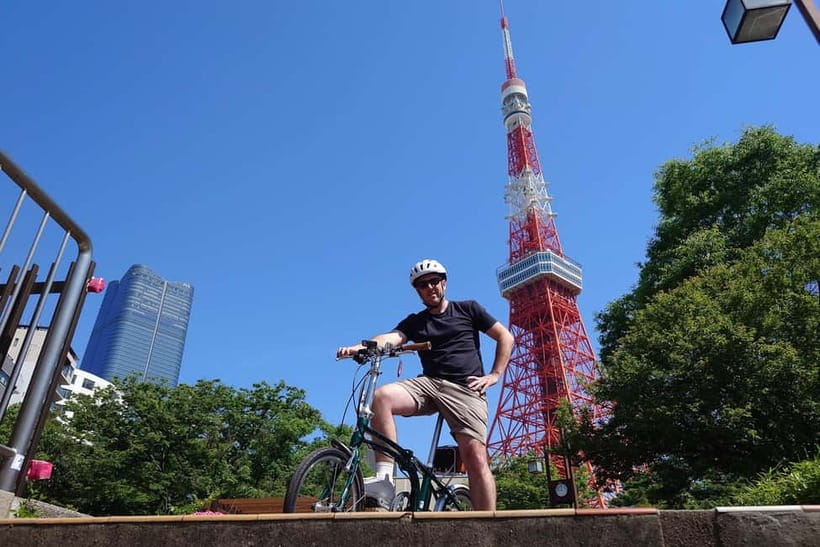
Zojo-ji Temple and Tokyo Tower are another possible pairing. The temple grounds give you a traditional setting, while the tower supplies one of Tokyo’s clearest visual markers. This is the kind of combination that makes a private route worthwhile: you can see several sides of the city without treating each one as a separate excursion.
Tokyo Station, Nihonbashi, and the waterfront
Tokyo Station is a natural place to pass through, particularly if you want landmark architecture and a sense of the city’s business center. Nearby Nihonbashi Bridge connects the present city with Tokyo’s older commercial identity.
From there, a longer route may head toward Tsukuda Island and Tsukishima. Tsukishima is associated with monja, a Tokyo-style savory dish cooked on a hot plate. Food is not included, so the stop is about atmosphere and neighborhood character unless you arrange to eat separately.
This section can be a good choice if you want less emphasis on the usual tourist checklist. The waterfront districts show how Tokyo has grown around canals, bridges, and reclaimed land. The downside is distance. Adding the bay-side areas to a route that also includes Shinjuku, Shibuya, and Asakusa may require a brisk pace or an additional tour time.
Asakusa, the Sumida River, and Tokyo Skytree
Asakusa’s Kaminarimon Gate is one of Tokyo’s best-known entrances. It leads toward Senso-ji, though the listed tour information specifically names the gate rather than promising a long temple visit. This distinction matters. You are booking a moving city tour with short stops, not a guided temple tour.
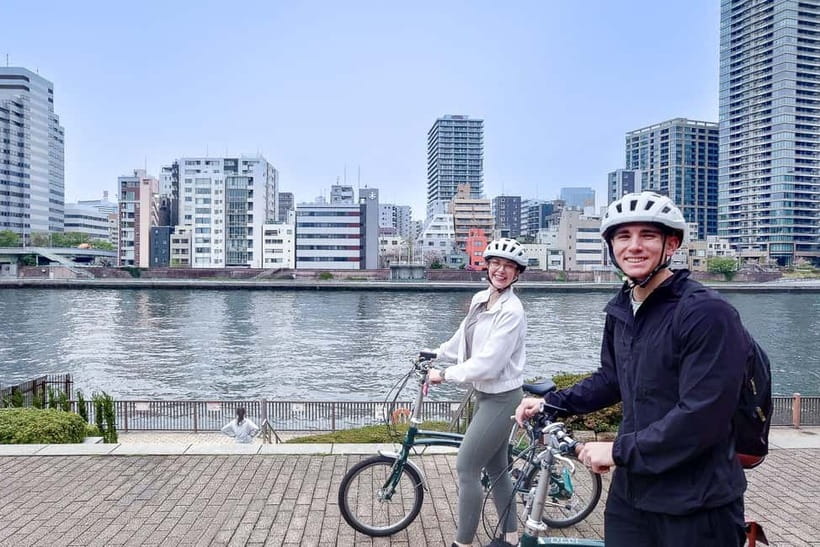
The Sumidagawa Riverside and Tokyo Skytree may also be included. The river gives you a more open view of the city, while Skytree provides a strong visual reference point. The ride can show you how Asakusa’s older streets sit beside newer towers.
Kitasenju and the Arakawa Riverside offer a less polished side of Tokyo. Kitasenju is a local neighborhood with its own everyday rhythm, and the Arakawa area can feel far removed from the neon-heavy center. These places are valuable if you have already seen the standard sights or want a broader view of how people live outside the central postcard districts.
Again, you cannot fit every named location into one three-hour ride. The advertised 15 to 20 kilometer range is a useful guide. Ask Kazuma to prioritize your top choices rather than trying to collect every landmark.
What the riding feels like
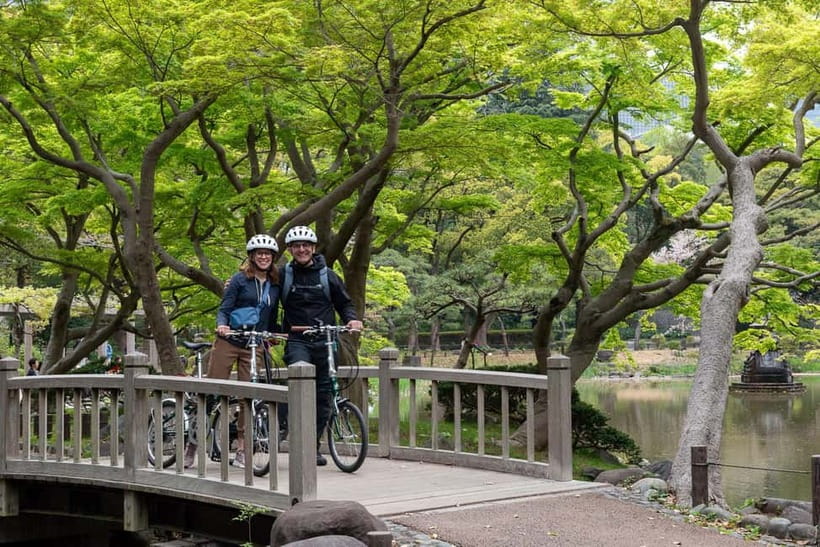
The bikes are electric, and the motor assists when you pedal. That means you still need to ride, steer, brake, and pay attention, but hills and longer stretches require less effort.
Safety is a repeated strength of the experience. Kazuma is described as careful and safety-conscious, and he keeps the tour at a manageable pace. That matters in Tokyo, where you are sharing streets with cars, taxis, pedestrians, and other bicycles.
You cannot take photos or videos while cycling. This is a sensible rule, but it means you should wait for the planned stops. Kazuma has also taken photos of groups during the tour and sent them afterward, which can be a welcome extra for families and couples. Treat that as a guide practice rather than a formal replacement for your own camera time.
The bikes are reported to be easy to ride, but this is still an active experience. You should be comfortable balancing and pedaling. The tour is not suitable for children under 10, people under 145 centimeters, or anyone over 100 kilograms.
Who gets the best value for $141?
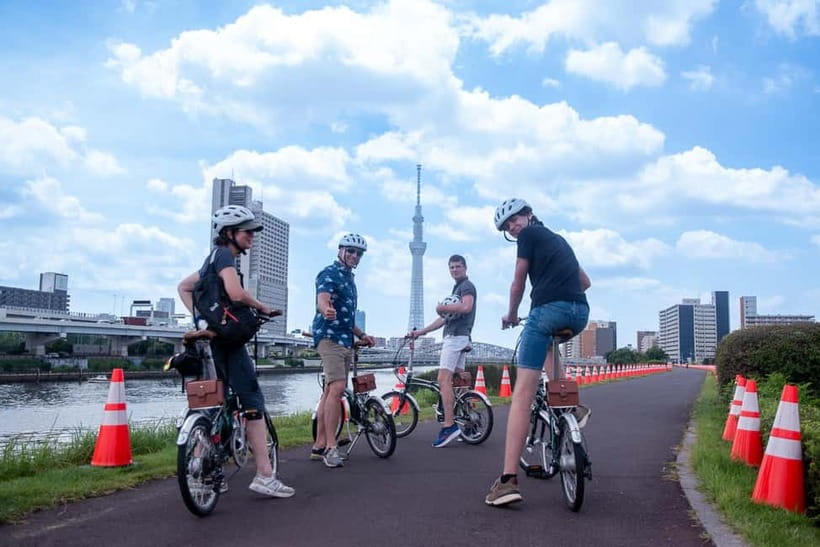
At $141 per person, the tour costs more than a shared group bicycle outing or a self-guided rental. The value comes from the combination of a private group, hotel pickup, equipment, helmet, insurance, safety instruction, and an English or Japanese-speaking guide.
I think the price makes the most sense for a first visit when you want quick orientation. It also works well for a family or small group that would otherwise split up in a large tour. Couples and friends who value flexibility can make good use of the private format.
The price is harder to justify if you already know Tokyo well, prefer public transit, or want a slow afternoon in one neighborhood. It is also less suitable if you are hoping to stop for full meals, shop extensively, or spend long periods inside museums and temples. Food and beverages are not included.
You can request a different start time, a longer duration, or a distant landmark, but additional charges may apply. Ask about these costs before confirming so the final price does not surprise you.
Timing, communication, and cancellation
The tour lasts about three hours, and available starting times depend on the date. The operator may contact you through WhatsApp, iMessage, or SMS, so use a phone number you will check in Japan.
You can reserve now and pay later, which helps if your schedule is still shifting. Free cancellation is available up to 24 hours in advance for a full refund. These policies are useful, but the more important planning point is route choice. Tell the operator your preferred districts when booking, especially if you have already visited the central sights.
Should you book this Tokyo e-bike tour?
Book it if you want to cover a lot of ground without spending half the day in train stations. It is especially appealing for first-time visitors, active families with older children, and anyone who wants Tokyo’s ordinary streets alongside its headline attractions.
I would choose the tour early in a Tokyo stay. The ride can help you understand how Shinjuku, Shibuya, the Imperial Palace, Tokyo Station, Asakusa, and the river districts relate to one another. You can then return later to the places that caught your attention.
Skip it if you dislike cycling in city traffic, fall outside the height or weight limits, or want a slow, indoor-focused sightseeing day. Also think carefully before requesting too many distant neighborhoods. The best version of this tour is not a race to collect landmarks. It is a well-paced private route with a few strong stops, clear explanations, and enough time to notice the city between them.
FAQ
Where does the Tokyo e-bike tour start and finish?
It starts at your hotel and can finish at a listed hotel-area drop-off location. Pickup and drop-off areas include Shinjuku, Shibuya, Ginza, Asakusa, Ueno, Akihabara, Tokyo Station and Marunouchi, among others. Hotels outside the normal range may require an extra charge.
How long is the tour?
The standard tour lasts three hours. The usual route covers about 15 to 20 kilometers.
Can I choose the route?
Yes. The tour is private, and you can request particular places or adjust the pace. Changes to the start time, duration, or visits to distant locations may involve additional fees.
Which languages are available?
The tour is available in English and Japanese. Kazuma is specifically noted for speaking excellent English.
Are e-bikes, helmets, and insurance included?
Yes. The experience includes an e-bike, helmet, safety instruction, insurance, hotel start, and a live guide.
Who cannot join the tour?
Children under 10, people under 145 centimeters, and people over 100 kilograms cannot participate. High heels, sandals, flip-flops, and skirts are not allowed.
Can I cancel or pay later?
You can reserve and pay later. You can also cancel up to 24 hours in advance for a full refund.
More three-hour rides around Japan
- Tokyo: 3-Hour Bike or E-Bike City Highlights Tour
★ 4.8 · 435 reviews - Tokyo: 3-hour Guided E-Bike Tour of the City’s Hidden Gems
★ 4.8 · 251 reviews - Tokyo: 3-Hour Bike/E-Bike Tour of the City’s Highlights
★ 5.0 · 209 reviews - 3 Hours E Bike Tour around Chiyoda Tokyo Prefecture
★ 5.0 · 2 reviews
New e-bike tours around Japan
- Ride around the Castle. Slurp like a Local★ 5.0 · 5 reviews
- 3 Hours E Bike Tour around Chiyoda Tokyo Prefecture★ 5.0 · 2 reviews
- Half Day Private Rural E-Bike Tour in Hida★ 5.0 · 101 reviews
- 3-Hour Tokyo Private E-Bike Tour Starting from Your Hotel★ 5.0 · 117 reviews
- Historical Kyoto E-Bike Tour★ 5.0 · 181 reviews
- Arashiyama Bamboo Forest E-Biking Tour★ 5.0 · 183 reviews
- Pedal Adventure Kyoto’s iconic landmarks on an e-bike tour★ 5.0 · 189 reviews
- 1-Day Private Rural E-Bike Tour in Hida★ 5.0 · 188 reviews
Tokyo E-Bike Tours, side by side.
3h Tokyo E-Bike Tour: Hidden Gems, and Local Life with guide
Read our review →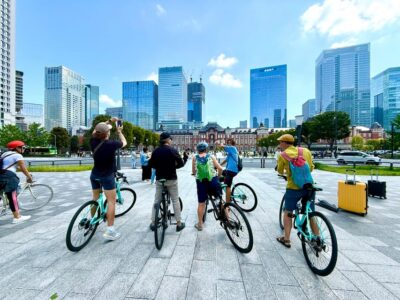
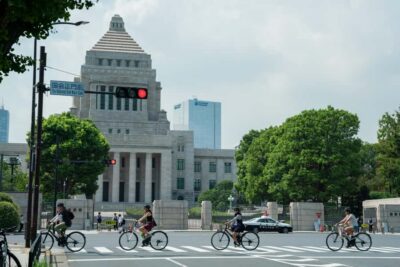
3-hour Guided E-Bike Tour of the City’s Hidden Gems
Read our review →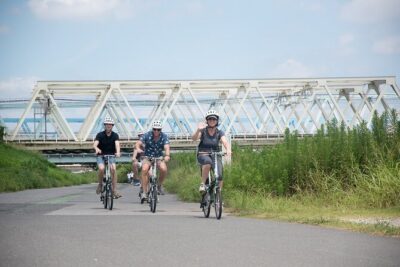
3-Hour Tokyo Private E-Bike Tour Starting from Your Hotel
Read our review →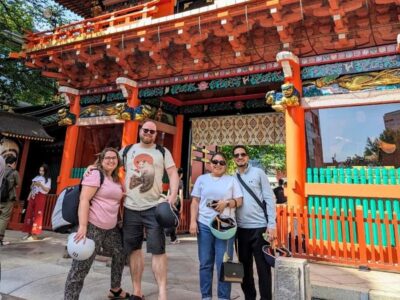
3 Hours E Bike Tour around Chiyoda Tokyo Prefecture
Read our review →This ride also appears in