Review · ROME
Rome: City Highlights Electric Bike Tour
Rome is a city made for seeing from the saddle. This four-hour e-bike ride links the Colosseum, Trevi Fountain, St. Peter’s Basilica, and a string of lesser-known corners without asking you to wear out your feet. Guides such as Daniela, Fabio, and Giorgio keep the ride friendly and adjust the pace to the group.
I especially like the small groups of up to eight per guide and the smart use of the Tiber bike path, side streets, and quieter roads. The route gives you a useful first look at a huge city, and the electric assist makes the distance manageable. The catch is simple: you still need to pedal, handle a bicycle confidently, and cope with occasional traffic and crowded areas.
Key points to know before you book
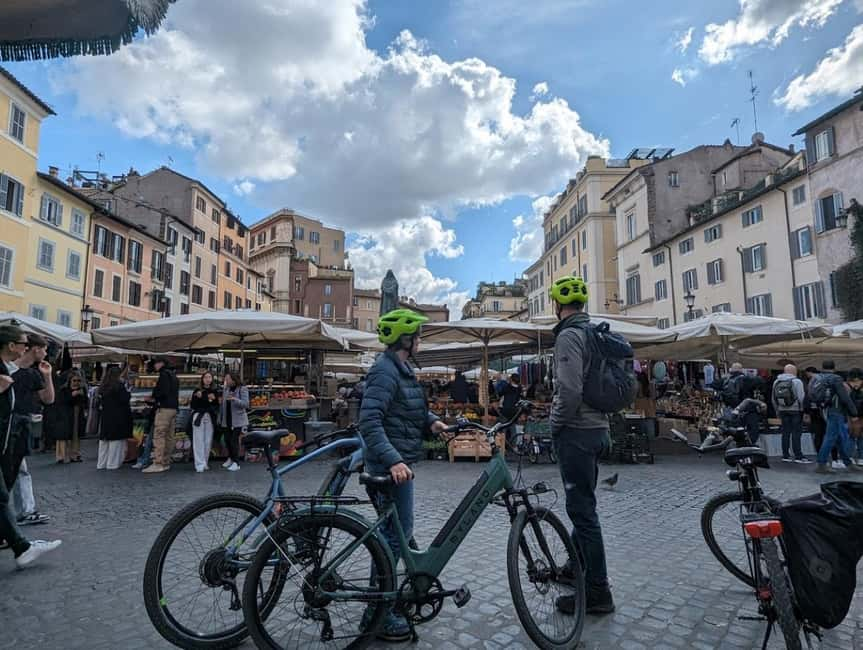
- Four hours, nearly all of central Rome: Cover the major sights from Circus Maximus to Piazza del Popolo without relying on a bus.
- Electric assistance, not a motorbike: You pedal, but the battery helps with distance and effort.
- Small groups: The usual limit is eight people per guide, with private tours available.
- Quiet routes where possible: Much of the ride uses the Tiber path, back streets, and low-traffic roads, though city traffic cannot be avoided entirely.
- A guide-led introduction to Rome: Expect stories, local tips, photo help, and route changes when crowds or public events make them sensible.
- Cycling ability is essential: A short test takes place before departure, and participation can be refused if you cannot ride safely.
Why an e-bike is a smart way to see Rome
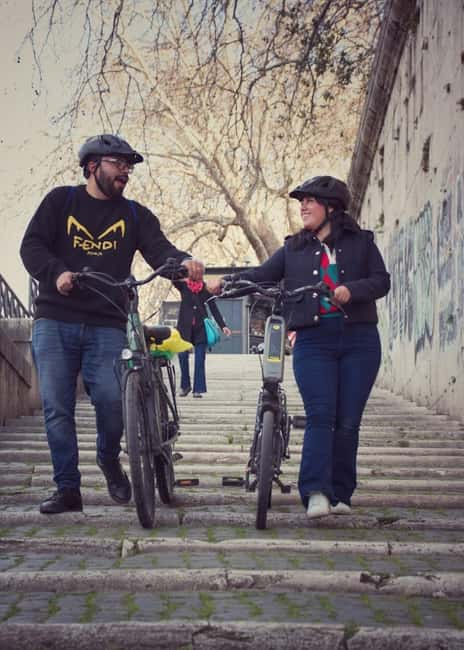
Rome’s sights are spread across a surprisingly large area. Walking from the Colosseum to the Vatican, then back toward the Pantheon and Trevi Fountain, takes time and energy. Public transport helps only part of the way, and buses rarely give you the same sense of place as moving through the streets yourself.
This tour solves that problem neatly. You cover a lot of ground, but the electric assistance takes the sting out of a long ride. It is still exercise, just gentler exercise. One important point: the bikes require pedaling. They are not fully motor-powered scooters, so this is not suitable if you have knee trouble or cannot ride a bicycle.
The route stays in Rome’s historic center and uses the Tiber bike path for part of the journey. Guides favor quieter roads, parks, and back streets when possible. You may still cross busy streets, walk the bike through packed areas, or share the road with traffic. That is normal for cycling in Rome, and the guide controls the group at those moments.
The group size matters. With as many as eight people per guide, you can hear the commentary and ask questions without shouting across a crowd. A private option gives your group the guide alone and allows more room for personal requests.
More City E-Bike Tours in Italy
- Rome: Top Highlights & Hidden Gems Tour by Cannondale E-Bike
★ 4.9 · 1,760 reviews - Rome: Standard or E-Bike Highlights Guided Tour
★ 4.7 · 777 reviews - Rome: City Highlights E-Bicycle Tour
★ 4.9 · 740 reviews
From the Tiber to Tiber Island
The ride begins on Lungotevere delle Armi, though the precise meeting point can vary by booking. After a brief bicycle check and safety test, the group heads toward the Tiber. If this is your first time on an e-bike, your guide explains the controls before you set off.
Tiber Island is an early highlight. The island sits in the middle of the river and gives you a quick change of scene from the city streets. The guided stop lasts about ten minutes, so expect a concise introduction rather than a long visit.
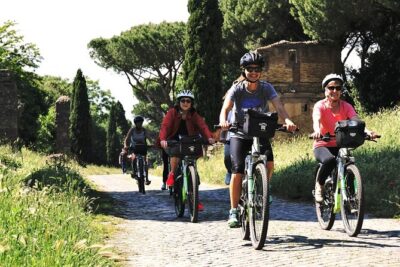
The river path is one of the best parts of the ride. It reduces contact with cars and helps the group settle into a rhythm. You may find the surface and pedestrian traffic vary, so follow the guide closely and be ready to slow down.
Circus Maximus and the Colosseum
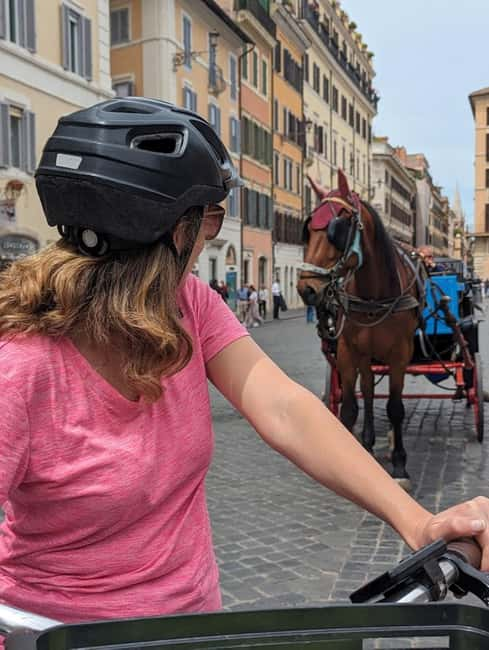
The next major stop is Circus Maximus, the vast ancient racing ground between the Palatine Hill and the Aventine. Today, its scale is easier to appreciate from the open space than from a crowded street. The stop is mainly for photographs and a short explanation.
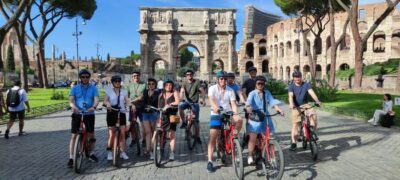
From there, the group continues to the Colosseum. This is a photo stop, not an interior visit, so do not book this ride expecting entry to the amphitheater. The benefit is speed: you can see the exterior, hear the basic story, and move on without spending hours in an admission queue.
The area around the Colosseum can be crowded. You may need to walk your bike for a stretch, especially near the busiest viewpoints. That minor interruption is a fair trade for reaching one of Rome’s essential sights by bicycle.
Piazza Venezia and the Jewish Ghetto
Piazza Venezia brings you into the center of Rome’s monumental core. The broad square, dominated by the Vittoriano, is a useful place to pause and take in the city’s layers of ancient, medieval, and modern power.
The ride then moves toward the Jewish Ghetto. This is one of the route’s more rewarding changes of mood. You leave the grand traffic corridors and enter a district with a quieter, more local feel. The tour does not present the area as a full museum visit, but the guide can give context as you pass through.
This is where the ride feels more personal than a standard bus circuit. You are close to the street, moving at human speed, and able to notice details that disappear through a coach window.
More City E-Bike Tours in Rome
- Rome Highlights by E-Bicycle Small group
★ 5.0 · 486 reviews - Highlights & Hidden Gems Tour with Top E-bike
★ 5.0 · 300 reviews - Rome E-Bike Tour with a Local! Top Attractions & Hidden Gems!
★ 5.0 · 229 reviews - Rome’s Best by E-bike: Guided City Tour (Small Group or Private)
★ 5.0 · 207 reviews
Campo de’ Fiori, Piazza Navona, and the Pantheon
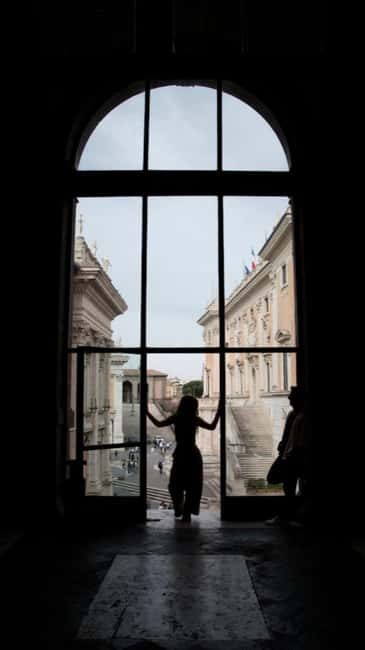
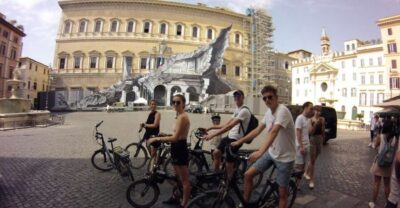
Campo de’ Fiori is another short photo stop. Depending on the time of day, the square may feel open and easy to cross or tightly packed with people. The guide manages the bikes and chooses the safest place to pause.
Piazza Navona is one of Rome’s grandest public spaces, shaped by Baroque fountains, palaces, and the long oval outline of an ancient stadium. Ten minutes is enough to look around and take photographs, but not enough for a serious art visit. Think of the stop as an introduction that helps you decide where to return later.
The Pantheon comes farther along the route. Like the Colosseum, it is seen from outside during this experience. That is useful for orientation, though you will need a separate visit if you want to enter and study the interior.
The pace is one of the tour’s strengths. Guides stop often enough to explain what you are seeing, but they do not turn every square into a lengthy lecture. M, who rode for four hours with guide Ricardo, valued that balance and the freedom to ask questions and stop for photographs.
Castel Sant’Angelo and St. Peter’s Basilica
Castel Sant’Angelo makes a strong approach by bicycle. The cylindrical fortress beside the Tiber began as a mausoleum and later served defensive and papal purposes. On this tour, you stop outside for photographs and a short explanation.
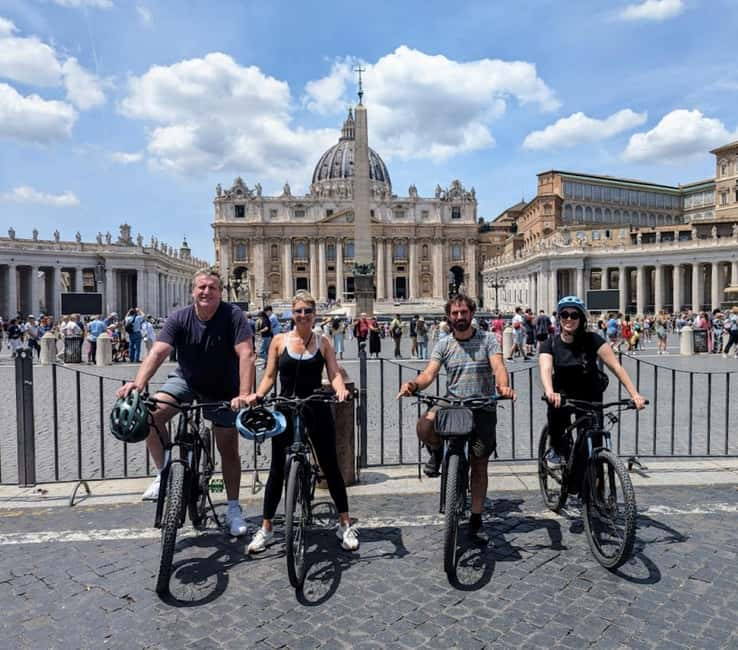
The route then reaches St. Peter’s Basilica. This is another exterior stop, so allow extra time on another day if you want to go inside. The ride gives you a valuable sense of how the Vatican area connects to the rest of central Rome, something that is less clear when you see it as an isolated destination.
The Tiber route helps here too. It offers a calmer way to move between central districts, though the guide may need to bring the group onto regular streets. Parents and riders new to city cycling should listen carefully at crossings and keep a steady line.
Trevi Fountain and Piazza di Spagna
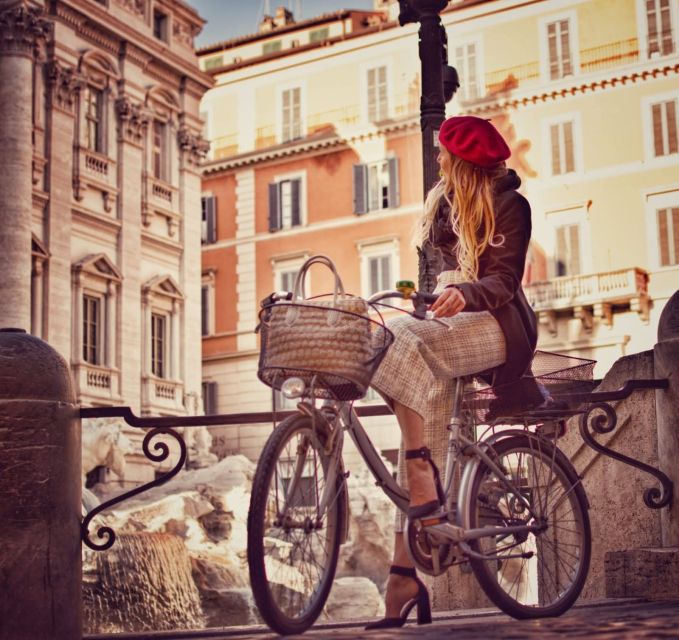
Trevi Fountain is one of the tour’s most popular stops, and it can be the most crowded. You may need to walk the bike near the fountain, as several participants found in busy parts of the center. The guide can help with photographs, but do not expect an empty view.
The fountain stop is brief, usually about ten minutes. That is enough to see the sculpture, take pictures, and perhaps toss in a coin if you have one. It is not enough for quiet contemplation, especially at peak times.
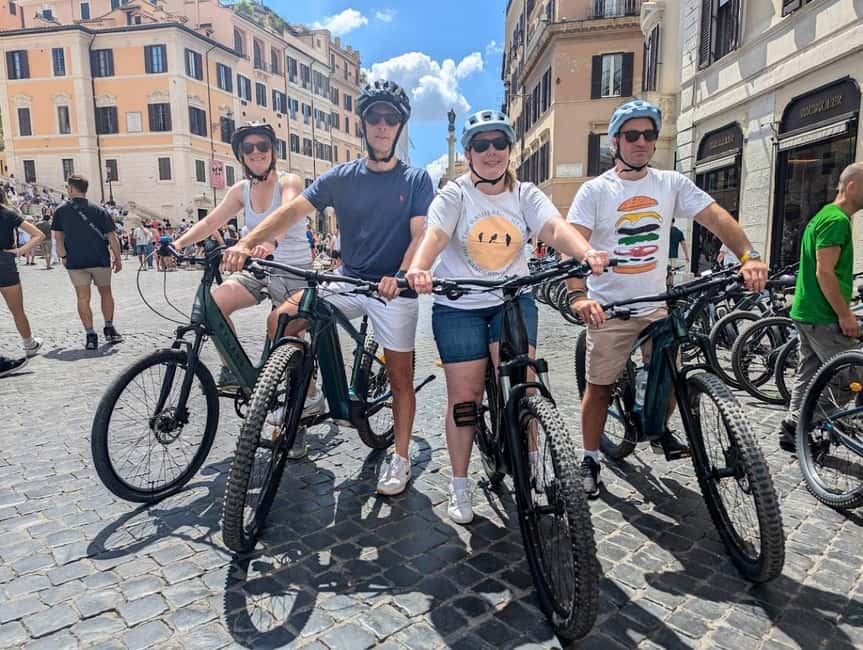
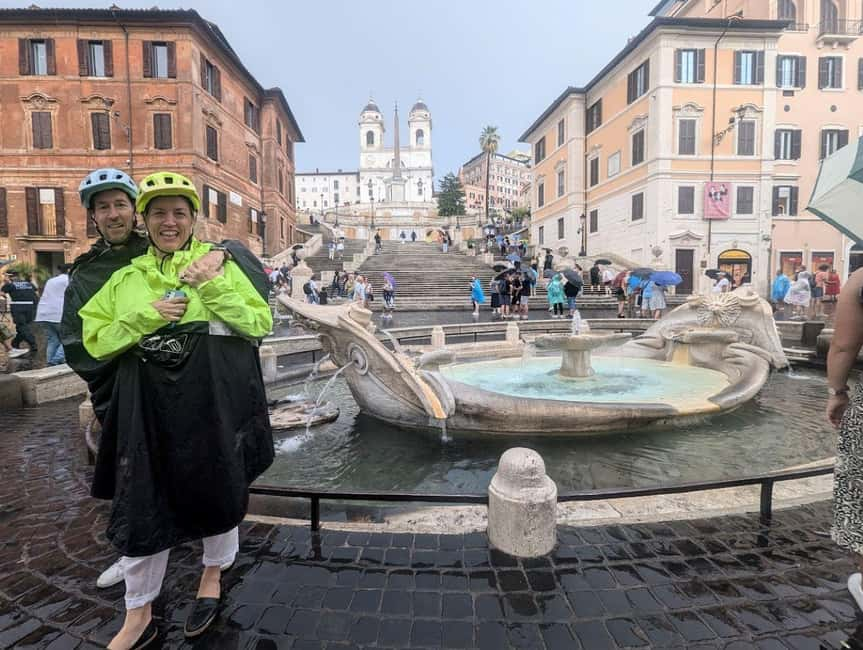
Piazza di Spagna follows. The Spanish Steps area is another place where bikes and crowds do not mix well. You will likely leave the saddle for part of the visit. That is not wasted time: walking through the busiest squares is safer and more comfortable than trying to pedal through them.
The final central sight is Piazza del Popolo. Its broad shape and open space make it a comfortable place to finish the sightseeing portion before returning to the starting area.
The guides make the difference
The route is impressive, but the guide shapes the experience. Daniela has a reputation for lively storytelling, quick adjustments, and taking excellent photographs. Fabio is described as relaxed, patient, and good at keeping the history interesting without piling on too much information.
Giorgio has led groups of six, and his calm, engaging manner suits families and first-time visitors. Other guides, including Alessio, Marco, Martina, Ricardo, and Noam, have adapted routes to match the group’s interests or cycling ability.
That flexibility is useful. At the start, tell the guide what you have already seen and what matters most to you. The standard route includes many landmarks, but public events, crowd conditions, or safety concerns can lead to substitutions.
The commentary is not meant to replace a museum guide. Instead, you get short explanations, local stories, and a sense of how Rome’s districts fit together. If you want a tightly scripted lecture at every stop, this may feel light. If you want a lively orientation with room for questions, it fits well.
How hard is the ride?
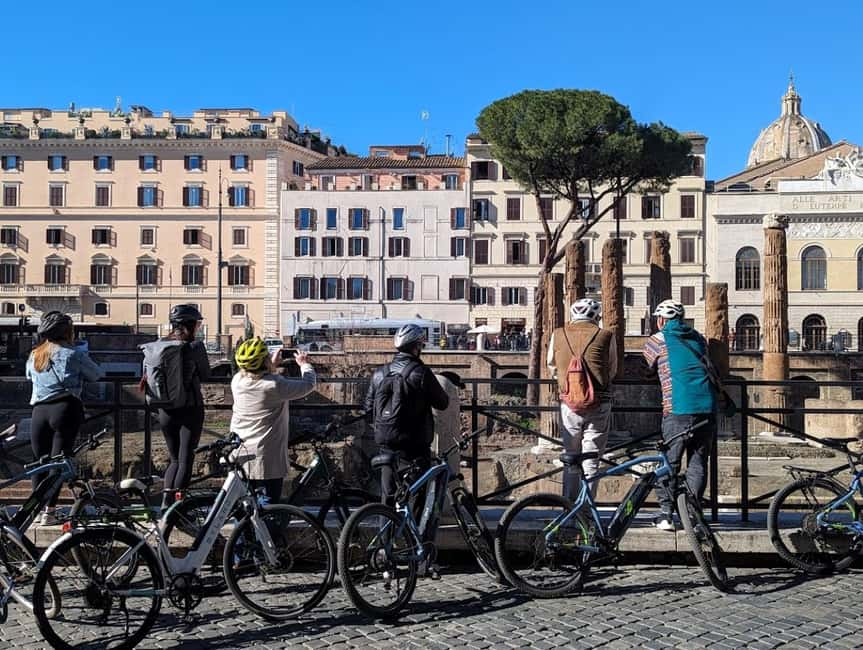
The electric assistance makes the four-hour distance feel easier, but the ride is not effortless. You need to balance, steer, brake, pedal, and respond to people and cars. A minimum cycling level is required, and the guide conducts a pre-departure test.
The tour is not suitable for people who cannot ride, those with mobility limits, serious heart problems, vertigo, recent surgery, low fitness, or pregnancy. There is also a stated weight limit of 220 pounds, or 100 kilograms.
Children under 139 centimeters must use a bike extension, such as a tag-along or trailer. Infants up to 20 kilograms can ride free in a child seat. The minimum age to operate an e-bike is 12.
A helmet cover, poncho, and child seat are included when needed. Bring comfortable clothing and identification. Water is a sensible addition, especially in warm weather. One participant specifically advised carrying water, and it is good practical advice for a four-hour ride.
Rain does not always end the tour. Ponchos are provided, and one guide took a group to a coffee house during a heavy shower. Still, poor weather may affect the route, pace, or stops.
Is the $80 price fair?
At $80 per person, this is not the cheapest way to see Rome, but the price is reasonable if you want an active overview rather than a single monument visit. You get four hours, a guide, an e-bike or mountain bike depending on the option, and a route that reaches many districts.
The value is strongest on a first day in Rome. You see where the major sights are, learn which areas deserve a return visit, and save your legs for the museums and interiors you plan to explore later.
It is also good value for families with mixed ages. The electric assist helps reduce the gap between a fit teenager and an older adult, while a small group keeps the ride manageable.
The tradeoff is that every stop is brief and mostly outdoors. You do not enter the Colosseum, Pantheon, or St. Peter’s Basilica, and you will not have long, quiet visits at the fountains and squares. If your priority is detailed sightseeing inside monuments, spend the money on admission and a focused walking guide instead.
Cancellation is free up to 24 hours before departure, and you can reserve now and pay later. The tour requires at least four participants. If that minimum is not reached, an alternative date or full refund is offered.
Who should book this Rome bike tour?
I would choose this ride if you have limited time in Rome, want to see a broad sweep of the center, or find long walking days tiring. It works especially well for families, couples, and groups that want a shared activity rather than a standard coach tour.
It is also a strong choice for your first full day. You will collect useful bearings and can return later to the Colosseum, Pantheon, Trevi Fountain, or Vatican Museums for longer visits.
I would be cautious if you are nervous on a bicycle, have health concerns, or dislike city traffic. The guides use safer routes, but no central Rome bike tour can remove all traffic, crowds, or uneven moments. Practice on an e-bike before booking if you have never used one.
Should you book it?
Book this tour if you want maximum sightseeing in four hours, enjoy light exercise, and value a local guide who can adjust the pace. The strongest features are the compact groups, good-quality bikes, route variety, and mix of famous sights with quieter streets.
Skip it if you need interior access, a slow art-focused tour, or a completely traffic-free ride. For confident cyclists, the $80 cost buys a practical introduction to Rome and a much better sense of the city than you can get by walking between every major sight.
FAQ
How long does the Rome City Highlights Electric Bike Tour last?
The tour lasts four hours.
What sights are included?
The route includes Tiber Island, Circus Maximus, the Colosseum, Piazza Venezia, the Jewish Ghetto, Campo de’ Fiori, Piazza Navona, Castel Sant’Angelo, St. Peter’s Basilica, the Pantheon, Trevi Fountain, Piazza di Spagna, and Piazza del Popolo.
Does the tour enter the Colosseum or St. Peter’s Basilica?
No. These are outdoor photo stops during the bike tour.
What languages are available?
Guides are available in English, Spanish, French, and Italian.
Is the tour private?
A private group option is available. Standard groups are limited to eight participants per guide, though the operator may make small adjustments to keep bookings together.
Do I need to know how to ride a bike?
Yes. A minimum cycling ability is required, and the guide conducts a pre-departure test.
Can children join the tour?
Children under 139 centimeters must use a bike extension, such as a tag-along or trailer. Infants up to 20 kilograms can ride in a provided child seat. Riders must be at least 12 years old to operate an e-bike.
What happens if it rains?
A poncho is provided if needed. The guide may adjust the experience during bad weather, and the route can include a coffee stop.
Can I cancel the booking?
Yes. You can cancel up to 24 hours in advance for a full refund. You can also reserve now and pay later.
New e-bike tours around Rome
- Rome E-Bike Tour: Roman Castles, Villages and Lake Views★ 5.0 · 2 reviews
- E-bike tour in the center of Rome★ 3.8 · 9 reviews
- Rome E-Bike Tour: Ultimate Street Food and Market Feast★ 4.9 · 50 reviews
- Best of Rome Electric Bike Tour★ 4.6 · 3 reviews
- Rome: E-Bike Tour on the Appian Way to Castel Gandolfo and the Lake★ 5.0 · 3 reviews
- Rome: Private Appian Way & Albano Lake Full-Day E-Bike Tour★ 5.0 · 2 reviews
- Rome: Appian Way, Aqueducts & Catacombs (Small Group or Private)★ 5.0 · 103 reviews
- Rome E-Bike Small Group Tour of the Appian Way with Private Option★ 5.0 · 130 reviews
Rome E-Bike Tours, side by side.
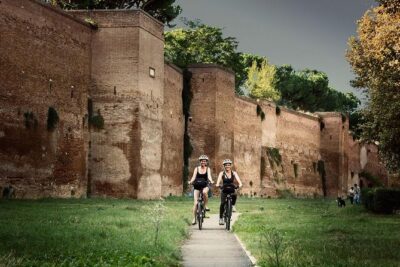
Rome EBike Tour: Appian Way, Catacombs & Roman Aqueducts
Read our review →
Top Highlights & Hidden Gems Tour by Cannondale E-Bike
Read our review →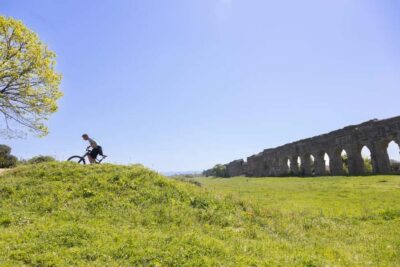
Appian Way & Aqueducts E-Bike Tour (Catacombs & Food)
Read our review →
Rome City Small Group Bike Tour with quality Cannondale EBike
Read our review →
Rome by Night – Ebike Small Group Tour – Food and Wine (Option)
Read our review →