
Review · VIENNA
Vienna: Guided E-Bike Tour
Vienna’s grand center is compact on a map, but its famous sights spread across a busy ring of streets and squares. This small-group e-bike tour lets you cover the Opera, Hofburg, Parliament, Rathaus, Stephansplatz, and Belvedere without wearing out your legs or waiting for public transport. Guides including Winfried and Tamour are known for answering questions and adjusting the pace.
I especially like the maximum of six participants, which gives you room to hear the guide and ask about the city. I also like the chance to keep the e-bike for additional riding, perhaps toward Prater, Donauinsel, or the vineyards near Vienna. The main consideration is that you are responsible for theft, damage, and traffic-rule mistakes, so this suits confident cyclists more than anyone uneasy in city traffic.
Key points at a glance
- Ride between Vienna’s headline sights: Cover Karlsplatz, the Opera, Hofburg, Heldenplatz, Parliament, Rathaus, Stephansplatz, Stadtpark, and Belvedere in one outing.
- Small group of up to six: You get a better chance to hear the guide and shape the conversation than on a large coach tour.
- Guides who adjust to your interests: Winfried is praised for a calm pace and useful local suggestions, while Tamour is noted for detailed explanations.
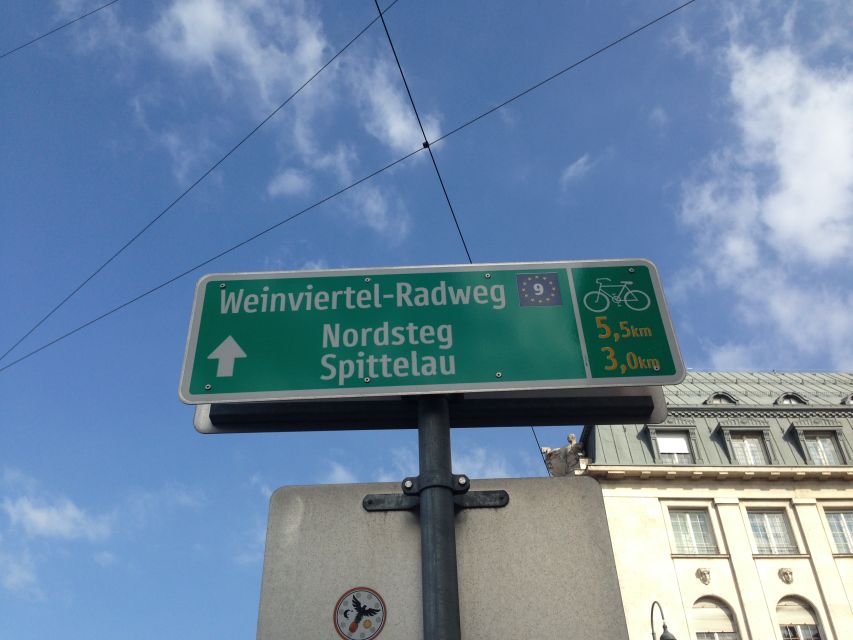
- Useful cycle routes: Much of the ride uses Vienna’s cycle lanes rather than busy roads, according to the available tour details.
- A bike for more than the guided route: You may be able to continue independently to the Danube Island, Prater, or nearby vineyards.
- Good value at $49: The price is attractive if the full-day e-bike use is available as described, but confirm the exact rental arrangement before booking.
Starting at Karlsplatz, with Vienna at your wheels
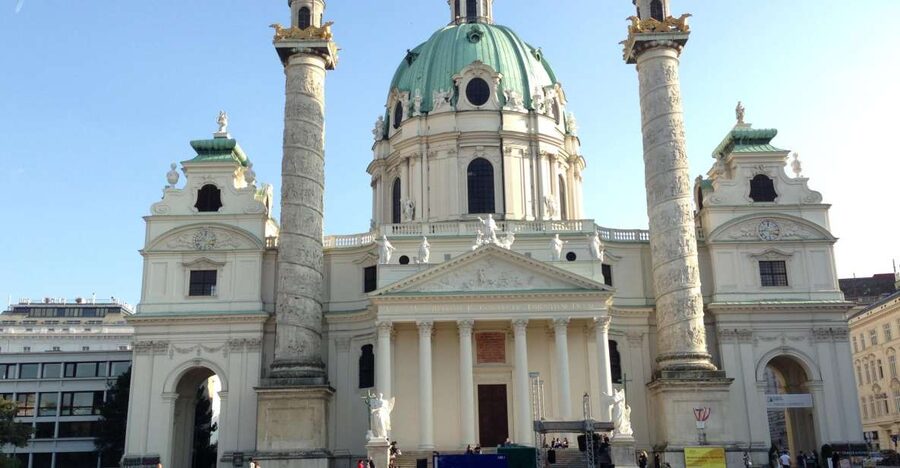
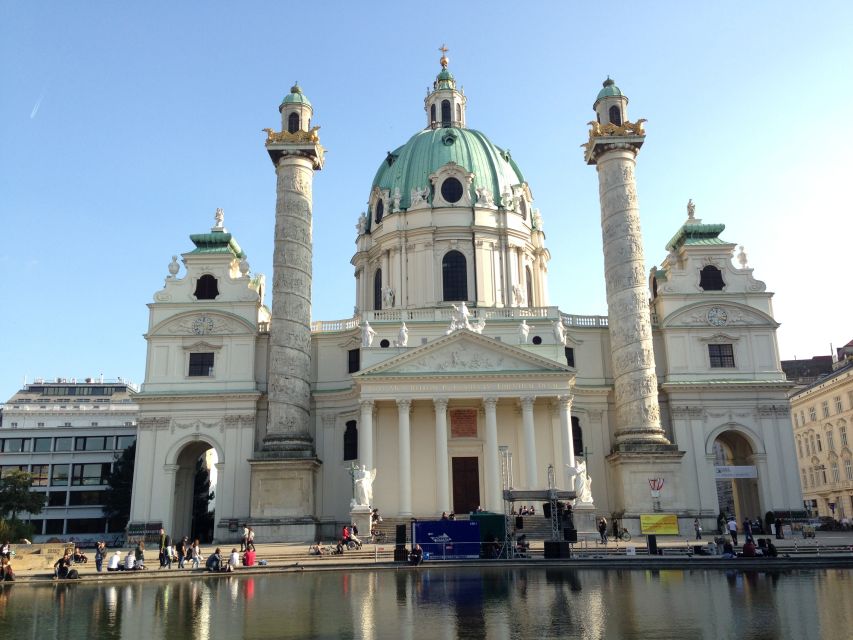
The meeting point is near Argentinierstrasse, about a two-minute walk from Karlskirche. You can also use the U1 underground line to Taubstummengasse, then walk roughly one minute to Argentinierstrasse 28.
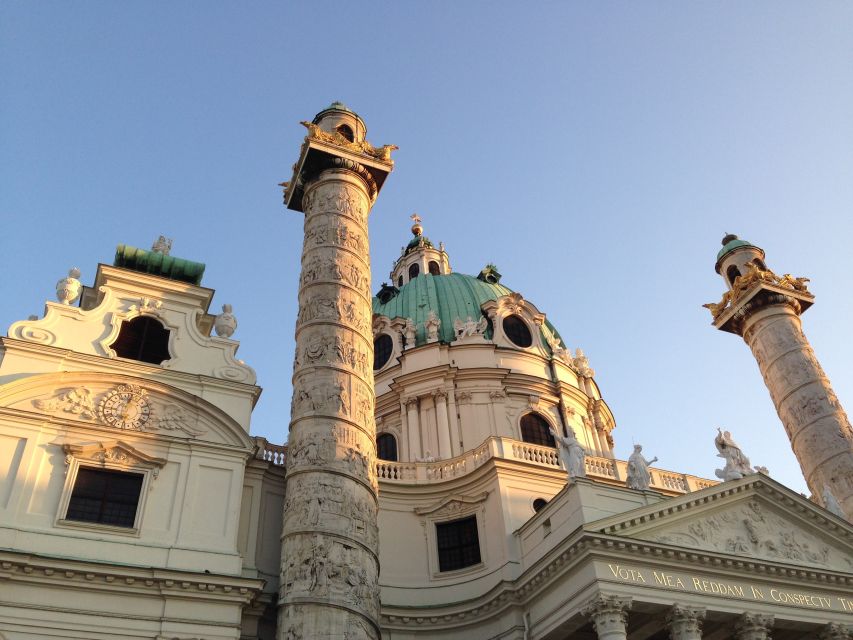
That location works well. Karlskirche is one of Vienna’s most graceful Baroque churches, and Karlsplatz puts you close to the Ringstrasse, the Opera, Musikverein, and the historic center. You do not waste the opening part of the tour getting out to a distant suburb.
The guided portion is described as 75 minutes, while the activity duration is listed as 90 minutes. That small mismatch is worth noting. The actual ride may run longer, as one guide has continued closer to two hours when time allowed, but you should treat 75 minutes as the reliable guided-tour expectation and ask about the schedule if timing matters.
The bikes are reported to be charged and in good condition. You will still need to take responsibility for your own machine, including theft, damage, and violations of Austrian traffic rules. Bring comfortable shoes, sunglasses, and a passport or identity card.
More guided rides around the world:
- 3-Hour Porto Highlights on a Electric Bike Guided Tour
★ 5.0 · 4,392 reviews - Porto: City Highlights 3-Hour Guided Electric Bike Tour
★ 4.8 · 3,092 reviews - Asheville Historic Downtown Guided Electric Bike Tour with Scenic Views
★ 5.0 · 1,234 reviews
Musikverein, the Opera, and Vienna’s grand front door
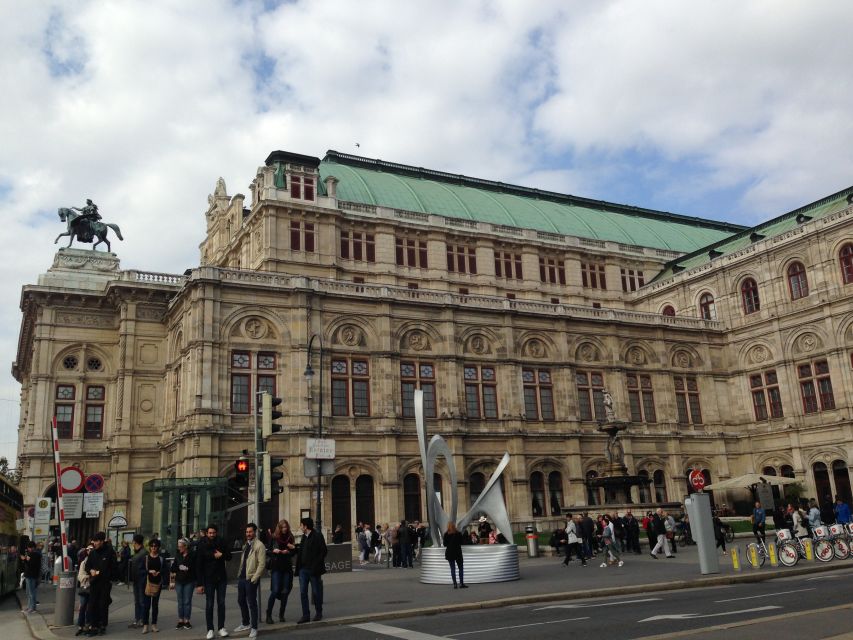
From Karlsplatz, the route passes the Musikvereinshaus and Vienna State Opera. These are not quiet, hidden corners. They are the city’s grand public face, framed by ornate facades, wide streets, and the constant movement of central Vienna.
The e-bike is useful here because the sights come quickly. You can stop for an explanation, ride a short distance, and be looking at another major building within minutes. Walking this same circuit is entirely possible, but it takes more time and leaves less energy for exploring interiors later.
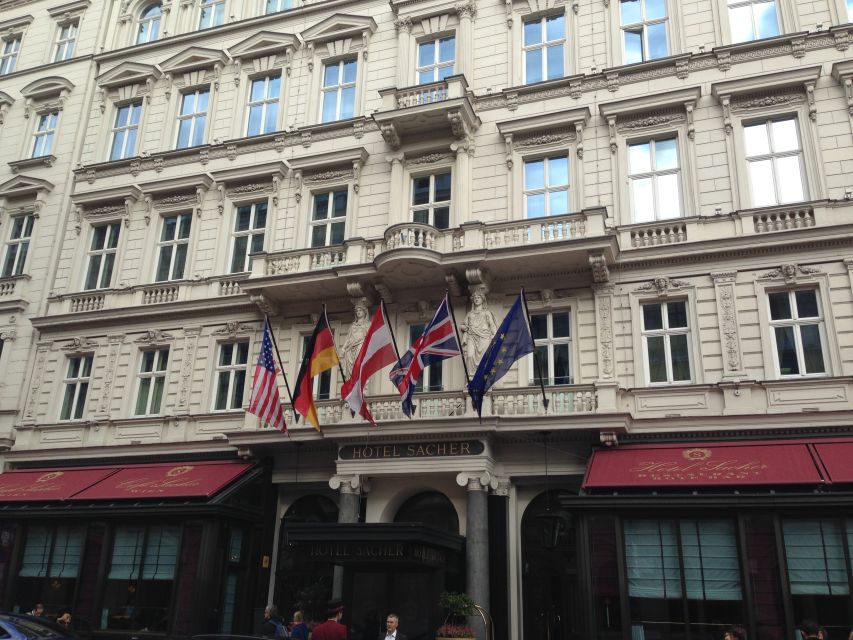
The route also passes Hotel Sacher and the Albertina. Hotel Sacher is linked with Vienna’s famous Sacher-Torte, while the Albertina occupies a commanding position above the Opera area and holds major art collections. Admission to attractions is not included, so think of this part as an orientation ride rather than a museum visit.
That distinction matters. You will see where the city’s main cultural sights are, learn which ones deserve a return visit, and get a useful sense of distance. If you want to enter the Albertina, Opera, or another attraction, plan a separate visit.
Hofburg and Heldenplatz, where imperial Vienna opens up
The route then reaches the Hofburg, Vienna’s former imperial complex, and Heldenplatz. This is one of the most rewarding sections because the spaces become larger and the story of the city becomes easier to read from the street.
At the Hofburg, you are surrounded by courtyards, ceremonial entrances, and buildings added over many centuries. Heldenplatz gives you a broad view toward the museums and the grand buildings around the square. It is a good place to pause rather than simply pedal past.
A guide can make this stop far more useful than a quick photograph. Ask about the Habsburg court, the role of the Hofburg today, or the buildings facing Heldenplatz. The available guide feedback points to a flexible approach, with questions welcomed and the explanation adapted to the group’s interests.
This is also where a small group helps. With only six riders, the guide can stop without creating a large crowd, and you can hear the explanation even when the square is active.
Parliament, Rathaus, and the Burgtheater
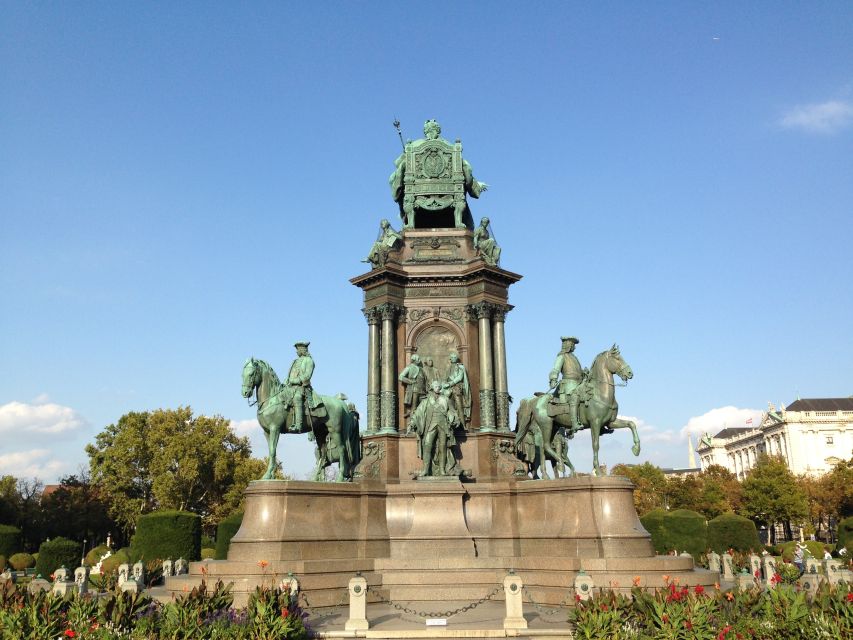
From Heldenplatz, the ride continues toward the Parliament House and Rathaus, then the Burgtheater and Stock Exchange. This stretch shows off Vienna’s Ringstrasse architecture, a grand nineteenth-century belt of public buildings created as the old city walls gave way to a wider urban center.
Parliament is especially striking for its classical design. Rathaus has a tall, highly decorated facade and a different visual character, while the Burgtheater adds the cultural polish you expect from Vienna. The buildings are close enough together to make an e-bike ideal. You can see a lot without spending half the tour crossing intersections on foot.
The guide’s role here is to connect the buildings rather than merely name them. I would use this section to ask which interiors are worth visiting, where to return for photographs, and how the Ringstrasse fits into Vienna’s growth.
The drawback is that a short route cannot give every building equal attention. If architecture is your main interest, you may want a longer dedicated walking tour afterward. This ride is best understood as a broad, well-paced introduction.
More e-bike tours around the world:
- Lisbon: Hills, Alfama, and Mouraria Tour by Electric Bike
★ 4.8 · 3,438 reviews - Athens Scenic Electric Bike Tour with optional Acropolis visit
★ 5.0 · 3,350 reviews - Red Rock Canyon eBike Half-Day Tour
★ 5.0 · 1,870 reviews - Hidden Kyoto E-Biking tour
★ 5.0 · 1,843 reviews
Stephansplatz and the heart of the old city
Stephansplatz is the route’s central stop. St. Stephen’s Cathedral dominates the square with its patterned roof and tall Gothic tower, and the surrounding pedestrian streets lead into the oldest part of central Vienna.
This is the point where the ride shifts from the broad imperial avenues to the tighter core of the city. The e-bike helps you reach Stephansplatz efficiently, but you should expect more care around pedestrians and crowded central streets. Your guide will set the pace, and you remain responsible for following Austrian traffic rules.
You will not have admission included, so the cathedral interior or tower visits require separate planning. Even without going inside, the square gives you a clear anchor for later sightseeing. It is easy to return here by underground or on foot from many central hotels.
If you are using this tour on your first day, remember the places that catch your attention. Stephansplatz, the Hofburg, and the Opera are all good candidates for a slower second visit after you have learned the city’s layout.
Stadtpark and the ride toward Belvedere
After Stephansplatz, the route heads toward the city park at Schwarzenbergplatz and then the Belvedere. Stadtpark offers a change of pace, with open space and a less formal setting than the imperial center. Schwarzenbergplatz, in turn, connects the central city with the grand avenues leading south.
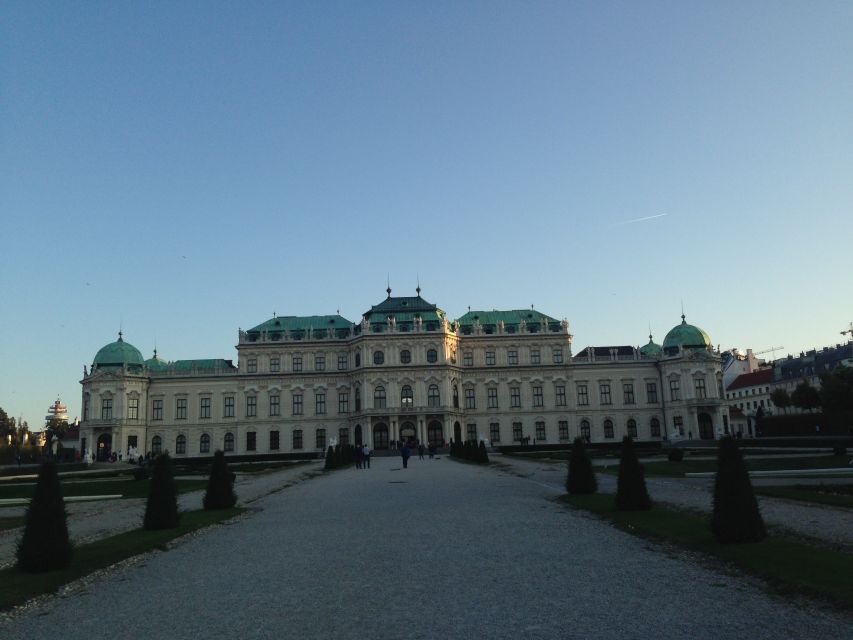
The Belvedere is one of Vienna’s best-known palace complexes, with formal grounds and major art collections. The route lets you place it in relation to the center, which is useful if you plan to return for a museum visit. Again, the tour does not include admissions, so the stop is about setting the scene and seeing the exterior.
This final stretch helps explain the tour’s value. You are not just ticking off one square after another. You are learning how Vienna’s major districts connect, from the Opera and Hofburg to the parkland and palace area around Belvedere.
The tour returns to Karlsplatz, completing a compact circuit of the city’s most recognizable landmarks.
Why the e-bike matters in Vienna
You can walk much of central Vienna, and the city’s underground system is useful. The e-bike adds a different advantage: speed between sights with less effort and more visual contact than you get underground.
The available information points to Vienna’s cycle lanes being a real benefit. One rider spent hardly any time on roads, while another found the powered bikes easy to handle. That makes the ride appealing if you want a broad introduction but do not want to join a bus tour.
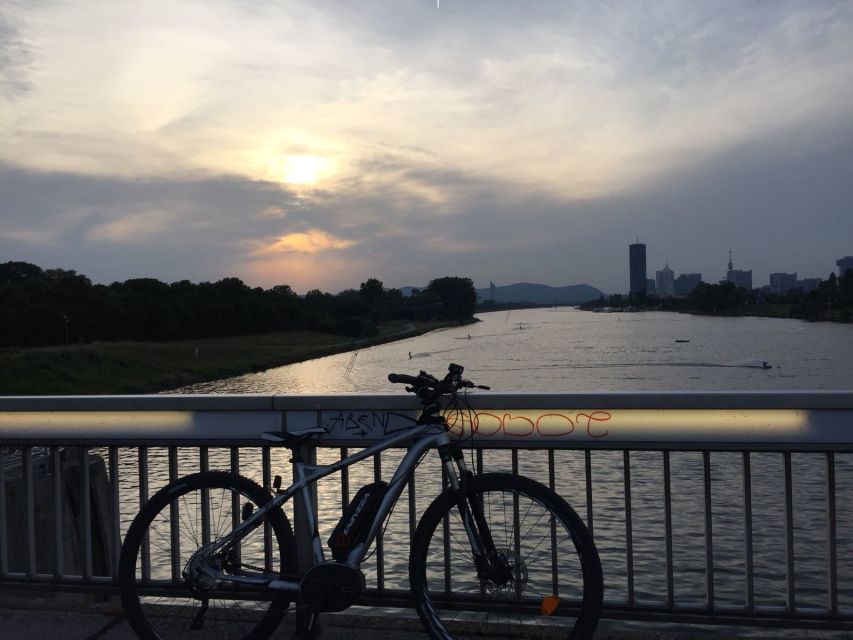
The bike also gives you a little more freedom after the formal route. You might continue to Donauinsel, the Prater, or the vineyards around Vienna, all described as reachable within about 20 minutes. These destinations offer a different side of the city than the Opera and Hofburg, although the exact independent-riding time and return arrangement should be confirmed when you book.
The option to return the bike at Karlsplatz or at the provider’s headquarters near Schönbrunn adds flexibility. Hotel pickup may also be possible. Do not assume every rental option is automatic, since the activity information combines a guided tour with full-day e-bike use. Ask for the precise handover and return terms.
What the guides add to the ride
The strongest part of this experience is likely to be the guide rather than the bicycle itself. Winfried is praised for taking riders all over the old city, setting a comfortable pace for people new to e-bikes, and offering suggestions for the rest of their stay. That is useful if you want more than a memorized list of dates.
Tamour is also specifically noted for detailed information. The tour can adjust to your interests, so you can ask about architecture, imperial Vienna, museums, or practical places to visit later.
The guides appear comfortable extending the route when time permits. One ride lasted close to two hours instead of the advertised 75 minutes, while another was described as an efficient tour that reached the major stops in around three hours. Those times are not guaranteed, but they show that the pace can vary.
That variation is both a strength and a planning issue. If you need to reach a train, airport, or restaurant reservation, leave a generous buffer. If your schedule is open, a longer explanation can make the $49 price even better.
Price, timing, and who gets the best value
At $49 per person, the price is reasonable for a small guided group in a major European capital. You are paying for an e-bike, a live guide in English or German, and a fast route through the historic center. If the full-day bike option applies to your booking, the value improves sharply, since you can continue riding after the guided circuit.
Admissions, food, and drinks are not included. That keeps the base price clear, but you should budget separately if you want to enter the Albertina, Belvedere, Hofburg buildings, or other sights.
I would recommend this most strongly to:
- First-time visitors who want to understand Vienna’s layout quickly
- People with limited time, including those on a stopover
- Riders who enjoy city sightseeing but do not want a long walking route
- Couples, families with suitable riders, and small groups who prefer personal attention
- Visitors who want suggestions for independent exploring after the tour
It is less suitable for anyone with mobility impairments, as stated in the activity details. It may also be a poor fit if you are not comfortable riding an e-bike in an urban setting or accepting responsibility for the bicycle.
Free cancellation up to 24 hours before the start and reserve-now, pay-later booking make the commitment easier. Still, the practical questions are the important ones: How long do you keep the bike? Where can you return it? Is the full-day option included in your specific booking? Get those answers before you count on an afternoon ride.
Should you book the Vienna e-bike tour?
Book it if you want a quick, well-connected look at central Vienna and like the idea of continuing by bike afterward. The small group, flexible guiding, charged e-bikes, and long list of major sights make this a strong first-day activity.
I would skip it if you want extended time inside museums and palaces, or if cycling in city traffic makes you nervous. For most capable riders, though, $49 buys a useful orientation, a pleasant ride, and the chance to see far more than you would on foot in the same short period.
FAQ
How long is the Vienna guided e-bike tour?
The activity duration is listed as 90 minutes, while the guided portion is described as 75 minutes. Some rides may last longer when the schedule and group allow, so leave extra time if you have a fixed appointment.
What sights does the tour visit?
The route starts at Karlsplatz and passes the Musikvereinshaus, Vienna State Opera, Hotel Sacher, Albertina, Hofburg, Heldenplatz, Parliament House, Rathaus, Burgtheater, Stock Exchange, Stephansplatz, Stadtpark, Schwarzenbergplatz, and Belvedere before returning to Karlsplatz.
What languages are available?
The live tour guide is available in English and German.
How large is the group?
The tour is limited to six participants.
Is the e-bike available after the guided ride?
The activity information says the e-bike is available for the day and may be used afterward for independent riding. Confirm the exact rental period and return arrangement for your booking.
Where can I ride after the tour?
The nearby recreation areas Donauinsel and Prater, along with the vineyards around Vienna, are given as possible destinations. Each is described as reachable within about 20 minutes.
Are admissions, food, and drinks included?
No. Entry fees, food, and drinks are not included in the activity price.
What should I bring?
Bring a passport or identity card, comfortable shoes, and sunglasses. You are responsible for the e-bike, including theft, damage, and negligence of Austrian traffic rules.
New e-bike tours around the world
- Franschhoek: Private E-bike Ride & Wine Experience★ 5.0 · 6 reviews
- Franschhoek: E-Bike & Wine Tour (Shared Tour)★ 5.0 · 10 reviews
- Franschhoek: Explore The Valley Of Dreams With E-Bikes★ 5.0 · 7 reviews
- Frankfurt: Unique E-Bikes Tours★ 4.8 · 22 reviews
- Forte Dei Marmi: E Bike Tour and hidden gems with a local★ 4.7 · 3 reviews
- eBike Guided Tour of Fort Worth★ 5.0 · 4 reviews
- Formentera: discover our fast ferry + electric bike package.★ 4.4 · 51 reviews
- Private E-Bike Tour: Piazzale Michelangelo & Florence hills★ 5.0 · 5 reviews