
Review · BARCELONA
Barcelona: 2.5-Hour Bike or E-Bike Historical Tour
Barcelona reveals itself beautifully from a bicycle, and this tour connects two very different pleasures: Gaudí’s wild Modernism and the everyday streets between his grand buildings. In 2.5 hours, you ride from Arc de Triomf through El Born and Gràcia to Sagrada Familia, with enough stops for photos and short explanations.
I like the $28 price, which includes the bike, guide, helmet, insurance, and water. I also like the e-bike choice, especially for the uphill sections around Gràcia and for anyone who wants to save energy for the rest of the day. The main drawback is time: you’ll see the exteriors of many major buildings, but this is not an inside tour of Gaudí’s work.
A few guides have earned especially warm praise for making the ride personal. Peter adjusted a solo rider’s route and pace, while Alex added local dining and shopping suggestions. Sergio helped a group recover quickly from a bike problem, with a mechanic sent out while they waited at a nearby café.
Key points before you book
- Arc de Triomf is the easy starting point: The office is about three minutes from the Arc de Triomf metro station and close to Ciutadella Park.
- The e-bike makes the route friendlier: You can choose a regular bicycle or electric bike, with the motor helping on inclines and after traffic lights.
- Gaudí’s best-known façades come in one sweep: Casa Calvet, Casa Batlló, La Pedrera, Casa Vicens, and Sagrada Familia all feature along the route.
- The tour mixes architecture with real neighborhoods: El Born, Plaça Sant Jaume, and Vila de Gràcia add streets, squares, and local city life between the headline sights.
- Small groups keep the ride manageable: Groups run from 2 to 15 people per guide, with private options available.
- It is best for exterior sightseeing: You get views, photo stops, and explanations, but no admission to the interiors is included.
Starting beneath Arc de Triomf
The tour begins at Passeig de Lluís Companys, 10, beside Barcelona’s Arc de Triomf. The nearest metro station is Arc de Triomf on the red L1 line. From the station, walk about three minutes along the broad promenade toward Passeig de Sant Joan.
This is a sensible place to begin. The Arc de Triomf is handsome in its neo-Mudéjar style, and the long pedestrian avenue gives you room to meet your guide and get set up before entering city traffic. You receive a regular bike or e-bike, helmet, insurance, and a bottle of water.
The group size ranges from two to 15 people per guide. That is small enough for questions, though a full group of 15 will naturally feel less personal than a private outing. If you have a strong preference for pace or subject matter, say so early. Peter, for example, adjusted the ride for a solo participant and even added a beach ride based on that person’s interests.
More Historic E-Bike Tours in Barcelona:
- Barcelona: Montjuïc e-bike Adventure with Views and Castle
★ 5.0 · 9 reviews - Barcelona: Guided tour e-bike Barcelona historical and modernist Barcelona
★ 4.5 · 5 reviews - Rome EBike Tour: Appian Way, Catacombs & Roman Aqueducts
★ 5.0 · 1,766 reviews
Ciutadella Park and Barcelona’s older core
From the Arc, you ride into Parc de la Ciutadella. The park’s fountain has an Italian-inspired design, and the guide may point out possible work by a young Antoni Gaudí. This is a short introduction to the architect before you reach his better-known buildings.
The park also gives the tour a useful change of rhythm. You are not simply racing from one famous façade to another. There is a little open space, a photo stop, and time to get comfortable with the bicycle. If you choose an e-bike, this is a good place to learn how the motor responds before the streets become busier.
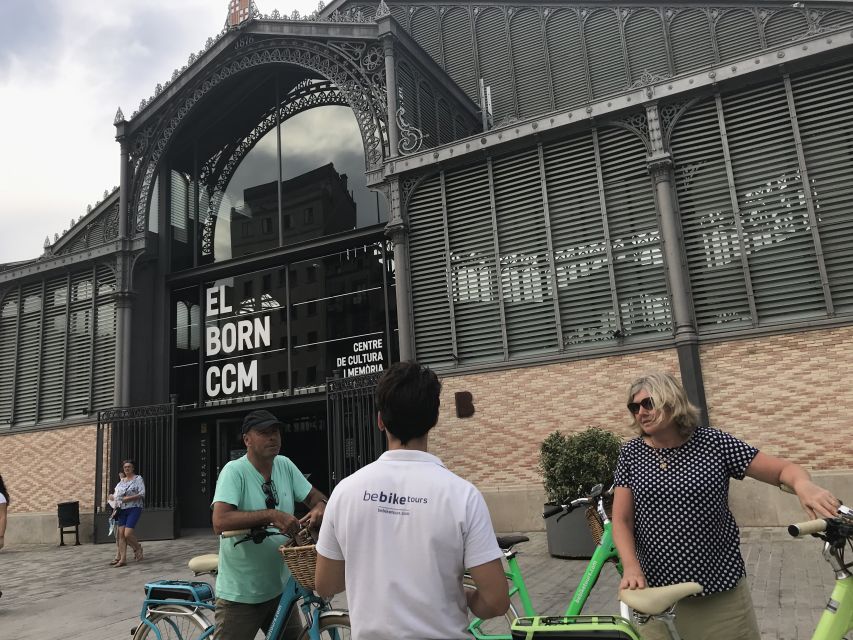
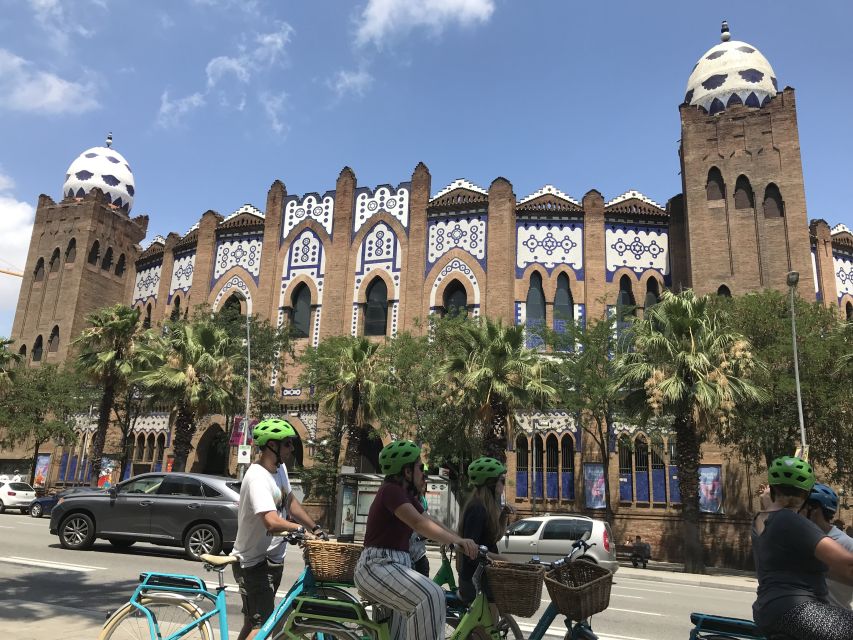
Next comes El Born, one of central Barcelona’s most appealing old districts. The route includes Mercat del Born, a large former market structure, and the nearby Basilica of Santa Maria del Mar, often called St. Mary of the Sea Cathedral. You also pass through Plaça Sant Jaume, the political heart of the old city.
These stops are valuable because they widen the story beyond Gaudí. You see medieval Barcelona, civic squares, market architecture, and church façades before moving into the newer Eixample and Gràcia districts. The guide’s commentary is important here, since the stops are mainly sightseeing and photo opportunities rather than extended visits inside.
Casa Calvet and the shift to Modernism
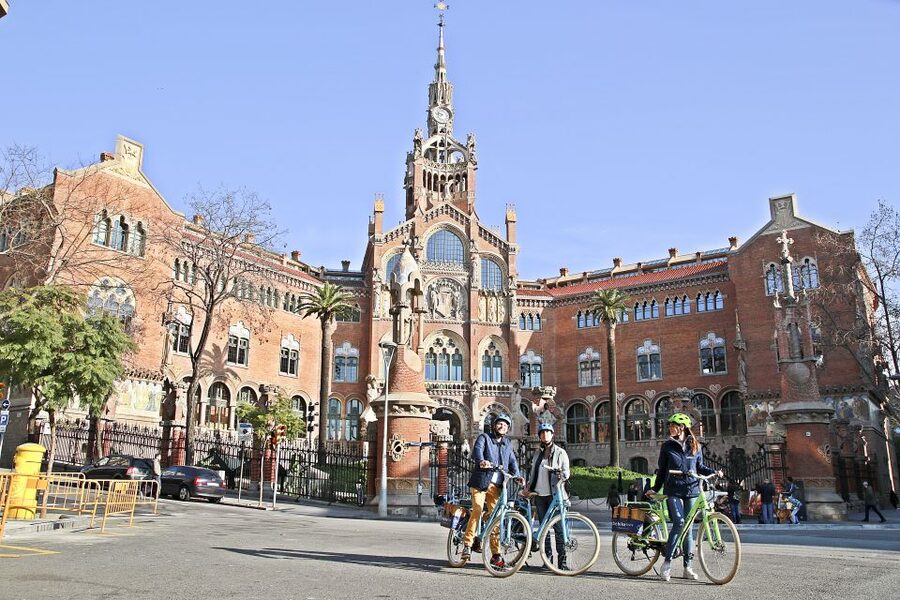
Casa Calvet is one of the quieter Gaudí stops. It was designed as a home and workplace for a textile manufacturer and was declared a Place of Cultural Interest in 1969. Compared with Casa Batlló or La Pedrera, it can be easier to overlook, so having a guide explain its place in Gaudí’s career adds real value.
This is one reason I prefer a guided bicycle tour to simply following a map. You can pass a building quickly on foot and never know why it matters. Here, the guide supplies the connection between the more restrained Casa Calvet and the playful designs that come later.
The route does not provide a long interior visit. You should expect to admire the building from outside and hear the architectural background while the group pauses nearby. If you want a close look at Gaudí’s interiors, you’ll need separate admission to one of the major houses.
Casa Batlló and La Pedrera along Passeig de Gràcia
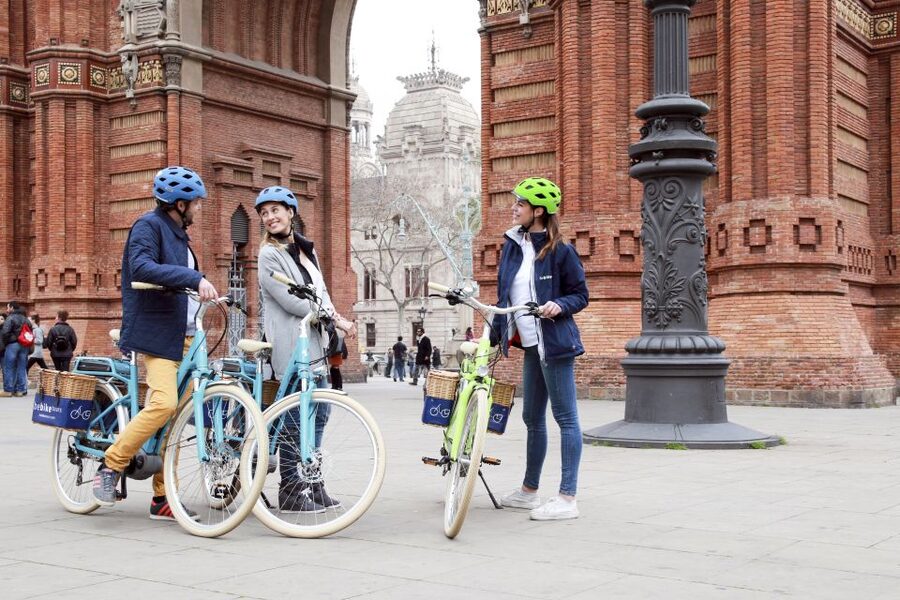
The ride then reaches the modern quarter around Passeig de Gràcia, where Barcelona’s wealthy families commissioned eye-catching homes during the city’s expansion. Casa Batlló is the visual showstopper, with its unusual façade and organic shapes. It is one of the places where the bicycle is especially handy, since you can approach, stop for photographs, and move on without spending the whole morning walking between distant sights.
La Pedrera, also known as Casa Milà, offers a very different look at Gaudí. Its pale stone façade seems to roll along the street, with wrought iron balconies adding another layer of detail. The tour includes a guided exterior stop and views of the building, but not admission inside.
You’ll want to look up as the guide explains what you are seeing. Barcelona’s grand façades can become visual overload after a while, especially on a short schedule. A good guide helps you notice the details rather than treating each building as another quick photo background.
The bicycle also saves time here. Passeig de Gràcia is a major city avenue, and the distance between the buildings is easy to cover on two wheels. The tradeoff is that you must stay alert around traffic, pedestrians, and stops. This is an urban bike tour, not a quiet countryside ride.
More e-bike tours around Barcelona:
- Barcelona 3-hour Bike or E-Bike Tour: Highlights and Hidden Gems
★ 5.0 · 1,429 reviews - Barcelona: Sagrada Familia or City Tour by Bike or eBike
★ 4.8 · 928 reviews - Barcelona E-Bike Photography Tour
★ 5.0 · 843 reviews - Barcelona: E-Bike Tour with Montjuic Cable Car & Boat Ride
★ 4.6 · 817 reviews
Vila de Gràcia and Casa Vicens
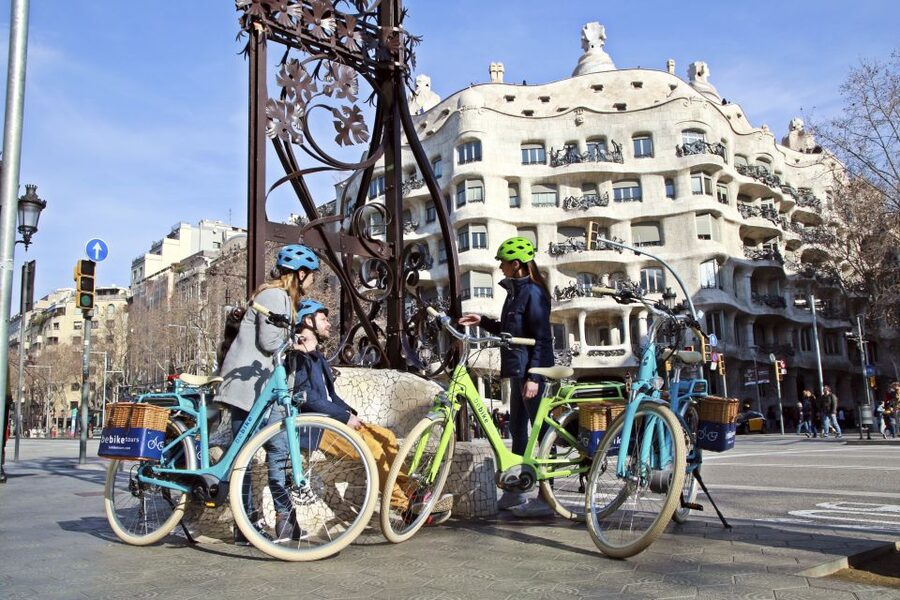
The route continues into Vila de Gràcia, a former independent town that now forms one of Barcelona’s most distinctive districts. The tour describes it as the city’s coolest suburb and its administrative and commercial center. That wording is promotional, but the practical point is sound: Gràcia feels different from the grand avenues of the Eixample.
You see the 33-meter bell tower crowned by the bell known as Marieta. The stop adds a local neighborhood detail to a day otherwise dominated by famous architecture. It also helps you understand that Barcelona is more than the central postcard sights.
Casa Vicens is another major Gaudí highlight. It is considered one of the first buildings of the Art Nouveau movement and the first house Gaudí designed. The ride gives you exterior views, with time to take in the building’s colorful, decorative character.
I like this part of the route because Casa Vicens is less predictable than the usual Gaudí trio. It also shows an earlier phase of his work. You see how his ideas developed rather than meeting only the most famous late designs.
The final approach to Sagrada Familia
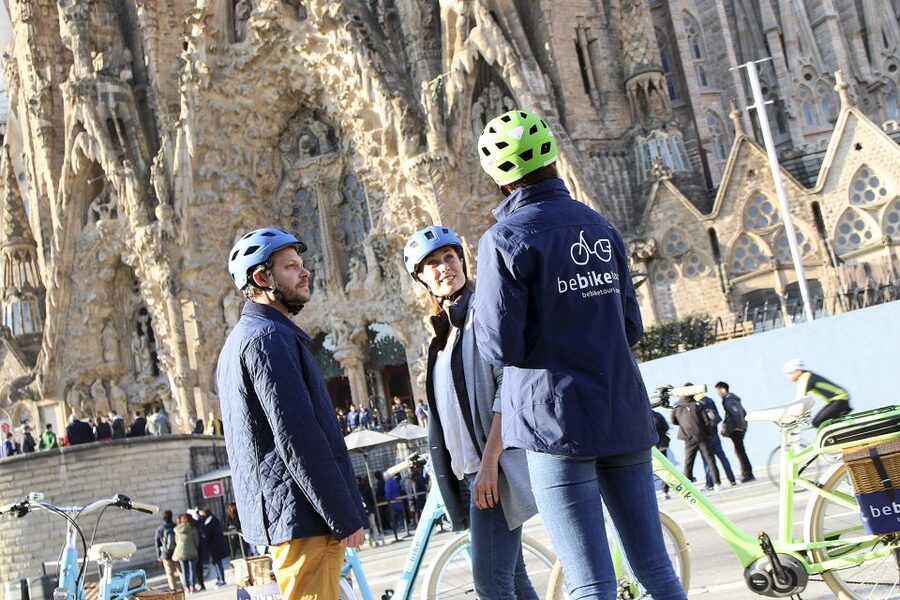
From Gràcia, the group follows Passeig de Sant Joan toward Sagrada Familia. This is a useful city ride in its own right, linking the neighborhood to Gaudí’s unfinished basilica. The final approach builds anticipation as the spires come into view.
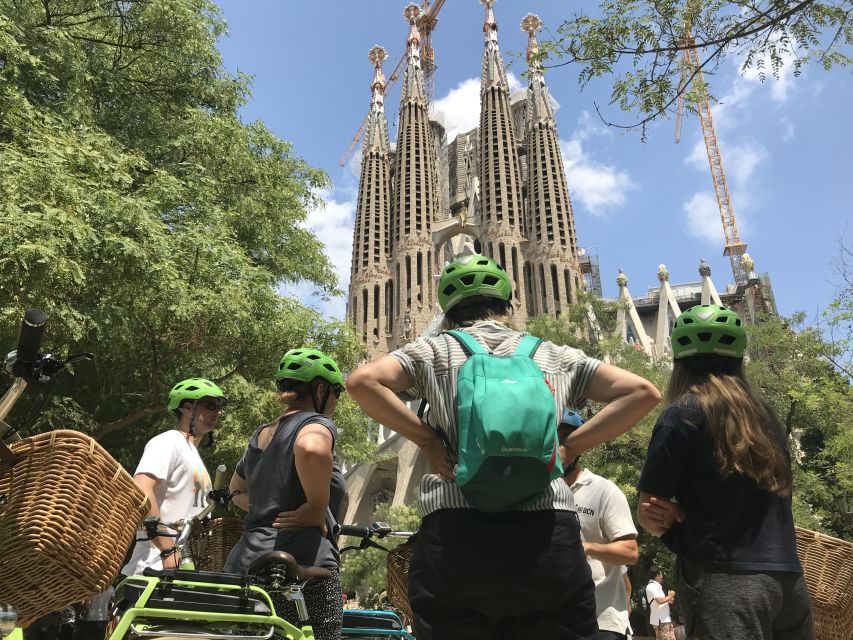
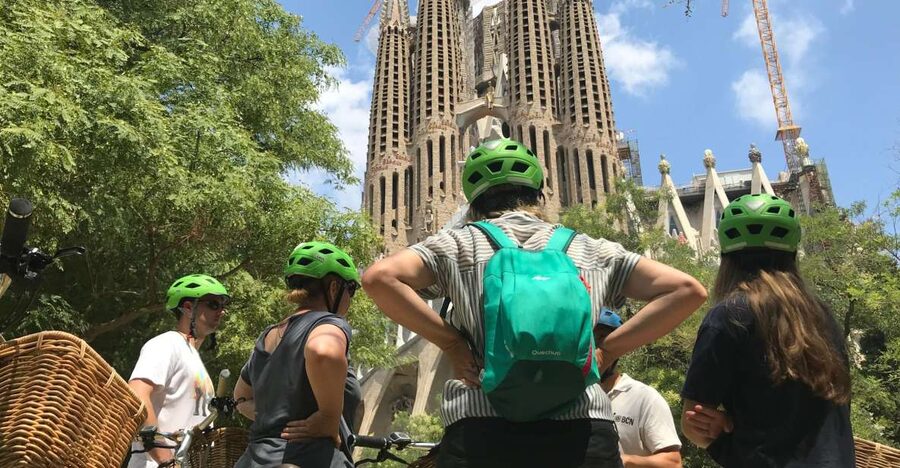
Sagrada Familia has been under construction since 1883, and the guide explains the building’s place in Barcelona’s story. You get views of the spires and façades, along with a photo stop and some free time. The basilica is often called Gaudí’s masterpiece, and even an exterior visit gives you plenty to examine.
Be clear about what is included: this is not an interior admission tour. You will not enter the basilica as part of the stated experience. If you want to see the inside, climb the towers, or spend serious time with the sculpture and light, arrange a separate visit.
Still, the bicycle approach has an advantage. You reach Sagrada Familia after seeing the city that surrounds Gaudí’s work, not as an isolated monument reached by metro. The route gives you a sense of how the basilica fits into Barcelona’s streets and neighborhoods.
Is the e-bike worth choosing?
For $28, the regular bike is a good value if you are comfortable cycling and want a little exercise. One guide noted that the route is mostly flat and can be done on a normal bike. That is useful advice, especially for confident riders.
I would choose the e-bike if you are unsure about hills, have limited cycling stamina, or want to keep your attention on the city rather than your legs. The motor helps on the uphill sections around Gràcia and makes restarting after traffic lights easier. It also gives you a bit more flexibility if your group has mixed cycling ability.
The e-bike is not a substitute for basic road awareness. You still need to follow the guide, watch traffic, and handle the bicycle comfortably. Ask for help before setting off if you have never used an electric bicycle.
The bikes have generally been described as easy to use and well maintained. A mechanical issue did occur for one group, but the company sent a mechanic and the group was able to wait at a nearby café before continuing. That does not erase the inconvenience, but it suggests the operator has a practical backup response when something goes wrong.
Guides, pace, and group feel
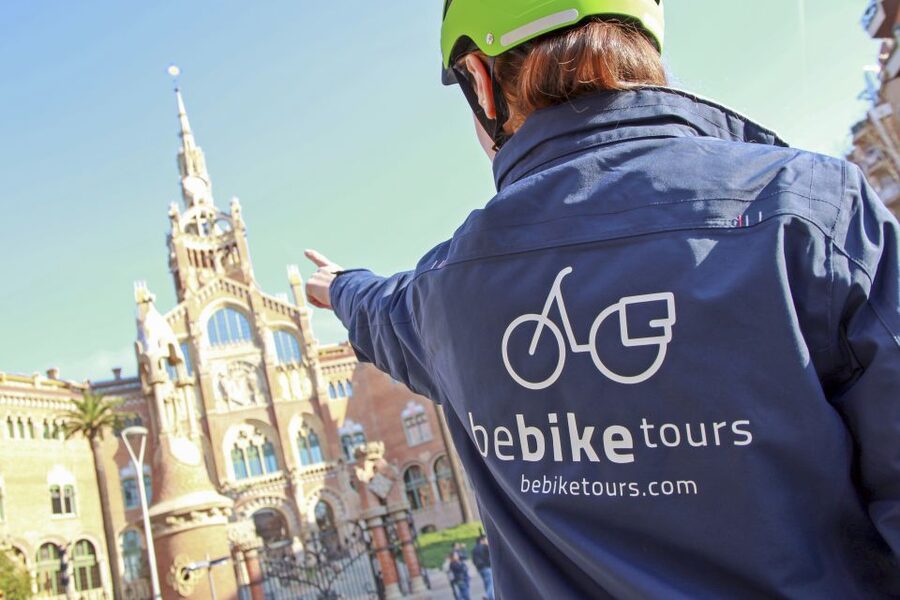
The guide can make or break a short city ride. You have a choice of Spanish, English, French, German, Italian, Russian, Dutch, or Portuguese. Names praised for warmth, flexibility, and clear explanations include Sergio, Peter, Alex, Marina, Maria, Sergey, and Liuba.
The best use of a guide here is not simply naming buildings. You want someone who can explain why Casa Calvet differs from Casa Batlló, how Gràcia fits into Barcelona, and what makes Sagrada Familia unusual. You also want clear instructions at intersections and enough time to take photographs.
The pace is designed to be comfortable rather than athletic. One account described the ride as easy and relaxed even with a few uphill sections. Another found the routes simple to follow. That said, comfort depends on your cycling experience, the group’s size, and the traffic on the day.
Private and small-group options are available. A private ride makes the most sense if you want a custom pace or have a short list of priorities. A regular small group gives you a lower price and a social outing, but you will have less control over every stop.
Who should book this Barcelona bike tour?
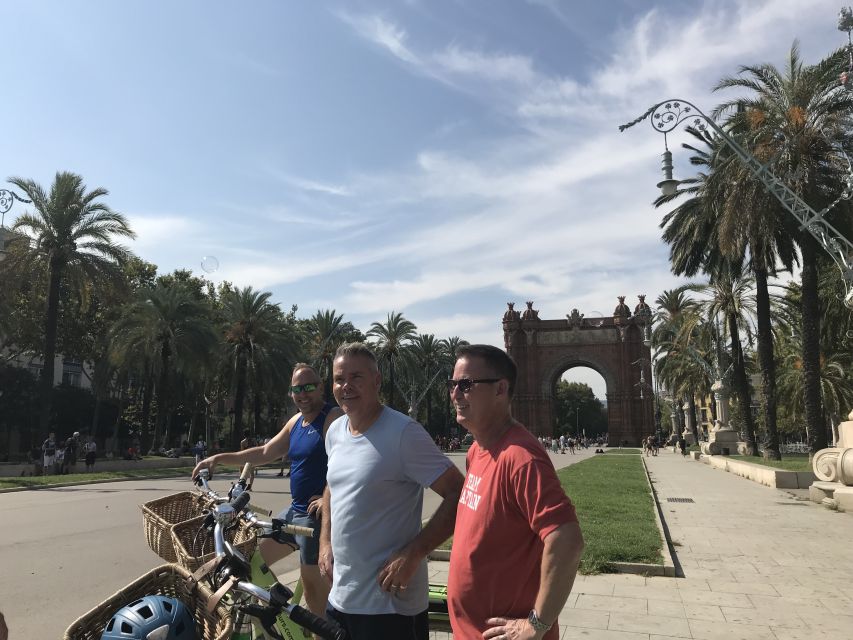
This is a strong choice for first-time visitors who want a quick orientation to Barcelona’s major districts and Gaudí sights. You cover a lot of ground without spending the day on foot, and the guide supplies context that can be hard to get from a self-guided map.
It also suits families with older children, couples, solo visitors, and anyone who enjoys seeing a city at street level. Children under six can ride free in a child safety seat on a parent’s bike. Children up to 20 kilograms and 130 centimeters can also ride free in the child seat.
The tour is not suitable for children under two years old or people with heart problems. You should also think carefully about it if you are not comfortable riding in an urban setting. The route includes city streets, public spaces, and traffic, even though the pace is described as manageable.
Practical details that matter
The activity lasts 2.5 hours and returns to Passeig de Lluís Companys, 10. Starting times vary, so check availability when booking. The office is about two minutes from Ciutadella Park and three minutes from Arc de Triomf on foot.
The $28 price is attractive because it includes the main practical costs: bicycle, e-bike if selected, helmet, insurance, water, and a live guide. You are paying for transport between sights as well as explanations, so the value is better than a simple bicycle rental if you want historical context.
You can cancel up to 24 hours before the activity for a full refund, and reserve now while paying later. That helps if your Barcelona schedule is still shifting. The tour also offers private or small-group formats, though the standard group can include up to 15 people per guide.
Should you book it?
Book this tour if you want to see Gaudí’s main exterior landmarks in one efficient outing and like the idea of moving through Barcelona by bicycle rather than underground. Choose the e-bike if you want an easier ride, and choose the regular bike if you are comfortable cycling and prefer the lower-tech option.
Skip it if your priority is going inside Casa Batlló, La Pedrera, or Sagrada Familia. This tour shows you the façades, streets, and surrounding districts, then leaves the interiors for a separate visit. For a first look at Barcelona, the mix of El Born, Gràcia, Modernist architecture, and Sagrada Familia makes the $28 cost a sensible buy.
FAQ
Where does the Barcelona bike tour begin?
The meeting point is the activity provider’s office at Passeig de Lluís Companys, 10, near Arc de Triomf.
How do I reach the meeting point by metro?
Take line L1, the red line, to Arc de Triomf. Walk about three minutes along Passeig de Lluís Companys toward Passeig de Sant Joan. The office is on the left.
Is an electric bike included?
You can select either a regular bike or an electric bike when booking. The selected bike, helmet, insurance, and water are included.
Which languages are available?
The live guide may conduct the tour in Spanish, English, French, German, Italian, Russian, Dutch, or Portuguese.
Does the tour enter Sagrada Familia or Gaudí’s houses?
No. The tour provides guided views, photo stops, and free time at selected sights, but admission to the interiors is not included.
Can young children join the tour?
Children under six can join free in a child safety seat on a parent’s bike. Children up to 20 kilograms and 130 centimeters can also ride free in the child seat. Children under two are not suitable for the activity.
Can I cancel the booking?
Yes. You can cancel up to 24 hours in advance for a full refund. Reserve now and pay later is also available.
New e-bike tours around Barcelona
- Electric Bike Tour of Montjuic and Barcelona★ 5.0 · 6 reviews
- Barcelona Private E-Bike Tour (2.5h): Gaudí & City Stories★ 3.7 · 4 reviews
- Barcelona to Tibidabo: Hidden Gems & Scenic Views eMTB Tour★ 5.0 · 6 reviews
- Barcelona: Undiscovered Secrets of Picasso on E-Bike★ 4.5 · 13 reviews
- Barcelona: Tapas Tasting Tour by Regular Bike or E-Bike★ 4.0 · 26 reviews
- Barcelona Private e-Bike Tour★ 5.0 · 2 reviews
- Barcelona Photo Highlights 4h Small Group eBike Tour★ 5.0 · 7 reviews
- Barcelona: Private E-Bike Tour and Wine Tasting★ 5.0 · 2 reviews
Barcelona E-Bike Tours, side by side.
Barcelona 3-hour Bike or E-Bike Tour: Highlights and Hidden Gems
Read our review →
E-Bike Tour with Montjuic Cable Car & Boat Ride
Read our review →
Barcelona e-Bike Tour: Gaudí & Old Town Small Group
Read our review →
Barcelona E-Bike Small Group Tour with Tapas & Wine Tasting
Read our review →
1.5-Hour Sightseeing Tour by Bike/Electric Bike
Read our review →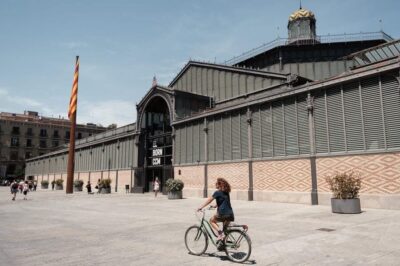
This ride also appears in