Review · THE USA
Self-Guided GPS Audio E-Bike Tour Hawaii Volcanoes National Park
The best part of this self-guided e-bike tour is the access. You can pedal to crater viewpoints and bike-only sections that are harder to reach by car, then stop when you want instead of following a group schedule. Steam vents, fern forest, lava fields, and the Thurston Lava Tube all fit into one half-day.
I like the comfortable bikes and the freedom to set your own pace. I also like the practical setup: secure parking, restrooms, a shaded staging area, equipment instruction, and staff support. The main drawback is that the GPS app depends on your own smartphone, and the route is not a good match for a first-time cyclist or anyone uneasy on wet pavement and gravel.
Key points to know before you book
- Bike access to Keanakakoi Crater Overlook: This route reaches a crater viewpoint closed to regular car traffic.
- Mostly easy riding: The route is designed around downhill and level paved roads, though you still need to steer, shift, balance, and manage occasional hills.
- GPS audio instead of a live guide: Your phone supplies directions and commentary about geology, Hawaiian culture, and the volcano.
- Weather changes fast: Kīlauea’s summit sits around 4,000 feet, where it can be 12 to 15 degrees cooler than the coast.
- Bring your own working phone: The map and audio can drain a battery quickly, so a backup power source is a smart precaution.
- Extra costs matter: The $159 price does not include the $15 national park entrance fee or the $1,500 equipment deposit authorization.
Why an e-bike works so well at Kīlauea
Hawaii Volcanoes National Park covers a great deal of ground. Walking between the crater viewpoints, rainforest paths, visitor center, lava tube, and volcanic fields would take much of the day. Driving is faster, but busy viewpoints can bring parking trouble, and a car separates you from the changing air, plant life, and smell of the volcanic vents.
An e-bike gives you a useful middle ground. You cover miles without committing to a hard cycling workout, but you still feel the cool summit air and the shifts between forest and bare volcanic rock. The electric assist lets you choose how much effort to use. You can pedal more on easier sections or let the motor help when your legs begin to tire.
The advertised route is built around paved and level roads, with much of the travel downhill. That makes it approachable for a recreational cyclist in decent shape, not just a serious rider. Still, this is not a motorized sightseeing cart. You must be comfortable balancing, steering, shifting, and controlling your speed on both paved and gravel surfaces.
The private format is another real advantage. Your group can pause for photos, spend longer at a crater overlook, or move along when a stop does not interest you. You are not waiting for a bus or trying to stay beside a guide. Live staff remain available for safety and park guidance, but the day belongs to your group.
More Self-Guided E-Bike Tours in the USA
- Red Rock Canyon Self-Guided Electric Bike Tour
★ 5.0 · 783 reviews - Self-Guided Ebike Tours of Acadia National Park Carriage Roads
★ 5.0 · 427 reviews - Tahoe Coastal Self-Guided E-Bike Tour – Half-Day | World Famous East Shore Trail
★ 5.0 · 315 reviews
Starting at Bike Volcano near the park
The meeting point is Bike Volcano at 19-3972 Old Volcano Road in Volcano. The morning pickup time is listed as 9:30 a.m., and the afternoon option begins at 12:30 p.m. The afternoon departure requires at least four riders. The activity returns to the same meeting point.
Arrive ready to spend a little time getting fitted to the bike. Staff provide an electric comfort hybrid bicycle, helmet, and lock, then give an equipment orientation and safety talk. Tall riders should provide their height when booking so the right frame can be prepared.
Secure parking and a restroom are included at the staging area. There is also a canopy where you can organize your gear before setting out. A backpack can be rented for $5, while rain jackets and bottled water are available for purchase nearby at the Kīlauea General Store.
You need to provide your name, height, local Hawaii phone number, and any special requirements when booking. A credit card and identification are needed for the $1,500 pre-authorized equipment deposit per party. That is not a charge in the tour price, but you should make sure your card has enough available credit.
Into the rainforest and around Kīlauea
From the bike shop, you ride less than a mile to the park trail entrance. The route then moves through native Hawaiian fern forest and along less-used paths near the crater rim. This early section is a good reminder that Kīlauea is not just black rock and smoke. Rainforest, ʻōhiʻa, koa, and large hapuʻu ferns thrive in the cool, wet summit climate.
The GPS audio app supplies commentary as you reach points of interest. It covers volcanic geology, Hawaiian mythology, cultural connections to Pele, and changes in the park caused by eruptions. You control when to pause, replay, or move on, which works better than a nonstop talk delivered at a fixed pace.
The technology has one weak spot. The map and audio are not always reached through the same part of the app, so starting the commentary can feel less direct than using a standard guided tour. Download or open everything before you leave the staging area, and check that your phone has a full charge and a working internet connection.
The app can consume battery quickly. If you have one, bring a portable charger. A paper map and operator help may be available, but the tour is built around the phone experience, so do not arrive with an unreliable device and expect staff to solve every connection problem.
Nahuku and the Thurston Lava Tube
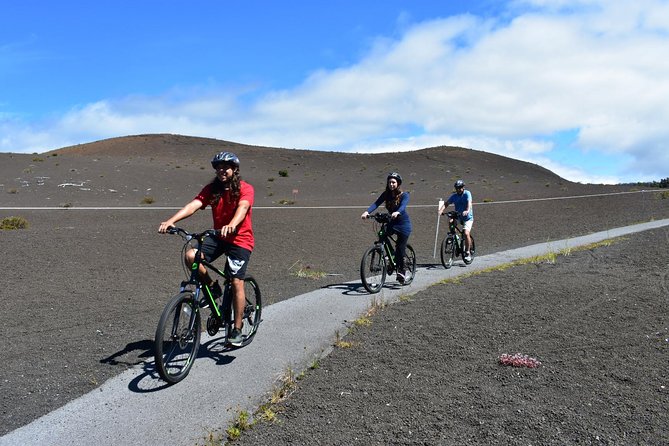
One of the most enjoyable stops is Nahuku, better known as the Thurston Lava Tube. The visit includes a short 15-minute loop walk through native rainforest to a 500-year-old pit crater filled with tall hapuʻu ferns and other plants.
The forest gives this stop a cool, enclosed feel before you enter the tube. Inside, molten lava once moved through the ground and left behind a broad passage. The audio commentary explains how the tube formed and points out the smooth walls, stalactites, and plant growth around its openings.
The walk is short, but you will need to leave the bike and use your feet. Closed-toe shoes are required for the tour, and they make sense here. This stop adds a welcome change of pace, although anyone hoping to remain on the bike for the entire outing should keep the hike in mind.
More national park e-bike rides around the USA:
- Big Island: Fat Tire E-Bike Tour through Volcanoes National Park
★ 5.0 · 546 reviews - Guided Ebike Tour of Acadia National Park Carriage Roads
★ 5.0 · 408 reviews - Saguaro National Park East E-Bike Tour
★ 5.0 · 316 reviews - 3 Hour Guided E Bike Tour in Zion National Park
★ 5.0 · 205 reviews
Kīlauea Visitor Center and the human story
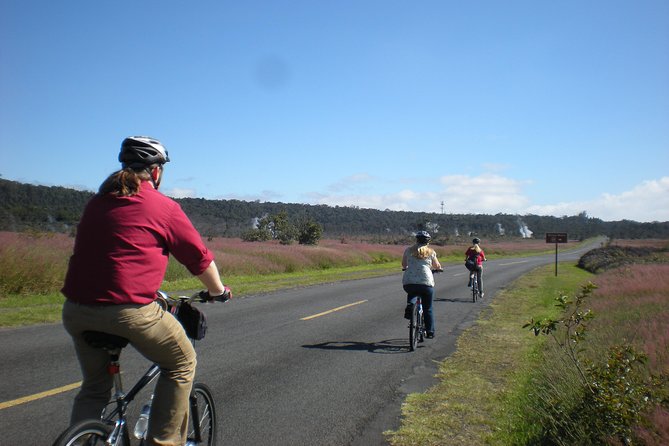
The Kīlauea Visitor Center helps connect what you are seeing outside with the forces that shaped the island. Exhibits cover volcanic activity, native wildlife, Hawaiian culture, historic changes, maps, and the role of Pele in local tradition.
Park rangers can provide current safety information and advice about conditions in the park. That matters at Kīlauea, where roads, trails, viewpoints, and lava access can change with volcanic activity. The center also has a bookstore and gift shop if you want a field guide or an educational souvenir.
The stop is scheduled for about 15 minutes, so you will not have time to read every display. If the visitor center is a priority for you, ask staff about the available timing before you set off. The GPS narration gives you background during the ride, while the visitor center supplies maps and current park information.
Keanakakoi Crater Overlook by bike
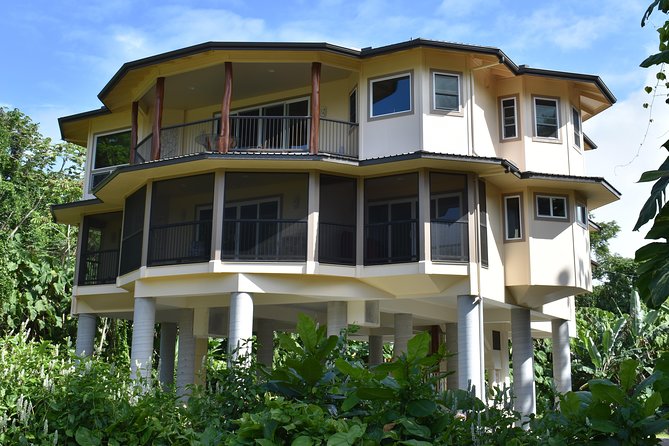
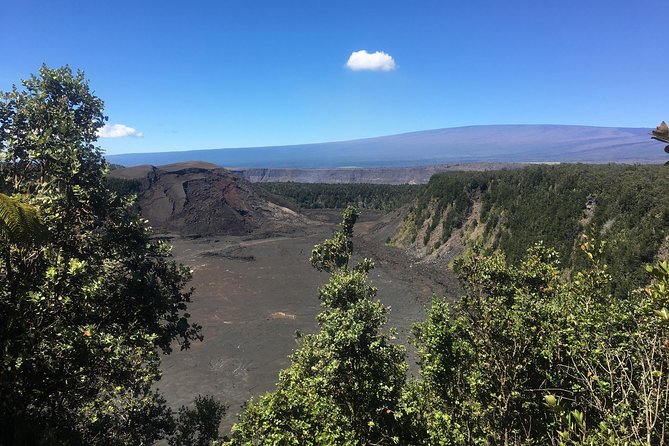
Keanakakoi Crater Overlook is the tour’s strongest argument for using a bicycle. The area is accessible by bike or foot rather than by ordinary car traffic, so riding can save you a long walk and lets you reach viewpoints many park drivers skip.
The route includes about two miles of bike trail through koa and ʻōhiʻa forest. As the trees thin, volcanic terrain comes into view, with broad crater scenery and stark fields of old lava. The GPS audio adds geology, ecological details, and stories connected with ancient basalt quarrying.
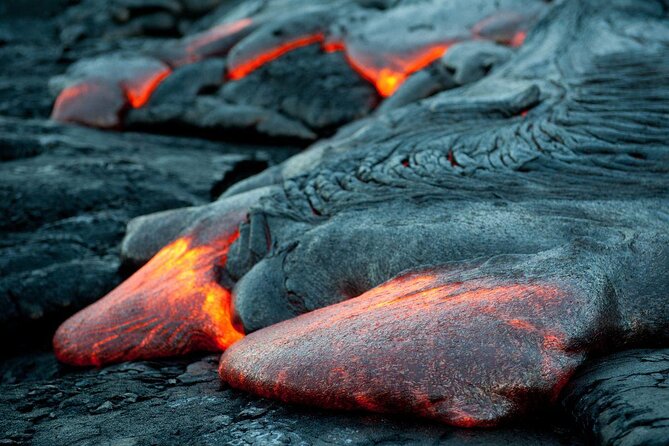
From the overlook, you may see Halemaʻumaʻu Crater, a sacred place associated with Pele. On rare days when conditions and volcanic activity allow it, lava may be visible, including fountains that can rise more than 1,000 feet. That possibility is exciting, but it should never be treated as a promise. Eruptions, viewing conditions, closures, clouds, and safety rules can change the scene.
The route also reaches a lava viewing area across from the crater. The chance to see active lava from more than one angle is one of the most memorable reasons to choose this outing, but you should book it for the bike ride and volcanic setting, not solely for a live eruption.
Pace, effort, and safety on wet roads
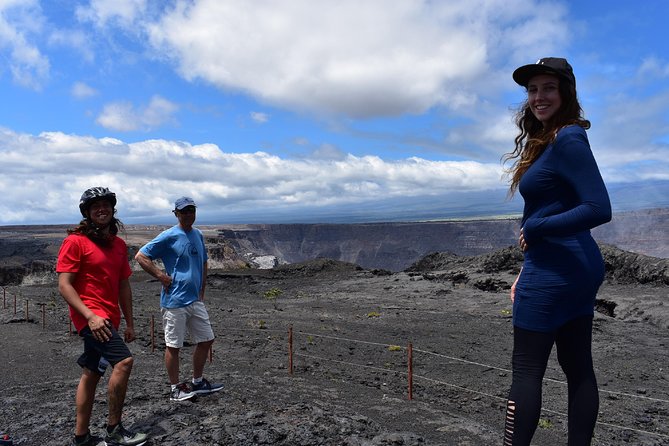
This is generally a relaxed ride, but relaxed does not mean risk-free. Summit weather can turn wet, windy, misty, and chilly at any time of year. Temperatures may sit in the low 60s to upper 70s, and the summit can be 12 to 15 degrees cooler than sea level.
Wear layers you can remove or add as the day changes. A shirt, shorts or long pants, and a light jacket are sensible starting points. Bring sunglasses or prescription glasses, sunscreen, and a rain jacket if you already have one. Closed-toe shoes are required.
Wet roads deserve extra caution. Slow down on curves and slick pavement, leave space between riders, and do not treat downhill sections as a speed contest. The electric motor makes the route easier, but it does not improve traction or shorten stopping distance.
The tour is not offered to riders under 15 or people weighing more than 270 pounds. It is also not recommended for beginner cyclists. You should already know how to balance and steer a bicycle, use gears, and stay in control on changing surfaces.
What the $159 price really covers
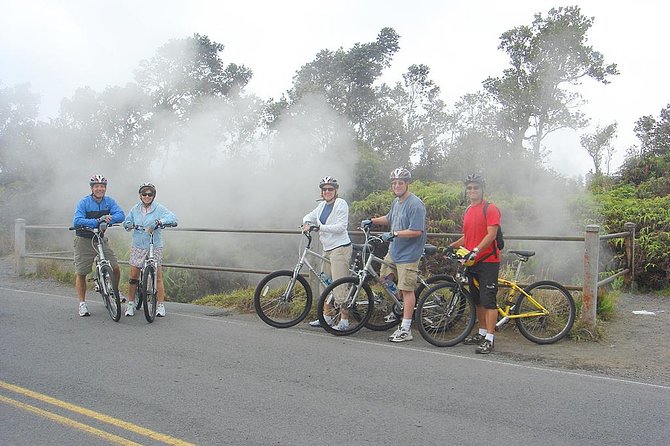
At $159 per person, this is not the cheapest way to enter Hawaii Volcanoes National Park. The value comes from combining equipment, parking, a helmet and lock, bike access, the GPS narration, restroom use, and live support in one half-day outing.
You avoid renting a bike separately and do not need to plan a route from scratch. You also gain access to bike-friendly sections that are less convenient by car. For a group that wants to cover more ground than a walking visit but does not want a scheduled coach excursion, the price can make sense.
Remember to add the $15 national park entrance fee per person. Food is not listed among the included services, so plan your lunch budget separately, even though Volcano House is suggested as a place to stop and eat with a crater view. A backpack, rain jacket, and bottled water may also cost extra.
The experience takes about four and a half hours, leaving room for other park stops or a later activity. The advertised route descriptions include roughly three hours of park touring plus the shorter lava tube, visitor center, and crater overlook stops. Build in flexibility because your actual time at each place depends on your pace and park conditions.
Who will enjoy this ride most
I would choose this tour for couples, families with older teenagers, and active adults who want a personal view of the park without a demanding full-day cycling commitment. It is also a good choice if parking worries you or if you want to reach an area that regular cars cannot reach.
It suits people who enjoy learning along the way but prefer to stop the narration when they want quiet. You can spend more time photographing the crater, ride past a stop that does not interest you, or add a short walk without asking a guide to adjust an entire group’s schedule.
I would choose a different option for a complete cycling beginner, anyone who dislikes riding in rain, or anyone who wants a live expert beside them at every stop. The audio content covers a lot, but the app takes some attention, and the phone setup is part of your responsibility.
The experience has a strong overall rating of 4.7 out of 5 from 131 ratings, with 92 percent recommending it. The most consistent strengths are the comfortable bikes, easy access to more of the park, freedom from parking problems, and the fun of traveling through the forest and volcanic fields under your own power.
Should you book the Hawaii Volcanoes e-bike tour?
Book it if you want to see a wide section of Hawaii Volcanoes National Park in half a day, prefer freedom to a fixed group schedule, and already feel comfortable on a bicycle. Bring layers, a charged phone, a backup battery, and rain protection, and treat active lava as a bonus rather than the purpose of the day.
Skip it if you need a fully guided outing, dislike managing an app, or are not comfortable controlling a bike on wet or uneven surfaces. For the right rider, the combination of crater views, rainforest, lava tube, and bike-only access offers a more direct way to experience Kīlauea than simply driving from overlook to overlook.
FAQ
What is included in the e-bike tour?
The price includes an electric comfort hybrid bicycle, helmet, lock, secure parking, restroom access, a shaded staging area, an equipment orientation, a safety lecture, the GPS audio app, and live operator assistance.
Do I need to bring a smartphone?
Yes. A fully charged, functioning smartphone is required to use the GPS audio app. The phone must be able to connect to the internet, and bringing a backup battery is wise because the map and audio can drain power.
Is the national park entrance fee included?
No. The national park entrance fee is listed separately at $15 per person and can be purchased online.
What should I wear?
Wear layered clothing because the summit can be rainy, windy, misty, and cooler than sea level. Closed-toe shoes and protective eyewear, such as sunglasses or prescription glasses, are required. Bring sunscreen and a camera, and plan for rain protection.
Is the tour suitable for beginner cyclists?
No. The tour is not recommended for beginner cyclists. You should be able to steer, shift, balance, and control the bike on paved and gravel surfaces.
What happens if bad weather cancels the tour?
If poor weather causes cancellation, you will be offered another date or a full refund. You can cancel for a full refund if you do so at least 24 hours before the experience begins.
New e-bike tours around the USA
- eBike Guided Tour of Fort Worth★ 5.0 · 4 reviews
- Estes Park: Guided E-Bike Tour★ 5.0 · 2 reviews
- Nashville: Electric Bike 2-hour Tour★ 4.9 · 8 reviews
- Electric Bike Tour of Bend & Deschutes River★ 4.9 · 12 reviews
- Electric Bike Tour: Classic Manhattan And More!★ 3.4 · 15 reviews
- Downtown Bike Tour with Stylish Dutch Bikes or E-bikes!★ 4.9 · 56 reviews
- Discover Denver: Electric Bike Tour with Local Guide★ 4.9 · 15 reviews
- Diamond Head E-Bike to Hike★ 5.0 · 2 reviews
USA E-Bike Tours, side by side.


Asheville Historic Downtown Guided Electric Bike Tour with Scenic Views
Read our review →

Monterey’s 17 Mile Drive Guided Electric Bike Tour, 3 hr
Read our review →
New York City: Highlights of Central Park Bike or eBike Tour
Read our review →