Review · BARCELONA
Picasso’s Barcelona on Electric Bike Small Group Tour
Barcelona makes more sense when you see how its old lanes, parks, waterfront, and working neighborhoods fit together. This 2.5-hour electric-bike tour covers far more ground than a walking tour, from the Roman heart of Ciutat Vella to Port Olímpic and back through El Born.
I like the easy pace and the chance to ride with guides such as Lily, Kubi, Nil, and Uri, who bring different stories to the route. I also like that the bikes, helmets, water, and wireless headsets are included. The main catch is focus: despite its Picasso title, part of the tour leans toward Barcelona’s Roman, medieval, Olympic, and sporting history rather than art alone.
Key points to know
- The route links several parts of Barcelona: You ride through the Gothic Quarter, El Born, Parc de la Ciutadella, the old fishermen’s district, and Port Olímpic.
- Electric assistance makes the distance manageable: You can spend less energy pedaling and more time watching the city around you.
- The group is limited to 10 people: That is small enough for a more personal ride, though the experience still depends on how safely and smoothly the group moves.
- Picasso appears through places, not a museum visit: Parc de la Ciutadella connects to where Picasso and his family spent time, but the tour is not centered on paintings or galleries.
- The tour begins and ends in the Born area: You get an easy starting point for further exploring the medieval lanes, market, and Santa Maria del Mar.
- The meeting spot takes care: Plaça de Sant Agustí Vell is in the old city and can be hard to spot in the maze of narrow streets.
Why an e-bike works well in Barcelona
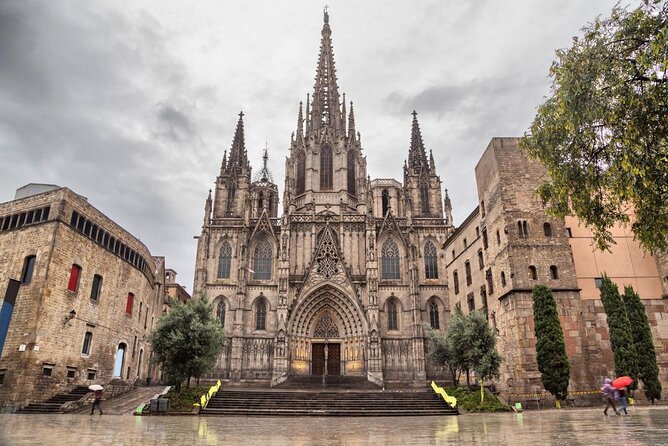
Barcelona is a city of close contrasts. One minute you are rolling through a medieval lane, and soon after you are beside the open sea. Walking between these places takes time and energy. An electric bike helps you connect them in one outing.
The motor does not turn the tour into a race. It simply makes the distance easier, especially when the group leaves the dense old center and heads toward the waterfront. You still pedal, steer, stop, and watch for people and vehicles. The benefit is that hills, longer stretches, and repeated starts do not take as much out of you.
You receive a bicycle, helmet, bottled water, and a wireless headset. The headset matters in a city where traffic and street noise can make a guide hard to hear. A short briefing takes place at Barcelona eBikes before the ride begins. At Barcelona Cathedral, you get more space to test the motor and grow comfortable with the controls.
If this is your first e-bike ride, use that practice time. The electric assist can feel lively at first. The guide explains how the bikes work, but you remain responsible for braking, steering, and leaving room around other riders.
More Small-Group E-Bike Tours in Barcelona
- Barcelona e-Bike Tour: Gaudí & Old Town Small Group
★ 5.0 · 769 reviews - Barcelona E-Bike Small Group Tour with Tapas & Wine Tasting
★ 5.0 · 638 reviews - Barcelona eBike Small Group Tour with entrance to Sagrada Familia
★ 5.0 · 133 reviews
Finding the start in El Born
The meeting point is Plaça de Sant Agustí Vell, 16, in Ciutat Vella. The tour starts at 4:00 pm and returns to the same place. The shop sits in the Born area, close to the part of Barcelona that developed around Roman Barcino and later grew into a medieval maze of workshops, markets, churches, and narrow lanes.
Give yourself extra time to find the shop. This is not a broad boulevard with a large sign that you can spot from far away. The small streets of El Born can make the final few minutes confusing, and one rider had trouble locating the entrance until using Google Maps.
That small inconvenience is worth planning for. Arrive early enough to find the meeting point without rushing, especially if you are new to Barcelona’s old center. Public transportation is nearby, and the activity ends where it starts, so you do not need to arrange a separate ride home.
Barcelona Cathedral and the first practice ride
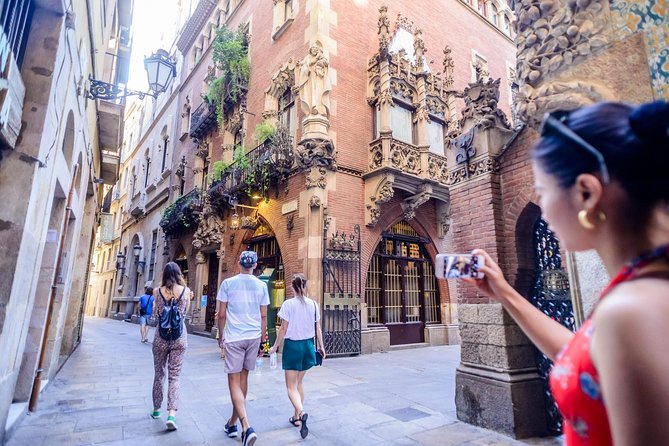
The first stop is Barcelona Cathedral, in the heart of the old town. Its large square gives the group a useful place to pause, listen, and test the bikes. The stop lasts about 10 minutes.
This is less a sightseeing visit than a practical start to the tour. You do not receive admission to the cathedral, and the route is not designed as an interior visit. Instead, the guide explains the controls and gives you time to get used to the motor before the riding becomes more complicated.
That is a sensible choice. The Gothic Quarter has narrow streets, pedestrians, and sudden turns. You want your first experience with the bike to happen in an open square, not in a crowded lane.
From here, the guide begins placing Barcelona into context. The old city grew from the Roman settlement of Barcino, and the route soon moves through streets where the medieval city still feels close at hand.
Santa Caterina Market and the Born’s changing past
Santa Caterina Market is one of the route’s quick glimpses of modern Barcelona. Its colorful, wave-like roof gives it a distinct look, and its organic shape sets it apart from the city’s older stone buildings.
You may not have time for a full market visit, so think of this stop as an introduction rather than a food tour. The value is in seeing how Barcelona keeps old neighborhood markets alive while giving them fresh architecture and new uses.
The ride continues to El Born Centre de Cultura i Memòria. This building once held Barcelona’s first covered food market. Today, archaeological remains beneath the market reveal an older layer of the city.
The stop lasts about 15 minutes. The guide explains what was found below the building and how the site connects Barcelona’s present streets with its earlier history. It is a good example of the route’s approach: you see a place, then learn what stood there before.
More Small-Group E-Bike Tours in Spain
- Barcelona Photo Highlights 4h Small Group eBike Tour
★ 5.0 · 7 reviews - Seville Electric Bike Tour – Small Group
★ 5.0 · 841 reviews - Bilbao: Guided Highlights Small Group or Private E-Bike Tour
★ 4.8 · 608 reviews - Small-Group Electric Bike Tour in San Sebastián
★ 5.0 · 603 reviews
Parc de la Ciutadella and Barcelona’s Picasso connection
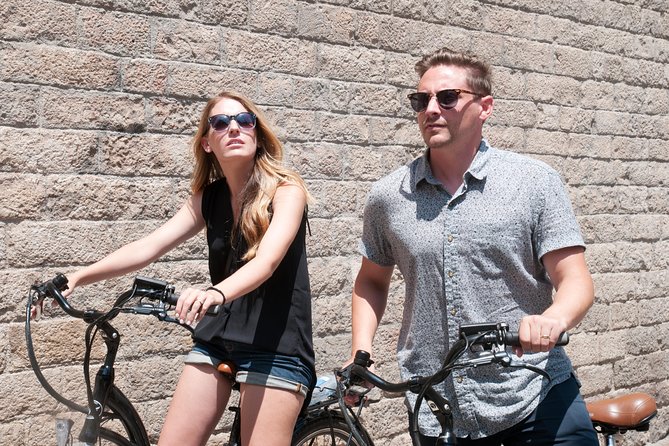
Parc de la Ciutadella offers a welcome change after the tight lanes of the old center. The park hosted the Universal Exposition of 1888 and later became a place where Picasso and his family spent time.
You ride through one of Barcelona’s most pleasant open spaces and get a view of the Arc de Triomf along the way. The park stop lasts about 15 minutes, enough for the guide to explain its role in the city and its link to Picasso.
This is where the tour’s title needs a little context. You will hear about Picasso’s connection to Barcelona, but you will not visit a Picasso museum or spend the full tour tracing his artistic career. If you want paintings, studios, or detailed art criticism, this route may feel too broad.
If you want a city overview with a few Picasso connections folded into the story, the balance works better. The park also gives you a break from traffic and a chance to enjoy the e-bike without constantly checking every doorway and corner.
Port Olímpic and the city’s modern waterfront
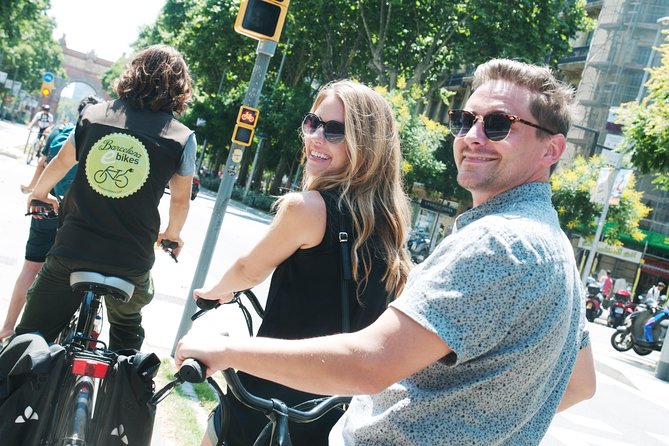
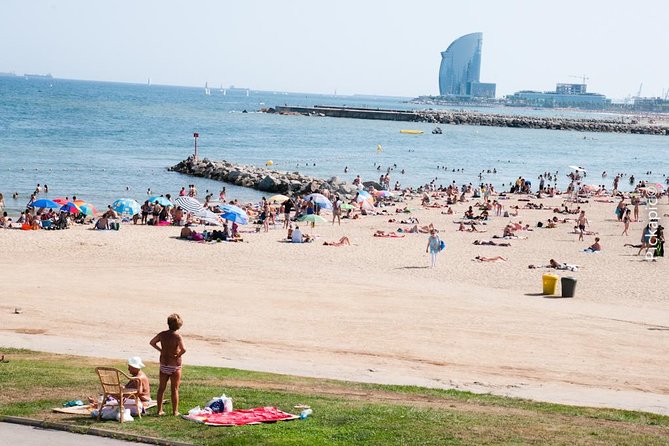
The route then heads to Port Olímpic, where Barcelona’s seafront changed dramatically for the 1992 Olympic Games. The stop lasts about 10 minutes.
The guide explains what the Olympics meant for Barcelona and how the waterfront was transformed. This section adds modern city planning and sports history to the older Roman and medieval material. You get a clearer sense of how Barcelona opened itself toward the sea and reshaped its shoreline.
This is also the part most likely to disappoint you if you expect the tour to stay focused on Picasso. One rider wanted more art and less Olympic history. That criticism is fair. The tour title suggests an art-centered route, but the actual experience is a general Barcelona introduction with Picasso as one thread.
Still, I think the waterfront earns its place. Without riding out to Port Olímpic, you would miss one of the city’s major changes and spend most of your time in the old center. The e-bike is especially useful here because it lets you reach the seafront without turning the outing into a long physical ride.
The old fishermen’s neighborhood
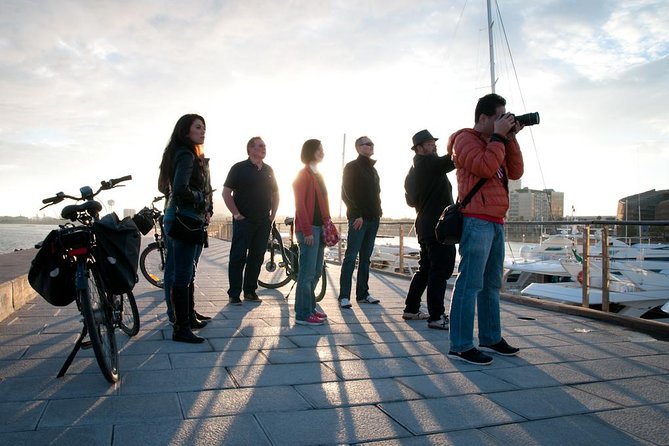
After the Olympic port, the route passes through a local neighborhood traditionally linked with Barcelona’s fishermen and fisherwomen. This helps connect the polished waterfront with the communities that lived and worked beside the sea before the Olympic redevelopment.
The exact amount of time spent here depends on the group and the guide. You should expect a ride through the area with commentary rather than a long stop. That is typical of a city overview: you get a look at how different parts of Barcelona relate to one another, even when you do not leave the bike at every point.
The streets can also be part of the challenge. Barcelona’s traffic, pedestrians, and unexpected turns demand attention. One rider described the route as an obstacle course at times. That does not mean the ride is extreme, but you should stay alert and avoid treating it like a carefree cycle path.
Santa Maria del Mar and medieval Born
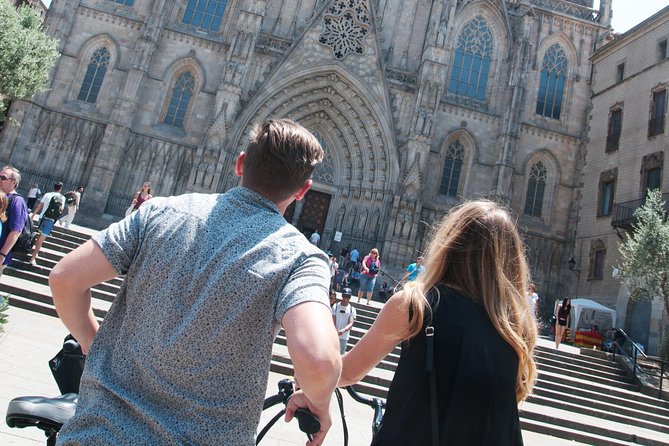
The Basilica of Santa Maria del Mar is one of the tour’s strongest stops. Locals often call it La Catedral del Mar, or the Sea Cathedral. This Gothic basilica in the Born area was built by the people of the neighborhood, with a close connection to the sea and the working community around it.
The stop lasts about 15 minutes. You should expect an exterior explanation and a chance to appreciate the building’s setting. The provided details do not include admission inside, so do not count on an interior visit as part of the tour.
The church also gives the guide a strong way to explain medieval Barcelona. The route then moves into a maze of small streets where craftspeople once had their workshops. Many of these lanes still have shops selling handmade clothing, jewelry, and other goods.
This is a fitting final stretch. You begin in the old city, ride through the market and park, reach the modern waterfront, then return to the medieval Born. The route gives you a broad sense of Barcelona’s layers instead of keeping you in one district.
Guides, group size, and the feel of the ride
The experience is offered in English and has a maximum of 10 people. That group size is a real advantage. A guide can usually keep the group closer together and respond to questions more easily than on a large coach or mass bike tour.
The guide can shape the experience. Lily received special praise for her friendly manner and clear information. Kubi was noted for interesting stops and details, while Nil led a pleasant, history-focused ride. Uri also made an effort to explain points in Spanish when needed, even though the tour is designed in English.
That variety is worth keeping in mind. Guide style and language clarity can affect your enjoyment. One rider found the English difficult to follow, while others found the guides excellent. The wireless headset helps, but it cannot fully solve a language or communication mismatch.
Families can join, and most people can participate. Still, children affect the pace and safety of a bike group. If you are looking for a quiet, tightly controlled ride with no sudden stops, a mixed-age group may frustrate you. Stay aware of the riders ahead and leave enough space to react.
Price, timing, and what you receive
At about $50.69 per person, the tour sits in a reasonable range for a 2.5-hour guided city ride. You are paying not only for the guide, but also for the electric bicycle, helmet, water, and headset. Renting a bike independently may cost less, but then you must choose a route, navigate unfamiliar streets, and provide your own city history.
The value is strongest if you want an overview early in your stay. You cover the old center, Born, Ciutadella, the waterfront, and the Olympic area in one outing. The ride can help you decide which districts deserve a later visit on foot.
The value is weaker if you already know Barcelona well or mainly want a serious Picasso tour. You will get Picasso-related context, but also plenty about Roman Barcelona, medieval neighborhoods, markets, the 1888 exposition, the 1992 Olympics, and the waterfront.
The tour is commonly booked around 13 days ahead. That suggests planning is sensible, especially if you have a fixed afternoon in Barcelona. Free cancellation is available if you cancel at least 24 hours before the 4:00 pm start time. Cancellations or changes made later are not refunded.
Who should book this Barcelona e-bike tour?
I would choose this tour if you want a friendly introduction to Barcelona and prefer riding to walking. It works well for a first or second day because you see several districts and receive useful orientation from a local guide.
It suits you best if:
- You are comfortable riding a bicycle in city streets.
- You want to cover more ground than a walking tour allows.
- You like history that ranges from Roman times to the 1992 Olympics.
- You want a small group rather than a large organized outing.
- You are interested in Picasso but do not need an art-only tour.
- You appreciate an easy pace with electric assistance.
I would choose another experience if your main goal is detailed Picasso scholarship, museum access, or a quiet ride away from traffic. I would also think twice if you are uneasy on a bicycle or dislike riding near pedestrians and vehicles.
Should you book it?
Book it if you want to get your bearings fast and see how Barcelona’s old quarters, park, waterfront, and Olympic district fit together. The route is broad, practical, and helped by the electric bikes.
Set your expectations correctly. This is a Barcelona overview with Picasso connections, not a dedicated art tour. At $50.69, the combination of guide, equipment, small group, and distance makes good sense for a first visit. Arrive early for the hard-to-find meeting point, listen closely during the bike briefing, and leave room for the group around you.
FAQ
How long does the Picasso’s Barcelona e-bike tour last?
The tour lasts approximately 2 hours and 30 minutes.
Where does the tour start and finish?
It starts at Plaça de Sant Agustí Vell, 16, in Ciutat Vella, Barcelona, and ends back at the same meeting point.
What time does the tour begin?
The listed start time is 4:00 pm.
Is the tour offered in English?
Yes. The tour is offered in English.
What is included in the price?
The tour includes the electric bike, bicycle use, helmet, bottled water, professional guide, and wireless headset.
How many people can join the group?
The group has a maximum of 10 people.
New e-bike tours around Barcelona
- From Barcelona: Penedès E-Bike Tour with 2 Winery Visits★ 4.9 · 17 reviews
- Electric Bike Tour of Montjuic and Barcelona★ 5.0 · 6 reviews
- Barcelona Private E-Bike Tour (2.5h): Gaudí & City Stories★ 3.7 · 4 reviews
- Barcelona to Tibidabo: Hidden Gems & Scenic Views eMTB Tour★ 5.0 · 6 reviews
- Barcelona: Undiscovered Secrets of Picasso on E-Bike★ 4.5 · 13 reviews
- Barcelona Private e-Bike Tour★ 5.0 · 2 reviews
- Barcelona: Tapas Tasting Tour by Regular Bike or E-Bike★ 4.0 · 26 reviews
- Barcelona Photo Highlights 4h Small Group eBike Tour★ 5.0 · 7 reviews
Barcelona E-Bike Tours, side by side.
Barcelona 3-hour Bike or E-Bike Tour: Highlights and Hidden Gems
Read our review →
E-Bike Tour with Montjuic Cable Car & Boat Ride
Read our review →
Barcelona e-Bike Tour: Gaudí & Old Town Small Group
Read our review →
Barcelona E-Bike Small Group Tour with Tapas & Wine Tasting
Read our review →