
Review · PORTO
Private e-Bike Tour in Porto – Explore Riverside, Beaches & Parks
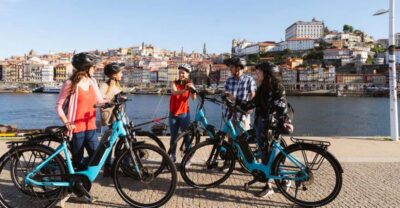
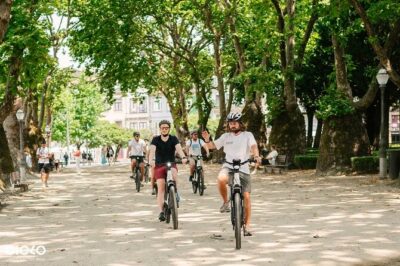
Porto’s best cycling is away from its steep center. This private e-bike ride follows the Douro to the Atlantic, passing old fishing quarters, sea walls, beaches, gardens, and broad city parks. I like the varied route and the way electric power takes the sting out of Porto’s hills. I also like that guides such as Eduardo, Felipe, and Emanuel add stories about local culture instead of simply pointing at buildings.
The drawback is the final approach to the Dom Luís I Bridge. You may face crowds, traffic, tram tracks, and a steep section, and some riders find this more stressful than scenic. If you are a nervous city cyclist, ask for a slower pace and pay close attention to your guide.
Key points at a glance
- A river-to-ocean route: Ride from Miragaia beside the Douro, past Foz, and out to Matosinhos Beach.
- A private experience: Only your group takes part, so the guide can adjust the pace and discussion.
- Mostly gentle riding: Much of the route is flat, though the city-center finish includes busier areas and a climb.
- Three hours with useful variety: You see waterfront districts, historic defenses, parks, beaches, and major bridges.
- Strong guide-led storytelling: Eduardo, Felipe, Emanuel, Helio, Atur, Mirella, and others are praised for local stories, history, and practical food advice.
- Good equipment included: Your e-bike, helmet, and bottled water are provided.
Why Porto’s waterfront is the right place for an e-bike
Porto is famous for its hills. The old center rises sharply above the river, and walking between viewpoints can quickly become hard work. This tour wisely spends most of its time along the flatter waterfront, where an e-bike lets you cover ground without turning the outing into a race.
You start at Biclas & Triclas, at Rua Nova da Alfândega 108, near the Alfândega area. From there, the route heads west. You see a side of Porto that is easy to miss if you stay around São Bento, the cathedral, and the narrow streets of Ribeira.
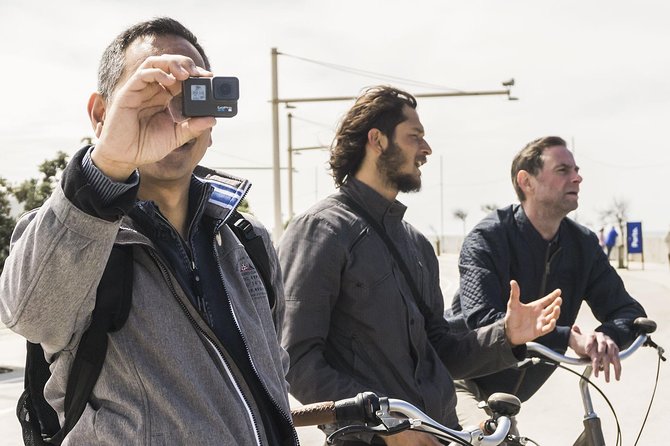
I like the balance here. You get fresh air and exercise, but the motor helps when the road rises. Several riders found the bikes easy to handle, and the equipment has been described as new or well maintained. Still, you need to be comfortable steering around pedestrians, cars, scooters, and occasional road hazards.
This is not a quiet cycle on an empty path from start to finish. Some stretches use waterfront roads, shared paths, tram tracks, or ordinary city streets. Your guide leads the way, but you remain responsible for braking, signaling, and watching the road.
More Private E-Bike Tours in Portugal
- Porto Private E-Bike Tour: Douro River, Parks & Beaches
★ 4.8 · 114 reviews - E-Bike Self-Guided Sintra – Cascais (Private Tour from Lisbon)
★ 4.0 · 22 reviews - Private Ebike Tour through Serra da Estrela
★ 5.0 · 20 reviews
Miragaia and Alfândega: Porto’s working riverfront
The first stop is Miragaia, one of Porto’s most picturesque old districts. Cobblestone lanes run between narrow villas, and small restaurants serve familiar Portuguese dishes. It is a brief stop, but it helps you see how closely the city developed around the Douro.
The ride then passes the Alfândega Porto Congress Centre. The building and its broad river platform reflect a major nineteenth-century change, when the old Miragaia beach was replaced by a customs quay. That detail gives the waterfront a practical purpose. This was not built only for views. It was made for trade, cargo, and control of goods entering the city.
The nearby Museu do Carro Eléctrico occupies a former thermoelectric power station in Massarelos. The museum traces Porto’s tram system and its collection includes material connected with the city’s electric trams. You do not enter the museum on this tour, but the stop adds useful context, especially as you may see tram tracks during the ride.
This opening section is strongest for architecture and city history. It is not the part for long stops or formal sightseeing. You are getting an outdoor introduction before the route opens up.
Arrábida Bridge and Cantareira’s fishing tradition
At the Arrábida Bridge, you pause beneath a major piece of twentieth-century engineering. Completed in 1963, its reinforced-concrete arch was the largest of its kind in the world at that time. The bridge links Porto with Vila Nova de Gaia, and its scale is easier to appreciate from the river level than from a distant viewpoint.
Next comes Cantareira, a riverside area with a more local feel. Its name recalls the many fountains that once brought people here to collect water in pitchers. It also remains tied to fishing, with small boats and fishing gear close to the shore.
I enjoy this part because it moves beyond postcard Porto. You see the river as a working place, not just a backdrop for photographs. Across the water, you can look toward Afurada and Cabedelo as the Douro runs toward the Atlantic.
The stops are short, often around five minutes. That keeps the three-hour circuit moving, but you should not expect time to explore every district on foot. If you want extended museum visits or long café breaks, this is the wrong format.
Foz do Douro: gardens, forts, and the Atlantic
At Jardim do Passeio Alegre, the river begins to feel more open. This public garden sits in Foz do Douro, an area known for its protected historic sites and sea-facing setting. It is a pleasant place to pause and let your guide explain how Porto shifts from river city to coastal city.
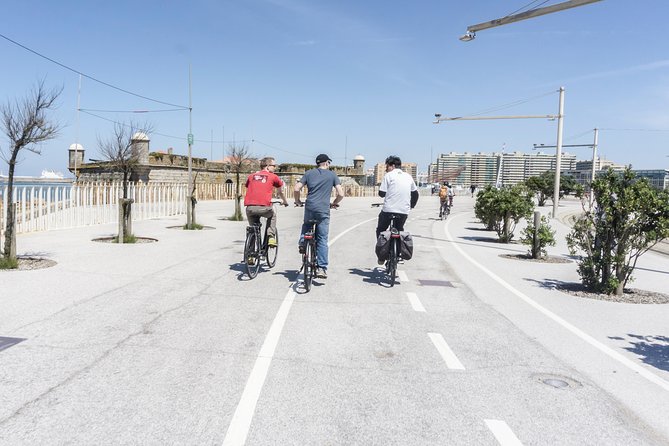
The route continues to the São João Baptista da Foz Fortress. Built in a commanding position near the Douro bar, the fort helped protect access to the river and the city. You only stop briefly, so think of it as a viewpoint and history lesson rather than a full fort visit.
At the Felgueiras Lighthouse, the river meets the ocean. The lighthouse sits at the end of a pier, and this is one of the tour’s most striking photo stops. Water, stone, wind, and the open Atlantic replace the enclosed feeling of the old center.
The Pergola da Foz follows, near the beaches of Ourigo, Ingleses, and Luz. Its colonnade is one of the recognizable features of the Foz waterfront. You may find this section particularly enjoyable in good weather, though the coast can be cold, rainy, and windy. One rider still found the outing worthwhile in poor conditions, but weather has a real effect on comfort and visibility.
You then pass Praia do Castelo do Queijo, the Cheese Castle. The seventeenth-century fort takes its name from the cheese-shaped rocky rise on which it was built. It was designed to defend the coast from North African pirates. The name is memorable, and the position beside the ocean makes a good contrast with the river forts seen earlier.
Same saddle, a different route:
- 3-Hour Porto Highlights on a Electric Bike Guided Tour
★ 5.0 · 4,392 reviews - Lisbon: Hills, Alfama, and Mouraria Tour by Electric Bike
★ 4.8 · 3,438 reviews - Porto: City Highlights 3-Hour Guided Electric Bike Tour
★ 4.8 · 3,092 reviews - Lisbon E-Bike Tour Commerce Square, Mouraria and Alfama
★ 4.5 · 1,688 reviews
Matosinhos Beach and Porto City Park
Matosinhos Beach is one of the easiest large beaches to reach from central Porto. Its broad golden sand and surf make it a popular place for beach life and water sports. The tour does not include a beach activity, but you get a useful look at Porto’s coastal side and a break from the stone streets of the center.
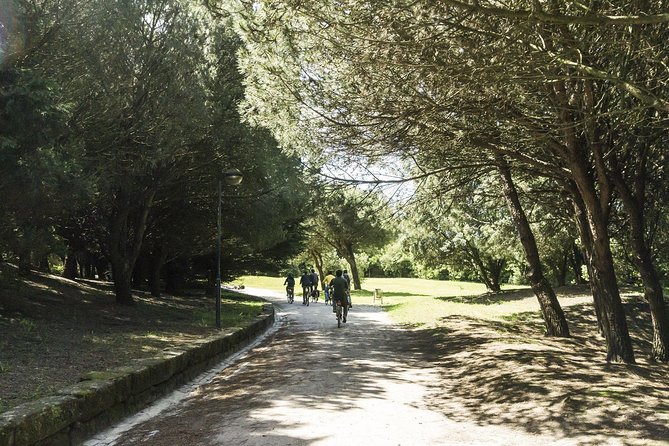
From there, the route enters Parque da Cidade. At 83 hectares and roughly 10 kilometers of paths, it is the largest urban park in Portugal. The park was designed by landscape architect Sidónio Pardal and includes lakes, plants, wildlife, and long paths woven into the city.
This is one of the tour’s most valuable sections. You see how Porto makes room for open space, and you get a calmer riding environment after the coast. The park also helps explain why an e-bike is useful: you can cross a large area in a short time without exhausting yourself.
The park stop is listed at about ten minutes, though the actual time can depend on weather, pace, and delays earlier in the route. If you want to linger beside the lakes, ask your guide at the start. A rainy ride has caused guides to hurry later stops to stay within the three-hour schedule.
Pasteleira and Jardim do Cálem
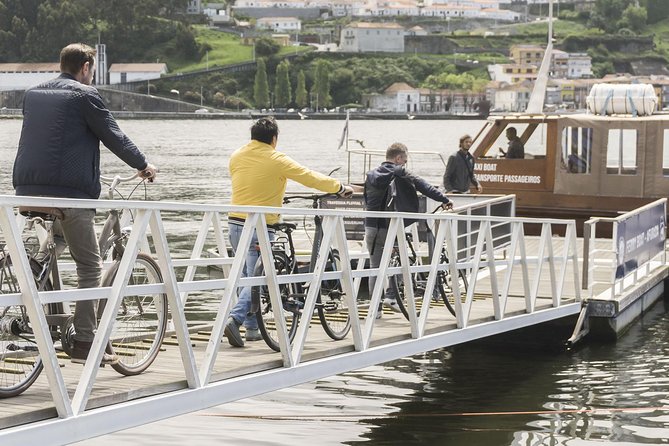
The route continues through Parque Urbano da Pasteleira, a wooded public park divided into two sections by Afonso de Paiva Street. Three wooden walkways connect the sections. It is a quieter green space than Parque da Cidade and gives you another view of Porto’s parks.
Jardim do Cálem comes near the mouth of the Douro. It is a small garden with river views and tall black poplars. This short stop works as a final breath of open space before the route turns back toward the historic center.
These parks are not famous headline sights, and that is part of their value. You see where people in Porto go for a walk, a run, or a little space away from the old streets. The trade-off is that the tour gives each place only a few minutes. You are sampling the city, not spending an afternoon in one garden.
Ribeira and the Dom Luís I Bridge finish
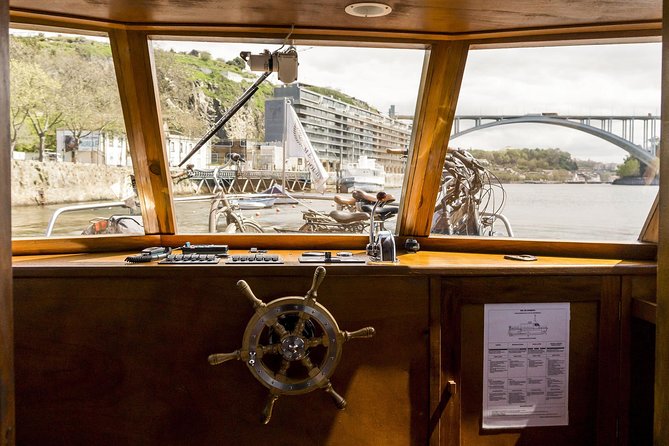
Back near the center, Praça da Ribeira brings you into one of Porto’s oldest squares. Its connection with the Douro helped the city grow as a commercial center. The square also recalls a darker event: in 1809, more than 4,000 people died during the collapse and panic at the Ponte das Barcas while French troops approached. A bronze relief records the tragedy.
The final landmark is the Dom Luís I Bridge, whose official name is Luiz I, despite the common version used by most people. The bridge has been part of Porto’s UNESCO-listed historic area since 1996 and is one of the city’s defining views.
This ending can be visually rewarding, but it is the least relaxed part of the ride. The area around the bridge is congested, and one section is steep. You may prefer to see the bridge on foot later, especially if you are new to city cycling. The route is more enjoyable when you treat the bridge as a short final landmark, not as a leisurely cycling path.
What the guides add to the ride
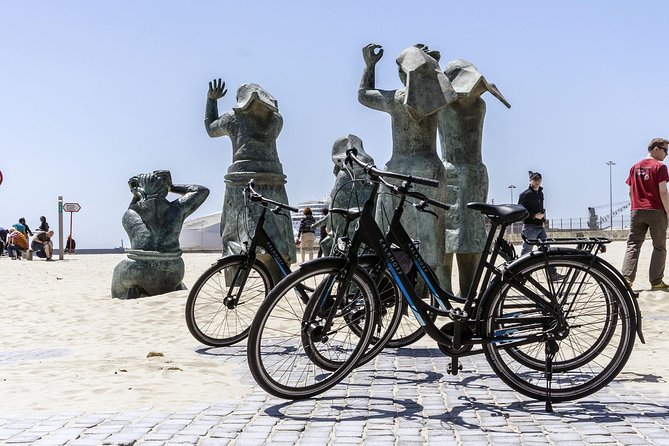
The guide can make or break a short city tour. Here, the strongest praise goes to guides including Eduardo, Felipe, Emanuel, Helio, Atur, Joachim, Mirella, and Philippe. Their strengths include local stories, Portuguese and Spanish cultural context, and practical advice about places to eat.
Eduardo is especially noted for tailoring the ride to the group and explaining the meaning behind monuments, parks, and neighborhoods. Emanuel has offered food suggestions away from the most commercial areas. Felipe and Helio are praised for clear guidance and good commentary, while Mirella is associated with interesting explanations along the coast.
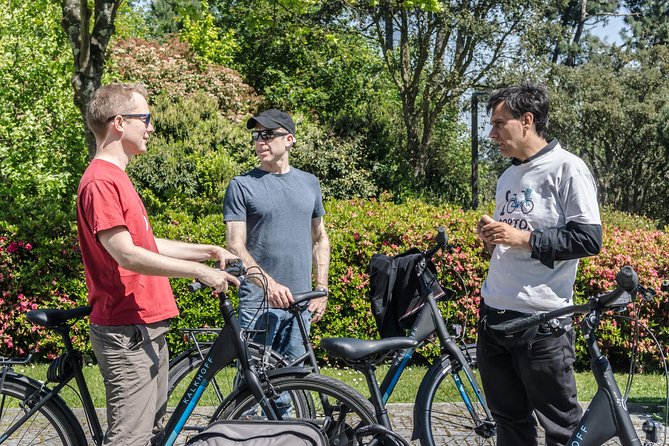
Because this is a private activity, you can ask for more history, a gentler pace, or extra time at a particular kind of stop. That flexibility matters more than a fixed script. Tell the guide if you are comfortable on bikes, if you want a relaxed outing, or if you are mainly interested in architecture, parks, beaches, or food.
Price, timing, and who gets the best value
At $71.20 per person, the tour is not the cheapest way to see Porto. You are paying for a private guide, an e-bike, helmet, water, route planning, and three hours of coverage. The value improves if your group has two or more people who would otherwise hire separate transport or spend money on taxis between the river, Foz, and Matosinhos.
I see this as a strong first or second activity in Porto. It gives you a clear map of the city’s western side, so you can later decide where to return on foot. It is less useful if your main goal is a detailed tour of the cathedral, São Bento Station, Clérigos, or the narrow historic center. Those sights are better explored slowly on foot.
The tour starts and ends at Biclas & Triclas. Hotel pickup is not included, but the meeting point is near public transport. Children up to five must use a child seat. Most people can take part, but you need enough balance and confidence to ride in a busy urban setting.
Free cancellation is available up to 24 hours before the start time. Poor weather can lead to a new date or full refund, and the same applies if the minimum number needed to operate the tour is not reached.
Should you book this Porto e-bike tour?
Book it if you want coast, river, parks, and local neighborhoods in one efficient outing. It suits couples, families with suitable cycling ability, and groups who want a private pace. It is also a smart choice after arriving in Porto, when you want to understand the city’s shape before choosing where to spend more time.
Skip it if you are a timid cyclist, dislike traffic, or want a slow walking tour of Porto’s central monuments. The waterfront is mostly manageable, but the route still includes shared paths, roads, pedestrians, and a demanding finish near the bridge.
For most confident riders, I think the mix of Atlantic views, old forts, fishing history, parks, and helpful guides makes the price fair. Ask for a relaxed pace, keep an eye on the final bridge section, and you will see far more of Porto than the usual center-only tour.
FAQ
How long does the private e-bike tour last?
The tour lasts approximately three hours.
Where does the tour start and finish?
It starts at Biclas & Triclas, Rua Nova da Alfândega 108 R/C, 4050-431 Porto, Portugal, and finishes back at the same meeting point.
Is this a private tour?
Yes. Only your group participates in the activity.
What is included in the price?
The price includes the e-bike, helmet, bottled water, local guide, and all taxes, fees, and handling charges.
Is hotel pickup included?
No. Hotel pickup and drop-off are not included.
Is the tour offered in English?
Yes. The experience is offered in English.
Do I need to bring food or drinks?
Food and drinks are not included unless specifically stated. Bottled water is provided.
Can young children join the tour?
Children up to five years of age must use a child seat. The provided information says most people can participate.
What happens if the weather is poor?
The experience requires good weather. If it is canceled because of poor weather, you will be offered another date or a full refund.
New e-bike tours around Portugal
- From Lisbon: Sintra and Cascais E-Bike Tour★ 4.7 · 26 reviews
- From Cascais: Sintra Guided E-Bike Tour & Guincho Beach★ 5.0 · 27 reviews
- Madeira E-Bike Food Tour – Local Flavours & Scenic Rides★ 5.0 · 2 reviews
- Ferragudo Village: Glide Through on an Electric Bike★ 4.6 · 4 reviews
- Ferragudo and Carvoeiro: Private e-Bike Tour★ 5.0 · 2 reviews
- Fátima: E-Bike Tour to Dinosaur Footprints Natural Monument★ 4.0 · 3 reviews
- Fátima E-bike tour★ 5.0 · 2 reviews
- E-bike Tours Carvoeiro – Silves Tour★ 4.4 · 2 reviews
Porto E-Bike Tours, side by side.
3-Hour Porto Highlights on a Electric Bike Guided Tour
Read our review →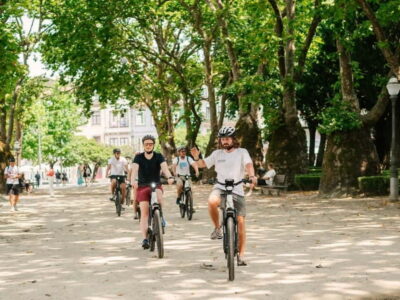
Porto Highlights in 3 Hours E-Bike Tour – Historical, Sightseeing
Read our review →
Porto Private E-Bike Tour: Douro River, Parks & Beaches
Read our review →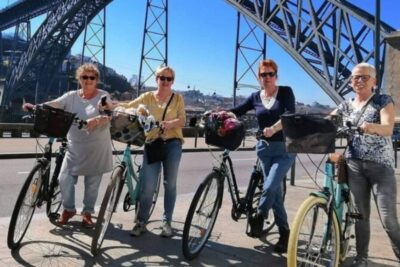
This ride also appears in