
Review · AUSTRALIA
Electric Bike Tour of Melbourne
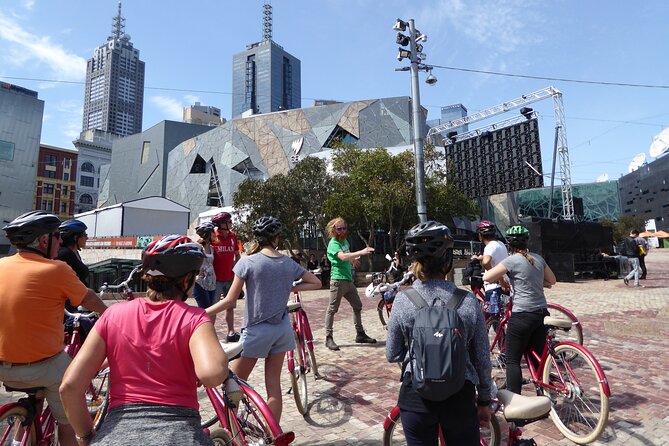
Melbourne reveals itself best at bicycle speed, and this tour covers a lot of ground without asking you to grind up hills. You roll from Southbank through parks, sporting landmarks, Fitzroy, Chinatown, Hosier Lane, and Federation Square, with about 95 percent of the route away from roads.
I like the easy electric boost and the frequent stops for stories about Melbourne’s founding, Aboriginal culture, the gold rush, war memorials, immigration, and sport. I also like the lunch stop in Fitzroy, which adds a local neighborhood feel instead of keeping you in the central business district. The main consideration is pace: this is an all-around city orientation with plenty of commentary, not a nonstop cycling workout or a tour of obscure back streets.
Key points before you book
- Four hours on mostly protected routes: You cover central Melbourne, nearby neighborhoods, parks, and riverside areas with limited exposure to traffic.
- Electric bikes make the distance manageable: The boost helps riders of mixed fitness levels, including people who do not ride often.
- A strong history component: Expect discussion of the Kulin Nation, settlement, the Eureka Stockade, war history, immigration, sport, and Melbourne’s gold-rush wealth.
- Small groups of up to 10: Guides such as Al, Marcus, Avalon, and Freddie can keep an eye on the group and adjust the pace.
- Lunch is not included: Bring extra money for food and drinks at the Fitzroy café stop.
- A useful first-day activity: The route gives you a map of the city and helps you decide where to return on foot or by tram.
Why an e-bike works so well in Melbourne
Melbourne is a friendly city for cycling, but a four-hour ride still covers enough distance to make ordinary bicycles tiring for some people. The electric motor takes the sting out of the effort, so you can pay attention to the city rather than the next incline.
The route is described as mostly off-road, using bike paths and parks. That does not mean you avoid every street or pedestrian area. You still need to pay attention around traffic, walkers, and city crossings. One rider described the ride as involving some dodging between pedestrians and traffic, while other feedback called the road portions easy to navigate.
That is a fair picture. This is a city ride, not a sealed cycling track. The guide keeps the group together and stops often, which matters more than having a perfectly empty path. Reviews repeatedly praise Al, Marcus, Avalon, and Freddie for clear instructions, safety awareness, and an easygoing manner.
The bikes are supplied, as are helmets. First-time e-bike riders receive an introduction before setting off. The electric assistance is especially useful if you are over 60, not in peak shape, or want to see a lot without arriving exhausted. One rider in their early 60s found the bikes easy and fun to use.
More e-bike tours around Australia:
- Sydney: Guided Harbour E-Bike Tour
★ 5.0 · 253 reviews - Electric Bike Tour of Melbourne
★ 4.7 · 210 reviews - E-bike (electric) – Blue Mountains – Hanging Rock – SELF-GUIDED Hire Service
★ 5.0 · 101 reviews
Starting at Southbank with Melbourne’s bigger story
The ride begins at 20 Rebecca Walk in Melbourne at 10:00 am and returns to the same meeting point. Southbank is a sensible starting place because it puts the Yarra River, the city center, and several major sights within reach.
The opening talk pays respect to the people of the Kulin Nation, whose land was never ceded. That framing is important. Melbourne’s story is not presented only as a tale of British settlement, gold wealth, and grand public buildings. Aboriginal people and ongoing Aboriginal rights are part of the introduction.
You also hear about settler figures who helped shape the city. Expect history early in the ride, possibly in more detail than you want if your main goal is simply cycling. One person found the first historical talk too long, especially for visitors with limited English. If you prefer a fast-moving ride with only brief commentary, keep that in mind.
If you enjoy context, though, the slower opening gives later sights more meaning. The grand buildings, memorials, gardens, and sporting grounds make more sense when you understand the forces that built Melbourne.
Shrine of Remembrance and the meaning of war
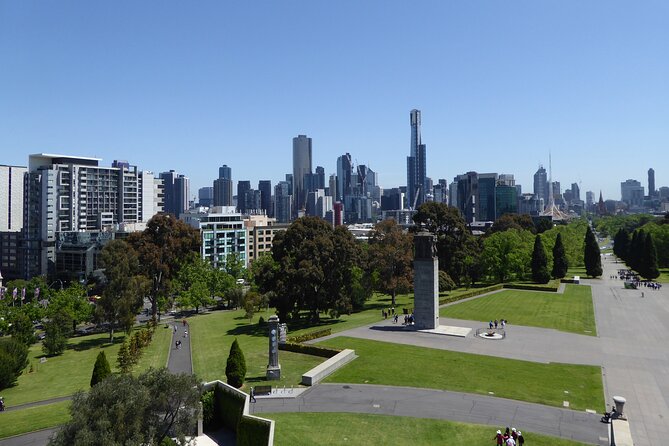
The Shrine of Remembrance is one of Melbourne’s most important public memorials. The stop introduces the building as Victoria’s largest and most visited war memorial of national significance.
The guide also connects this part of the route with William Barak, an Aboriginal leader, activist, cultural ambassador, educator, and advocate for Aboriginal rights. That pairing makes the stop more than a quick photo opportunity. You are considering both Australia’s war memory and the Aboriginal figures who fought to protect culture and rights.
You stop briefly rather than taking a full indoor visit. That makes the tour efficient, but it also means you will not have time to study every memorial detail. If the Shrine interests you, mark it for a return visit after the ride.
The MCG and Melbourne’s sporting identity
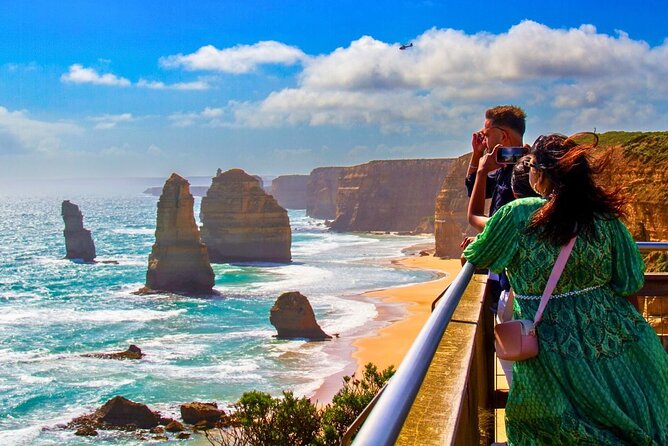
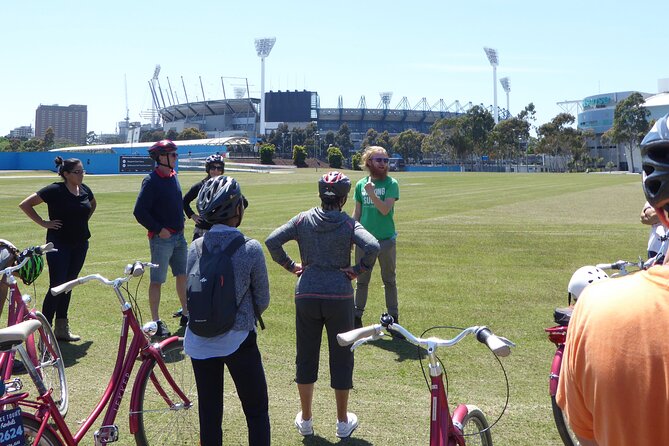
The Melbourne Cricket Ground is a must-see for anyone who follows sport, but it is also useful for understanding local culture. Melbourne takes its sporting identity seriously, and the MCG helps explain why the city is often called the sporting capital of the world.
The stop is short, so you should think of it as an orientation rather than a stadium tour. You see the setting, learn why it matters, and decide if you want to come back for a match or a dedicated visit.
Even if cricket or Australian rules football are not part of your usual interests, the scale of the grounds is impressive. The guide helps connect the stadium to Melbourne’s wider public life, where major sporting events are part of the city calendar.
Same saddle, a different route:
- E-Bike Hire: Northern Rivers Rail Trail, Trail Side Hire
★ 5.0 · 95 reviews - Premium E Bike Hire at the Northern Rivers Rail Trail
★ 5.0 · 81 reviews - Narooma – E-Bike Hire 2 Hour Rental
★ 5.0 · 35 reviews - Byron Bay: Northern Rivers Rail Trail E-Bike Hire & Shuttle
★ 5.0 · 15 reviews
Fitzroy Gardens and Cook’s Cottage
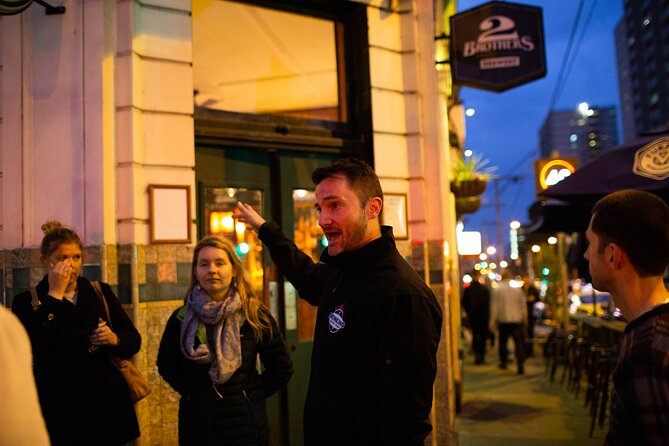
Fitzroy Gardens brings a welcome change from city streets and large civic buildings. The park is one of the prettiest green spaces on the route, and its paths make a natural fit for an e-bike ride.
Here you see Cook’s Cottage, a structure shipped from England and rebuilt brick by brick in Melbourne. The story is wonderfully odd and says a lot about how the young city wanted to connect itself to British history.
The stop is brief, so do not expect a full garden walk. You will get the key story and a chance to take in the setting. The bike keeps moving, which is the tradeoff for seeing so many districts in one morning.
Parliament House and the gold-rush city
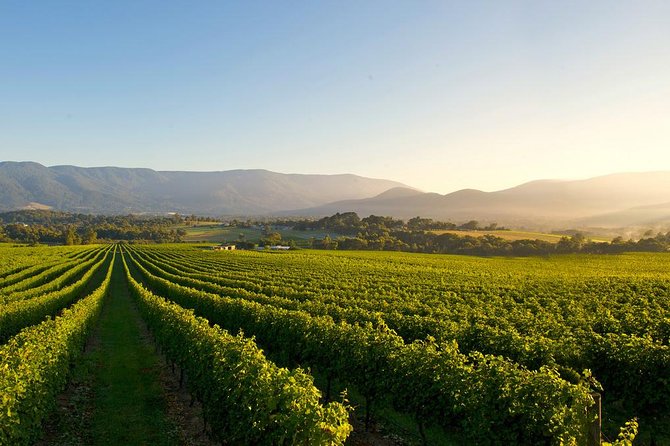
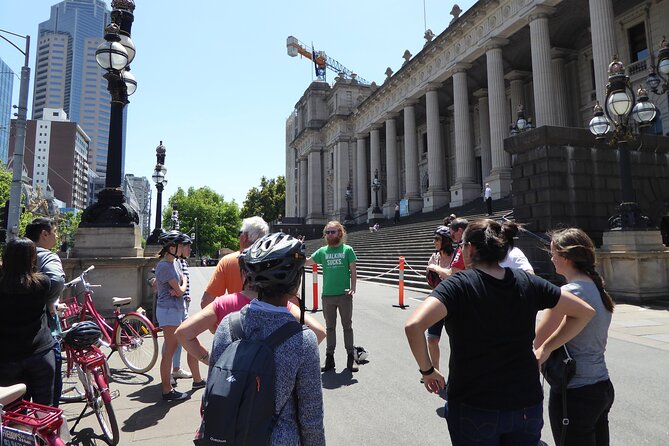
Parliament House of Victoria was built to show Melbourne’s wealth during the gold rush, when the city was one of the richest places in the world. That context gives the building more punch than its formal facade might suggest.
Melbourne’s gold wealth helped pay for grand public projects, cultural institutions, and civic ambition. As you cycle past Parliament House, you begin to see the city not just as a modern café and arts center, but as a place shaped by a sudden burst of money and confidence.
Again, this is an exterior stop, not a parliamentary tour. The value comes from the guide’s explanation and from seeing the building as part of a larger route through Melbourne’s political and social center.
The Royal Exhibition Building and Melbourne’s public ambition
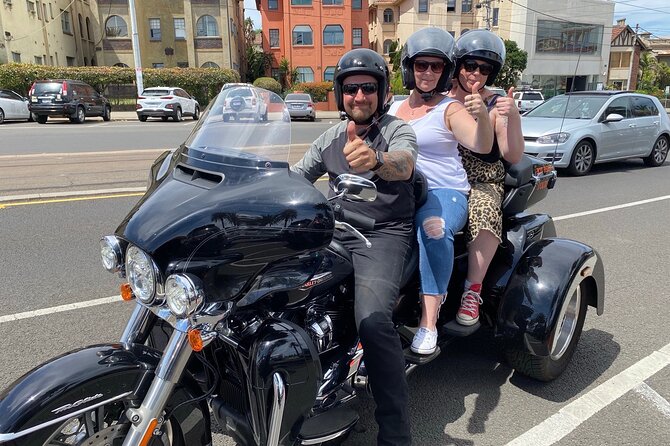
The Royal Exhibition Building represents another chapter in Melbourne’s rise. It was built in the era of international exhibitions, when cities displayed new technology, trade, ideas, culture, and national pride.
The building makes a strong cycling stop because it is both visually grand and easy to place within the city’s story. You learn why a young city wanted a stage for the world, and why this part of Melbourne still feels tied to education, public gatherings, and cultural exchange.
The route does not provide an extended interior visit. You get the setting and the explanation, then continue toward Fitzroy.
Lunch in Fitzroy, with your own budget
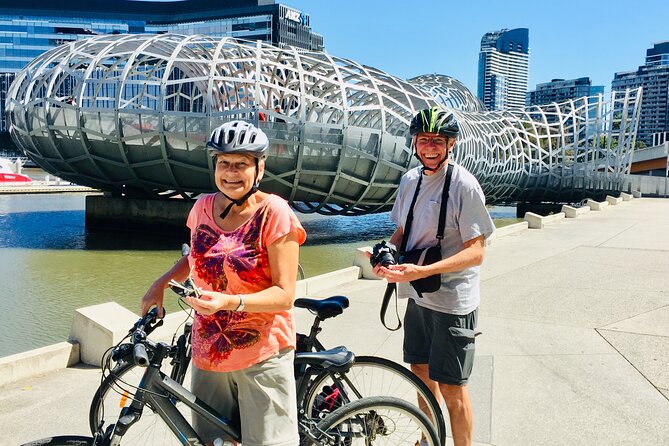
The lunch stop in Fitzroy is one of the most useful parts of the day. Instead of eating near the starting point, you pause in a neighborhood known for its independent, eclectic character.
A café stop gives you a chance to rest, eat, and talk with the other riders. It also breaks up the history and sightseeing with a more ordinary Melbourne experience. The food and drinks are not included, so bring extra cash or another payment method suitable for the café.
The exact meal depends on the venue and what you choose. The important practical point is that lunch is an additional expense, not part of the $85.35 tour price.
Fitzroy also helps show how quickly Melbourne changes from formal civic spaces to creative residential and café districts. You see more of the city’s everyday personality here than you would on a route limited to major landmarks.
Chinatown and Melbourne’s gold-rush diversity
The ride continues to Chinatown, established in 1851 in response to the gold rush. It is described as the second-oldest Chinatown in the world, and its location in the middle of Melbourne makes it especially easy to connect with the city’s wider history.
This stop adds an important migration story to the gold-rush account. Melbourne’s wealth did not come from one group alone. People arrived from many places, and Chinese communities became part of the city’s economic and cultural life.
You get a short orientation rather than a food tour. If you want to eat here, return later with time to explore. The tour’s purpose is to place Chinatown on your mental map and explain why it belongs in Melbourne’s central story.
Hosier Lane and the city’s street-art side
Hosier Lane brings a sharp change of mood. You leave grand civic buildings and enter a bluestone lane covered with changing street art.
The guide stops the bikes so you can look down the lane instead of trying to admire murals while riding. This is a good example of why a guided bike route works better than simply following a map. You get the right place, a short explanation, and time to look around safely.
Street art changes, so the exact walls will not always look the same. The point is to see how Melbourne’s public identity extends beyond Victorian buildings and formal institutions. The lane gives the city a playful, urban edge without requiring a separate street-art tour.
Federation Square and the Yarra connection
Federation Square is Melbourne’s main public gathering place and links Flinders Street with the Yarra River. Its modern architecture sits beside older landmarks, including St Paul’s Cathedral and Flinders Street Station.
This is one of the best orientation stops because several parts of central Melbourne meet here. You can understand the riverfront, the railway station, the cathedral, and the city center in one glance.
The square can feel busy, especially around events, but the guide’s job is to position the group and keep the stop manageable. You will not get a long free period here, so note the places you want to revisit after the ride.
Immigration Museum and a broader Melbourne
The final listed stop overlooks the Immigration Museum and asks you to consider Melbourne through the experience of its immigrant communities. Half of Melbourne’s population is identified in the tour information as having been born outside Australia, so this is not a side note. It is central to the city you are seeing.
The stop rounds out the earlier discussion of Aboriginal people, British settlement, the Chinese gold-rush community, and modern Melbourne. It also helps explain why the city’s food, neighborhoods, languages, and cultural life feel so varied.
You do not receive admission to the museum as part of the bike tour. The stop gives you the location and the larger idea, making it a useful place to return if you want a longer look at immigration stories.
The guides shape the day
The route is consistent, but the guide can change its feel. Al receives frequent praise for detailed historical explanations, safe riding, and practical suggestions for restaurants and places to visit afterward. Marcus is described as relaxed, friendly, and especially strong on Melbourne’s origins and local context.
Avalon brings a calm, attentive style, while Freddie is associated with clear e-bike instructions and an enjoyable pace. One unusually enthusiastic account describes a guide called Mad Max as energetic, funny, highly informed, and able to remember riders’ names. That gives you a sense of the range of personalities you might encounter, though you should not book expecting one specific guide unless the operator confirms it.
The common thread is frequent stopping and active group management. That matters in a city environment. A good guide makes the ride feel safe without turning it into a rigid procession.
Price, timing, and who gets good value
At $85.35 per person, the tour is not the cheapest way to see Melbourne, but the price includes the guide, e-bike, helmet, and four hours of coverage. You are also paying for route planning, local interpretation, and the ability to see districts that would take much longer on foot.
I see the strongest value for a first visit, a short stay, or anyone who wants a city overview before choosing where to spend more time. The tour covers enough ground to replace several separate walks, and the electric assistance keeps the experience active without making it punishing.
The value is weaker if you already know central Melbourne well or want two and a half hours of continuous riding. One critical assessment felt that only about one and a half hours were spent actually cycling because of the frequent history stops. That is not necessarily a flaw, but it makes the tour’s character clear: it is a narrated sightseeing ride, not a fitness ride.
The group maximum is 10 people, which is a useful size for city cycling. You should still expect to ride with people of different abilities. The guides have been praised for keeping groups together and making adjustments, but basic confidence on a bicycle remains important.
Most of the route is flat, and most participants can take part. Still, you should be comfortable steering, braking, and paying attention around pedestrians and occasional traffic. The tour is not recommended in one review for children, and the supplied information does not provide a minimum age, so families should confirm suitability before booking.
Free cancellation is available if you cancel at least 24 hours before the 10:00 am start. Food, drinks, and hotel pickup are not included. The listed meeting point is 20 Rebecca Walk, though one booking account referred to 2 Rebecca Walk, so check the final confirmation carefully before setting out.
Should you book this Melbourne e-bike tour?
Book it if you want a broad, active introduction to Melbourne with a guide who explains what you are seeing. It is particularly useful on your first day, when you want to learn the city’s layout, get historical context, and mark places for later visits.
I would also choose it for older riders or mixed-ability groups who want to cycle together without making the least fit person struggle. The electric bikes, mostly off-road route, short stops, and flat sections make the distance realistic for many people.
Think twice if you want a fast ride, long independent stops, or a narrow focus on street art, food, architecture, or Aboriginal history. This tour touches all those subjects, but none gets a full specialist treatment. For most visitors seeking a friendly four-hour overview, though, the mix of cycling, stories, parks, neighborhoods, and major landmarks offers solid value.
FAQ
How long is the Electric Bike Tour of Melbourne?
The tour lasts approximately four hours.
What time does the tour start?
The listed start time is 10:00 am.
Where does the tour begin?
The meeting point is listed as 20 Rebecca Walk, Melbourne VIC 3000, Australia. One booking account referred to 2 Rebecca Walk, so check your confirmation for the exact meeting point.
Where does the tour finish?
The activity ends back at the meeting point.
Is an electric bike included?
Yes. Use of an e-bike and helmet is included in the tour price.
Is lunch included?
No. The tour stops at a café in Fitzroy, but food and drinks are not included. Bring extra money for lunch.
How large is the group?
The tour has a maximum of 10 participants.
Can most people participate?
The activity information says most people can participate. The route is mostly off-road and generally flat, but you should be comfortable riding a bicycle around pedestrians and occasional traffic.
New e-bike tours around Australia
- Discover Noosa North Shore: Eco-Friendly Guided e-Bike Tour★ 4.8 · 4 reviews
- Byron Bay: Northern Rivers Rail Trail E-Bike Hire & Shuttle★ 5.0 · 15 reviews
- Barossa Valley: Gourmet Food and Wine E-Bike Tour★ 5.0 · 11 reviews
- Adelaide: Electric Bike City Tour or Hire Only★ 4.9 · 4 reviews
- Self Guided E Bike Tour – Unicorn Falls, Rainforest & Rail Trail★ 5.0 · 12 reviews
- Adelaide Hills: E-Bike Self-Guided Tour with Coffee and Cake★ 4.5 · 10 reviews
- Adelaide Hills: Self-guided E-Bike wine tour with Lunch★ 4.9 · 7 reviews
- E-Bike Hire: Northern Rivers Rail Trail, Trail Side Hire★ 5.0 · 95 reviews
Australia E-Bike Tours, side by side.
E-bike (electric) – Blue Mountains – Hanging Rock – SELF-GUIDED Hire Service
Read our review →
E-Bike Hire: Northern Rivers Rail Trail, Trail Side Hire
Read our review →
Byron Bay: Northern Rivers Rail Trail E-Bike Hire & Shuttle
Read our review →
Self Guided E Bike Tour – Unicorn Falls, Rainforest & Rail Trail
Read our review →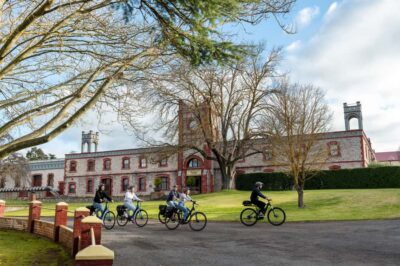
Barossa Valley: Gourmet Food and Wine E-Bike Tour
Read our review →This ride also appears in