
Review · BUDAPEST
Budapest: Guided E-Bike Sightseeing Tour
Budapest reveals itself best from two wheels, especially when your route climbs from the river to Citadella and the Castle District. The electric assist lets you reach the high viewpoints without turning a sightseeing tour into a fitness test, then carries you across both Buda and Pest in about three hours.
I like the efficient route and the small group, limited to eight people. I also like that guides such as Angie, Monica, Petra, and Alex add practical advice about restaurants, bars, and what to do next. The main consideration is that this is an active outing on a bicycle, so it is not recommended for people with mobility impairments.
Key points to know before you book
- About 16 kilometers in three hours: A brisk route that covers many major sights without requiring a full day.
- Electric help on Budapest’s hills: Useful for reaching Citadella and Castle Hill with less effort.
- Both sides of the Danube: You see the grand Pest landmarks and the elevated Buda viewpoints.
- A small group of up to eight: Easier to hear the guide and ask questions than on a large coach tour.
- A practical first-day introduction: Guides share history plus tips on places to eat, drink, and visit later.
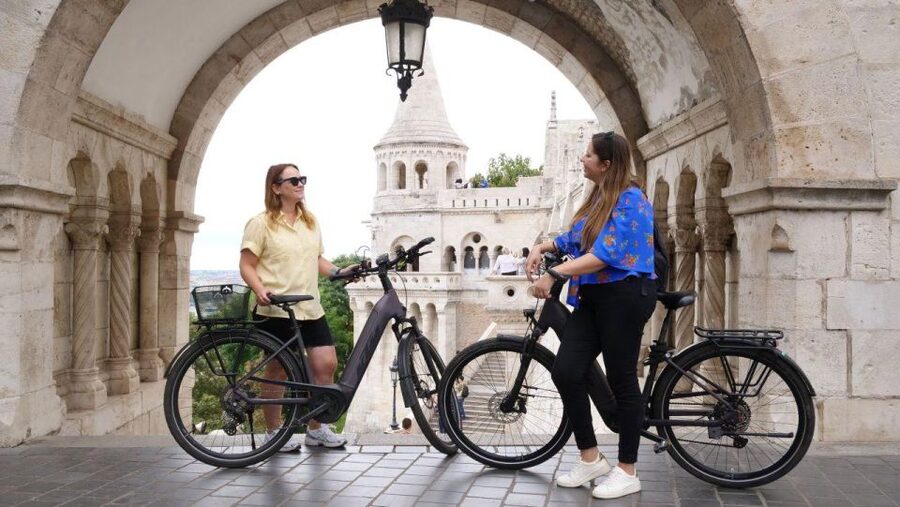
- Family equipment is available: A child seat or trailer can be provided, along with a helmet and water bottle.
Why an e-bike is a smart way to see Budapest
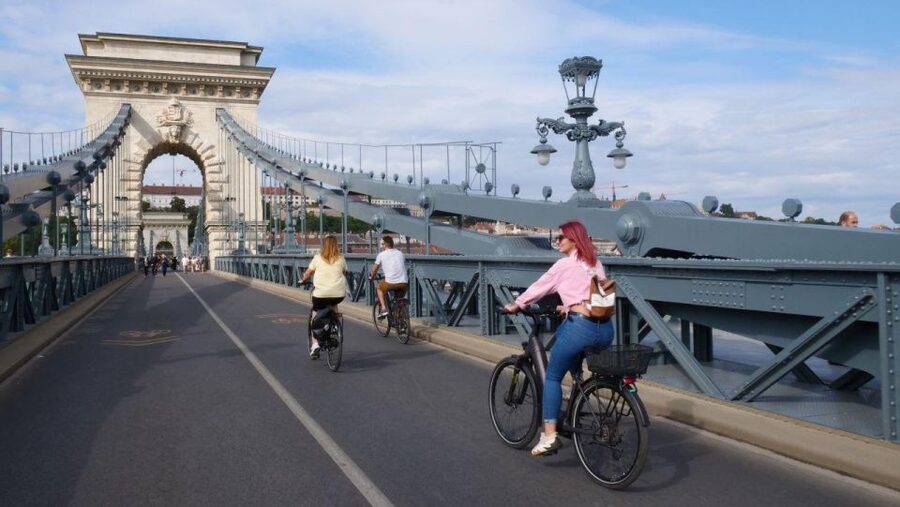
Budapest is split by the Danube, with flat Pest on one side and hillier Buda on the other. That geography gives the city some of its best views, but it also makes a walking tour covering both districts more demanding.
An e-bike changes the equation. You still pedal, but the electric motor helps on the climbs. That matters most on the way to Citadella and the Castle District, where the views reward the effort but the uphill riding can otherwise take energy from the rest of your day.
You cover roughly 16 kilometers in three hours. That is enough distance to connect the main sights, but not enough time for long visits inside museums or churches. Think of this as an orientation tour with frequent stops, not a series of detailed interior visits.
I like that balance for a first or second day in Budapest. You get a map in your head, a sense of how Buda and Pest fit together, and a list of places worth returning to on foot.
More City E-Bike Tours in Budapest:
- Budapest: Guided Downtown Electric Bike Tour
★ 4.9 · 595 reviews - Budapest: Historic Downtown ride on E-Bicycles Buda & Pest
★ 5.0 · 227 reviews - Budapest: Guided City Tour by E-Bike
★ 4.9 · 87 reviews
Reaching Citadella without the usual uphill struggle
The route includes Citadella, one of the city’s key high points for broad views over the Danube and Budapest. From here, you can take in the city as a whole rather than seeing it one monument at a time.
This is where the e-bike earns its price. The motor assistance makes the climb more manageable, so you can spend your energy looking around instead of concentrating on the hill. You should still expect to pedal and steer, but the point is comfort, not speed.
The stop is especially useful early in your stay. A guide can point out the parts of the city you will later explore at street level, helping you understand the relationship between the river, the central districts, and the high ground of Buda.
The tradeoff is simple: you get a viewpoint and a short stop rather than a long, unhurried visit. If your priority is spending an hour at every monument, this route will feel fast. If you want a broad first look, Citadella gives the tour a strong start.
Castle District, Fisherman’s Bastion, and St Matthias Church
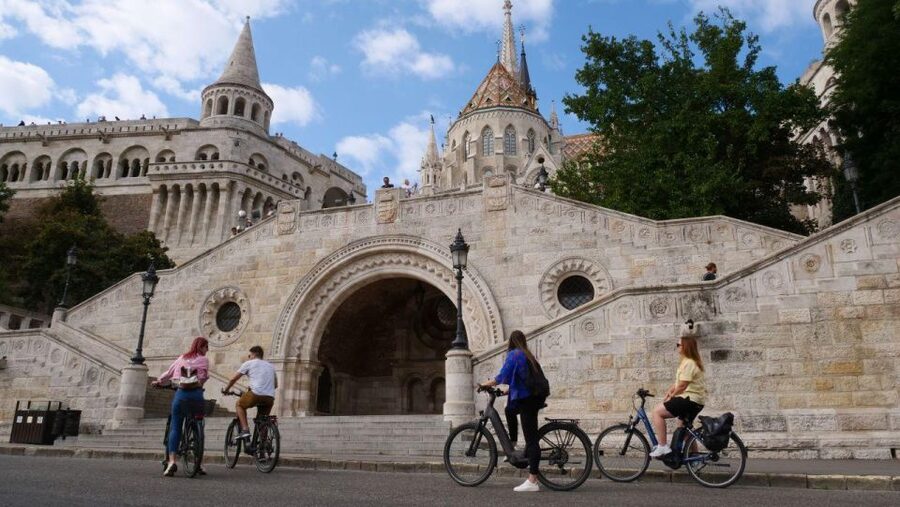
The ride continues to the Castle District, another high point with a different feel from Citadella. Here, the focus shifts from the wide city panorama to historic streets, landmark architecture, and two of Budapest’s best-known sights: Fisherman’s Bastion and St Matthias Church.
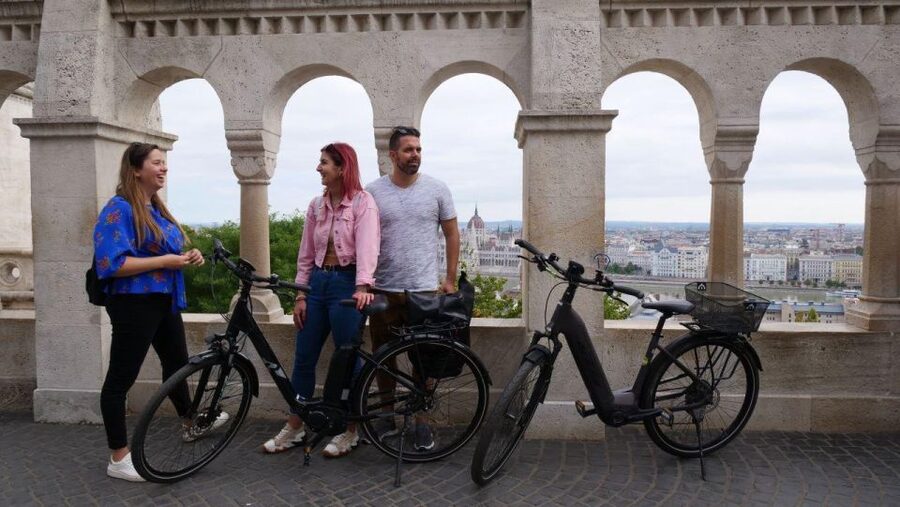
Fisherman’s Bastion is a natural photo stop, with its pale stone terraces and open views toward the Danube and Parliament. The tour gives you a chance to see it as part of the city’s larger layout, not as an isolated monument reached by taxi or on foot.
St Matthias Church adds a more detailed architectural stop. The building is one of the Castle District’s major landmarks, and the guide provides context about what you are seeing. Since the tour is only three hours, the visit is primarily an outside look unless your guide’s timing allows otherwise. Do not book this outing expecting a long church visit or a formal museum tour.
The Castle climb is also the section where good equipment matters most. One rider specifically noted that hybrid bikes were essential for reaching the top. With electric assistance, you can focus more on the views and less on the slope.
Parliament from the opposite riverbank
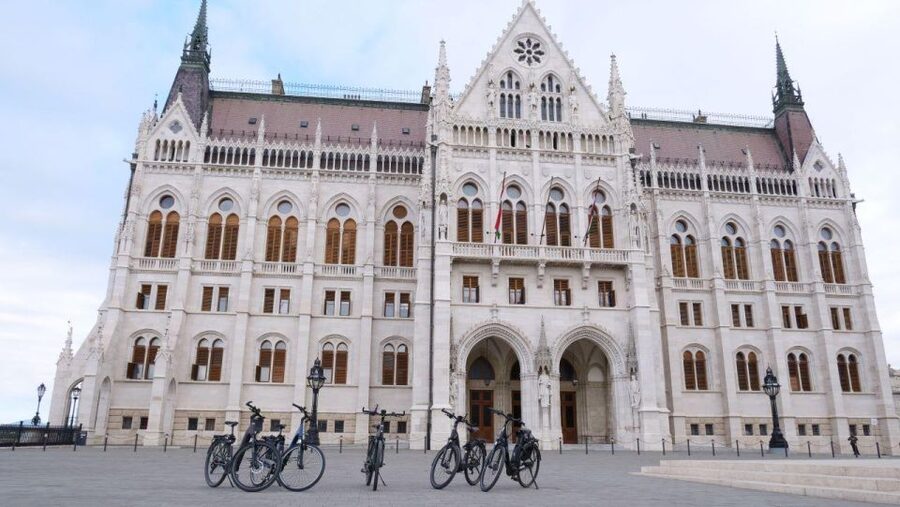
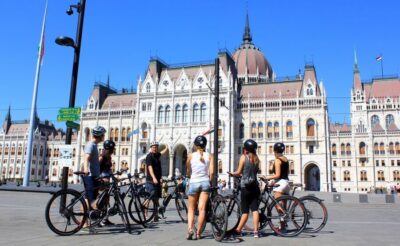
Few Budapest views are as recognizable as the Parliament Building seen across the Danube. The tour deliberately takes you to the other side of the river for that classic angle, giving you a chance to frame the building with the water in front of it.
This stop works well because it changes your view of the city. From the Buda heights, Budapest spreads out below you. From across the river, Parliament becomes the subject, with its grand facade facing the water.
You will want your camera ready, but do not expect a long photography session. The tour keeps moving, and the guide is managing the group, bikes, and the clock. Still, this is exactly the sort of stop that makes an e-bike tour worthwhile: you reach several separated viewpoints in one morning or afternoon without arranging your own transport.
More guided rides around Budapest:
- Budapest: E-Bike Guided Tour and Castle Hill
★ 4.9 · 241 reviews - Budapest: Guided Bike & E-bike Tour with a Goulash
★ 4.8 · 220 reviews - Budapest to Szentendre e-Bike Tour with a local guide
★ 5.0 · 10 reviews - Budapest & Buda Castle e-Bike Tour with a local guide
★ 5.0 · 10 reviews
St Stephen’s Basilica and the grand Pest side
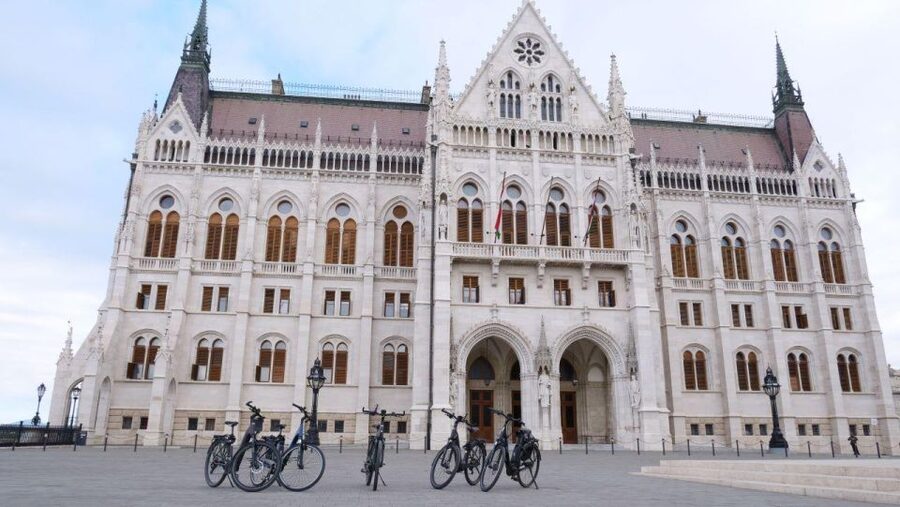
On the Pest side, the route includes St Stephen’s Basilica, one of the city’s most important churches and a major central landmark. Its scale gives you a useful counterpoint to the hilltop views and Castle District streets.
The basilica also helps round out the tour. You see Budapest’s ceremonial and urban center after spending time above the city in Buda. Along the way, the guide explains the main points of the city’s past and adds local suggestions for the rest of your stay.
That local advice may be one of the tour’s most useful extras. Guides have shared favorite addresses and suggestions about restaurants and bars, including places to avoid. If you take this tour near the start of your visit, you can use those tips while you still have several meals and evenings ahead.
The limitation remains time. You will see the basilica as part of a moving city tour, not as a dedicated religious or architectural visit. If the building is high on your personal list, return later for a slower look.
Margaret Island gives the route a local pause
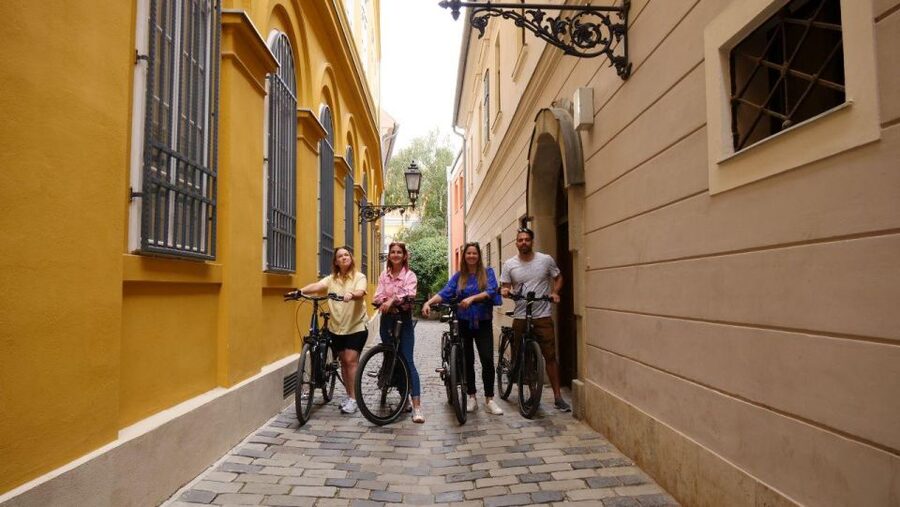
Margaret Island, in the Danube, is included as a look at the city’s recreational side. The tour presents it as the people’s island, a place where locals go to enjoy open space away from the central streets.
This is a welcome change of pace after the viewpoints, churches, and formal landmarks. It shows you how Budapest residents use the city, not just what appears on a postcard.
Because the island is one stop within a compact three-hour route, the experience is more about seeing and understanding the setting than spending an afternoon there. You should not expect extended free time or a full island exploration. Still, the stop adds variety and keeps the tour from becoming a checklist of monuments.
What the small group changes
The maximum group size is eight people. That is large enough to create a social outing, but small enough for the guide to speak to everyone without shouting.
A small group also helps at stops. You can ask why a building matters, request a restaurant suggestion, or clarify the route without waiting behind a crowd. The guide can keep an eye on the riders and adjust explanations more easily than on a large vehicle tour.
The exact atmosphere depends on who books that day. One booking may become a very small private-feeling outing, while another may include the full group of eight. The limited size gives you better odds of personal attention, but it does not guarantee a private tour.
The guides work in English, French, or Dutch. Named guides associated with the experience include Angie, Monica, Petra, and Alex. Angie has led both English and French tours, which may be helpful for visitors from Quebec or other French-speaking areas. You can check the available language when choosing a departure.
How the guides add value
The guide is not there only to point out buildings. The stated focus includes Budapest’s past, cultural landmarks, and practical advice for the rest of your visit.
That combination is important. A quick city tour can become a blur of names and dates, but useful context helps you decide where to return. The best outcome is that you finish knowing which sights deserve more time and which neighborhoods suit your evenings.
The guides have received especially strong praise for being friendly, fun, and informed. Angie is noted for bringing the city to life and sharing favorite addresses. Monica is described as warm and entertaining, while Petra and Alex are praised for clear tours of the city’s main landmarks.
I would treat the individual guide as part of the experience, not a guaranteed feature. Guide assignments can change, but the tour is designed around local explanation rather than a recorded commentary.
Price, timing, and what you receive
The price is $56 per person for three hours. That is fair value if you want transportation between far-flung sights, electric assistance on the hills, a local guide, and an efficient introduction to both halves of Budapest.
You also receive the bicycle, helmet, and water bottle. A child seat or trailer is available, which makes the outing more workable for some families. Hotel pickup and drop-off are not included, so you need to make your own way to the meeting point.
The reserve-now, pay-later option can help if your schedule is still changing. You can also cancel up to 24 hours before the tour for a full refund. Check the available starting times when booking, since the departure schedule is not fixed in the basic tour details.
Wear comfortable clothes. You do not need special cycling equipment, but you should be ready for three hours of riding, stopping, climbing, and restarting in an urban setting.
Who should book this Budapest e-bike tour
This tour suits you best if you are visiting Budapest for the first time and want to get oriented quickly. It also works well if you have only a short stay and want to connect the main sights without spending a day walking between them.
It is a good fit for adults and families who are comfortable on bicycles and want a little help on the hills. The child seat or trailer adds flexibility, though the tour is not recommended for people with mobility impairments.
You should choose a different format if you want long interior visits, extensive time at one monument, or a slow food-focused experience. You may also prefer a walking tour if you dislike city cycling or want to stop often without managing a bicycle.
The route moves at a useful pace. It gives you the broad picture first, then leaves you free to return to Fisherman’s Bastion, St Matthias Church, Parliament, St Stephen’s Basilica, or Margaret Island on your own.
My verdict on the three-hour route
I like this tour because it solves Budapest’s main sightseeing problem: the best places are spread across flat Pest and hilly Buda. The e-bike handles the difficult connections, while the guide supplies the context and practical advice that can shape the rest of your visit.
The strongest parts are the Citadella and Castle District climbs, the Parliament view from across the river, and the small-group format. The main compromise is speed. You will see many important places, but you will not linger at each one.
Book it early in your stay if you want a useful city overview, easy hill access, and restaurant tips from a local guide. Skip it if you need a museum-style visit or cannot comfortably ride for three hours. At $56, it is a sensible choice for active visitors who want a lot of Budapest in a short window.
FAQ
How long is the Budapest e-bike sightseeing tour?
The tour lasts three hours and covers approximately 16 kilometers.
Which Budapest sights are included?
The route includes Citadella, the Castle District, Fisherman’s Bastion, St Matthias Church, the Parliament Building, St Stephen’s Basilica, and Margaret Island.
Does the tour visit both Buda and Pest?
Yes. The route crosses both sides of Budapest, including the hills of Buda and the central landmarks of Pest.
What languages are available?
The live tour guide may conduct the tour in English, French, or Dutch.
How many people are in the group?
The group is limited to eight participants.
Is equipment provided, and can children join?
A bicycle, helmet, and water bottle are included. A child seat or trailer can be provided. The tour is not recommended for people with mobility impairments.
New e-bike tours around Budapest
- E-Bike Rental Full Day in Budapest★ 5.0 · 2 reviews
- Budapest to Szentendre e-Bike Tour with a local guide★ 5.0 · 10 reviews
- Budapest: Guided City Tour by E-Bike★ 4.9 · 87 reviews
- Budapest: Premium E-Bike Rental★ 4.8 · 6 reviews
- Budapest: Private E-Bike Sightseeing Tour★ 5.0 · 2 reviews
- Budapest: Danube Bend Sunset E-bike Tour to Szentendre★ 5.0 · 2 reviews
- Budapest Peaks: Off-Road eBike Tour★ 5.0 · 4 reviews
- Budapest & Buda Castle e-Bike Tour with a local guide★ 5.0 · 10 reviews
Budapest E-Bike Tours, side by side.
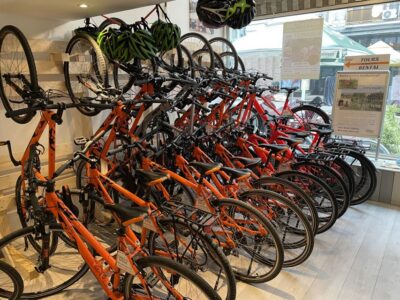
Historic Downtown ride on E-Bicycles Buda & Pest
Read our review →
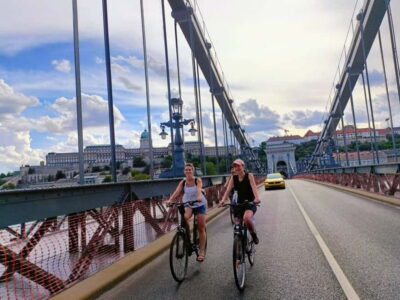
Budapest & Buda Castle e-Bike Tour with a local guide
Read our review →
Budapest to Szentendre e-Bike Tour with a local guide
Read our review →
This ride also appears in